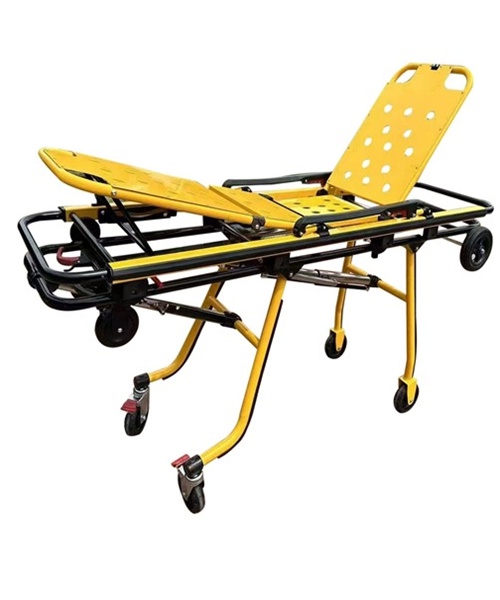
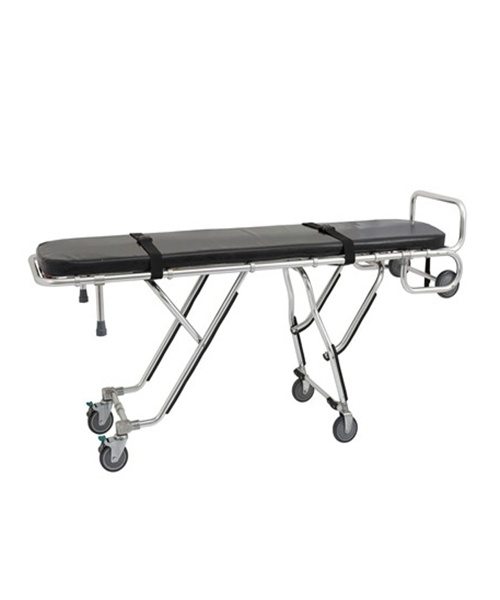
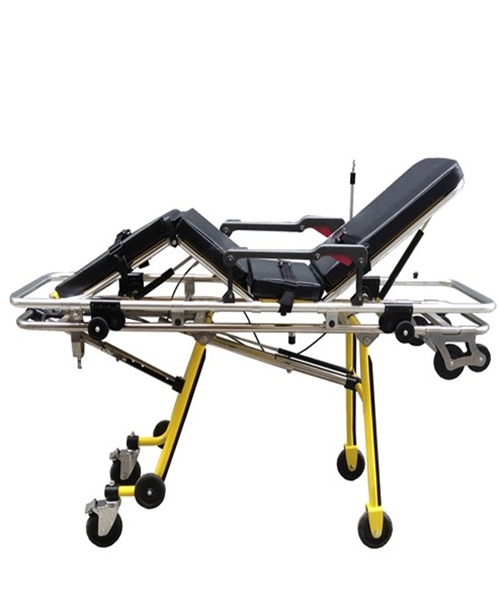
Ambulance Stretcher Innovation: Why DRAGON Sets the Standard
DRAGON ambulance stretchers combine durability, safety, and ergonomic design, setting the standard for modern emergency transport solutions.
In emergency medical services, the equipment used to transport patients can mean the difference between life and death. Ambulance stretchers serve as the critical link between accident scenes and hospital care, yet many healthcare providers struggle with equipment that fails under extreme conditions, causes rescuer fatigue, or lacks versatility for complex rescue scenarios. Understanding what separates exceptional stretcher solutions from ordinary ones has become essential for procurement officers, EMS directors, and emergency planners worldwide.
The Hidden Challenges in Emergency Patient Transport
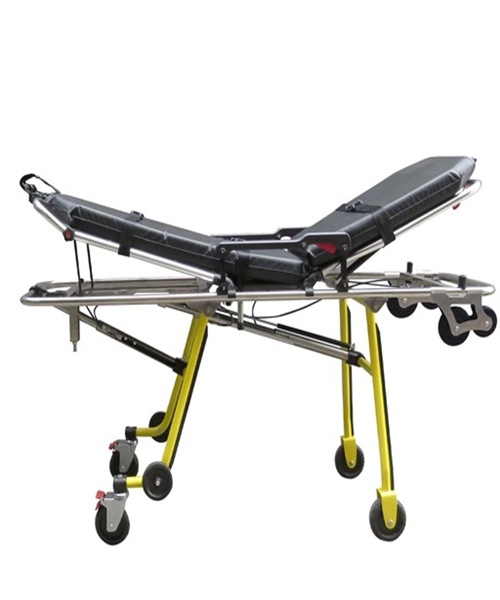
Emergency medical personnel face an unforgiving reality: transport equipment must perform flawlessly in conditions ranging from disaster zones to confined apartment stairwells. Standard stretchers often fail when subjected to saltwater corrosion during maritime rescues, buckle under the weight of bariatric patients, or prove too bulky for helicopter evacuation operations. These failures don’t just damage equipment—they jeopardize patient outcomes and put rescue personnel at risk.
The core challenge lies in balancing competing requirements. A stretcher must be lightweight enough for rapid deployment yet strong enough to safely carry loads exceeding 250 kilograms. It needs to withstand harsh environmental conditions while remaining affordable for budget-constrained public health systems. Most importantly, it must integrate seamlessly with modern ambulance systems and rescue protocols without requiring extensive operator retraining.
Material Science: The Foundation of Reliability
The construction materials used in ambulance stretcher manufacturing directly determine performance longevity and safety margins. 6061 aluminum alloy has emerged as the gold standard for frame construction due to its exceptional strength-to-weight ratio and superior durability compared to the more common 6063 variant. When frame tubes are manufactured 1-2 millimeters thicker than industry standards, stretchers gain the critical ability to bend under extreme stress rather than fracture—a property that proves lifesaving when equipment is dropped during chaotic rescue operations.
DRAGON Stretcher Manufacturing Co., Ltd. leverages over 20 years of specialized engineering experience to optimize material selection across diverse rescue scenarios. Their aluminum folding stretchers utilize this enhanced 6061 alloy specification, while their basket stretcher series incorporates impact-resistant polyethylene and TPU plastics for maritime environments where corrosion resistance is paramount. This material specialization reflects a deep understanding of real-world operational stresses that generic manufacturers often overlook.
For fabric components, PVC vinyl provides the ideal combination of tear resistance, waterproofing, and fire resistance. The bright orange coloring standard in emergency equipment improves visibility in low-light disaster conditions while simplifying decontamination protocols—critical factors for equipment that may be exposed to bloodborne pathogens or hazardous materials.
Electric Lift Systems: Reducing Operator Strain
Manual lifting of patients weighing up to 300 kilograms poses significant injury risks to medical personnel and creates dangerous instability during loading procedures. The 2024-generation electric ambulance stretcher addresses this challenge through integrated powered height adjustment mechanisms that enable single-person operation. This innovation dramatically reduces physical demands on EMS crews while improving patient comfort during the critical transition from ground level to ambulance transport height.
Unlike conventional stretchers requiring dedicated mounting platforms, advanced Stryker-model configurations operate independently, offering flexibility across varied ambulance designs. The electric lift mechanism provides consistent, smooth elevation that minimizes jostling of patients with spinal injuries or other trauma requiring immobilization. For healthcare systems managing aging EMS workforces or seeking to reduce workers’ compensation claims related to lifting injuries, this automation represents a measurable operational advantage.
Specialized Solutions for Extreme Environments
Different rescue scenarios demand fundamentally different equipment characteristics. Basket stretchers, also known as Stokes baskets, exemplify purpose-built design for air and maritime rescue operations. These rigid-frame devices feature 12 strategically positioned side handles that provide secure grip points for multiple rescuers navigating uneven terrain. When equipped with optional inflatable buoyancy accessories, the same stretcher transforms into a water-surface rescue platform—a versatility that eliminates the need for separate specialized equipment.
DRAGON’s collapsible basket stretcher design specifically addresses helicopter winch compatibility requirements. The one-piece molded PE construction option provides maximum structural integrity during high-altitude hoist operations, while the aluminum-frame variant reduces weight for extended carries across mountainous terrain. Both configurations maintain compatibility with standard spinal boards, allowing rescue teams to maintain spinal immobilization protocols throughout multi-stage evacuations.
For urban high-rise emergencies, ambulance stretcher chairs solve the persistent problem of elevator access limitations. The convertible frame seamlessly transitions between stretcher and chair configurations, enabling emergency responders to navigate narrow corridors and small elevator cars that cannot accommodate traditional stretchers. This adaptability proves particularly valuable in densely populated cities with aging residential infrastructure.
Manufacturing Scale Meets Customization Capability
Global procurement of medical equipment increasingly occurs through government tender processes that demand both volume capacity and specification flexibility. DRAGON(https://www.dragonmfc.com/) operates a 500,000-square-meter modern production facility staffed by over 1,000 professional technicians, providing the industrial scale necessary to fulfill large international contracts while maintaining quality consistency. This manufacturing capacity supports monthly production volumes reaching 100 units for specialized electric stretcher platforms—volumes that smaller competitors cannot match without compromising delivery timelines.
Beyond scale, the company’s OEM and ODM service capabilities enable deep customization for specific tender requirements. Engineering teams work from client drawings to modify aluminum tube thickness, adjust folding mechanisms, and optimize load-bearing capacities for particular use cases. This design flexibility extends to logo printing, body structure modifications, and integration with existing ambulance mounting systems—factors that often determine tender award success when technical specifications are otherwise similar.
Proven Performance Across Critical Applications
Real-world validation provides the most meaningful measure of equipment reliability. In maritime search and rescue operations, DRAGON’s PE-based Stokes basket stretchers have achieved zero equipment failures due to corrosion exposure—a critical reliability metric in saltwater environments that rapidly degrade lesser materials. The integrated buoyancy systems enable stable water-surface flotation for casualty stabilization, directly improving survival rates in maritime emergencies.
Military logistics departments operating in battlefield conditions require transport solutions that combine tactical mobility with extreme durability. Customized 6061 aluminum folding stretchers with breathable mesh achieve 250-300 kilogram load capacities while remaining light enough for rapid tactical movement across non-linear terrain. This balance of strength and portability reflects engineering optimization that generic commercial products cannot replicate.
Helicopter EMS operations in remote areas depend on lightweight, suspension-compatible equipment for high-altitude hoist rescues. The basket stretcher configurations used in these scenarios facilitate rapid patient immobilization and safe high-load transport during winching operations—capabilities validated through extensive field deployment with air rescue services.
Making Informed Procurement Decisions
When evaluating ambulance stretcher suppliers, procurement professionals should prioritize manufacturers demonstrating verifiable field performance across diverse rescue scenarios. Material specifications matter significantly—6061 aluminum alloy with enhanced wall thickness provides measurably superior durability compared to standard constructions. Electric lift capabilities should be assessed not just for load capacity but for single-operator feasibility and platform independence.
Customization capacity becomes critical for government tenders with specific technical requirements. Suppliers offering genuine ODM capabilities backed by in-house engineering teams provide far greater flexibility than distributors sourcing from multiple manufacturers. Production scale indicators such as facility size, technician workforce, and monthly output volumes directly predict delivery reliability for large contracts.
The global emergency medical equipment landscape continues evolving toward solutions that reduce operator strain while improving patient outcomes. Manufacturers like DRAGON that combine decades of specialized experience with modern production capabilities are establishing new benchmarks for what emergency transport equipment should achieve. For healthcare systems and rescue organizations making multi-year equipment investments, partnering with suppliers demonstrating both innovation capacity and operational scale represents the most prudent path forward in an increasingly demanding field.
Related products
-
 Contact Us
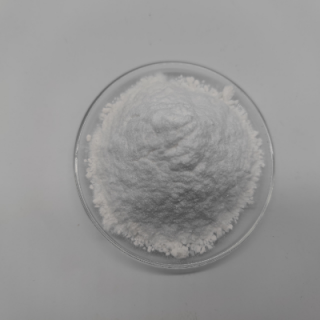
【Synonyms】:4-Hydroxyphenyl-α-D-Glucopyranoside 【CAS No.】:84380-01-8 【Formula】:C12H16O7 【Molecular Weight】:272.25 【Appearance】:White crystalline powder
-
 Contact Us
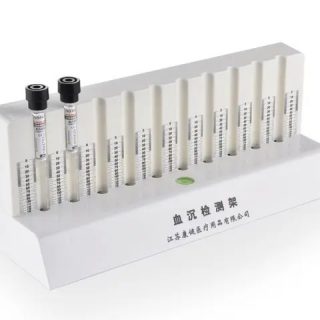
Kangene ESR Fast-Detector Vacuum Tube delivers 30-minute erythrocyte sedimentation rate results with ±1 mm accuracy, safe, sterile, and CE-marked for rapid clinical screening.
-
-
-
 Contact Us
【Synonyms】:4-Hydrocinnamic Acid 【CAS No.】:501-98-4 【Formula】:C9H8O3 【Molecular Weight】:164.16 【Appearance】:White crystals, slightly soluble in water, easily soluble in ethanol and ether
Reviews
There are no reviews yet.