Evacuation Stair Chairs: Essential Equipment for Emergency Rescue
Evacuation stair chairs provide safe, efficient emergency transport for patients on stairs, improving rescue speed and reducing handling risks.
When emergencies strike in multi-story buildings, transporting patients through narrow stairwells and tight corridors presents one of the most challenging rescue scenarios. Traditional stretchers often cannot navigate these confined spaces, creating dangerous delays in critical situations. Evacuation stair chairs have emerged as the specialized solution for these high-risk environments, combining portability with functionality to ensure safe patient transport when every second counts.
Understanding Evacuation Stair Chairs
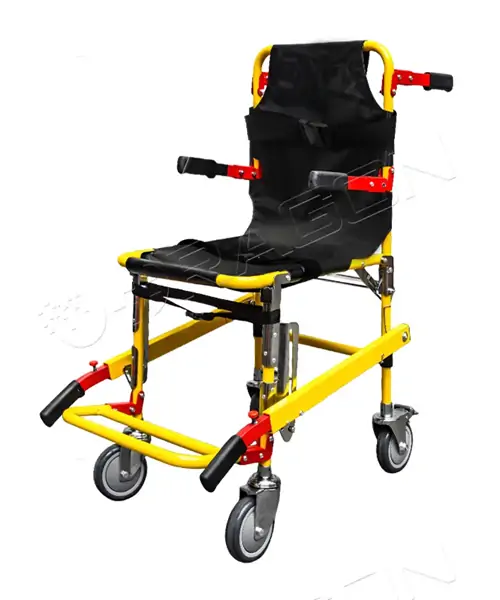
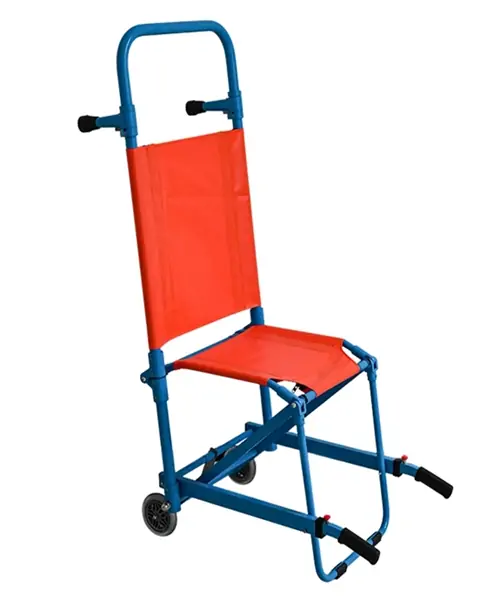
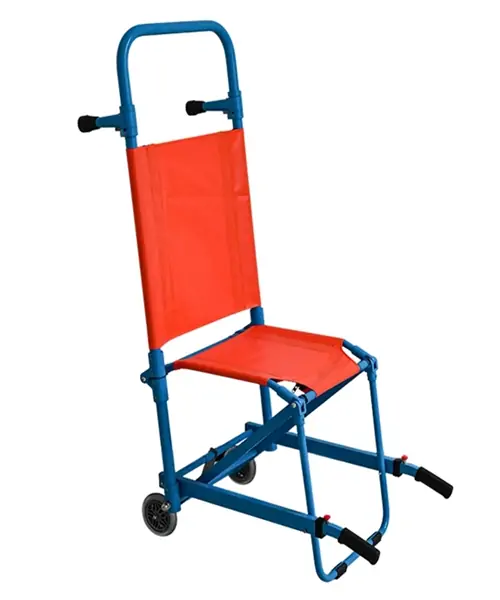
An evacuation stair chair is a specialized medical transport device engineered specifically for moving patients through staircases, narrow hallways, and confined spaces where conventional stretchers cannot operate effectively. Unlike standard ambulance stretchers, these chairs feature compact dimensions, reinforced frames, and strategically positioned handles that enable controlled descent on stairs while maintaining patient stability and rescuer safety.
The core design challenge these devices address is the conflict between patient comfort, equipment durability, and spatial constraints. In earthquake evacuations, fire emergencies, or medical crises in high-rise residential buildings, the ability to quickly and safely move individuals down multiple flights of stairs can determine survival outcomes. This equipment category has become indispensable for emergency medical services, fire departments, and building safety programs worldwide.
Critical Features That Define Quality Stair Chairs
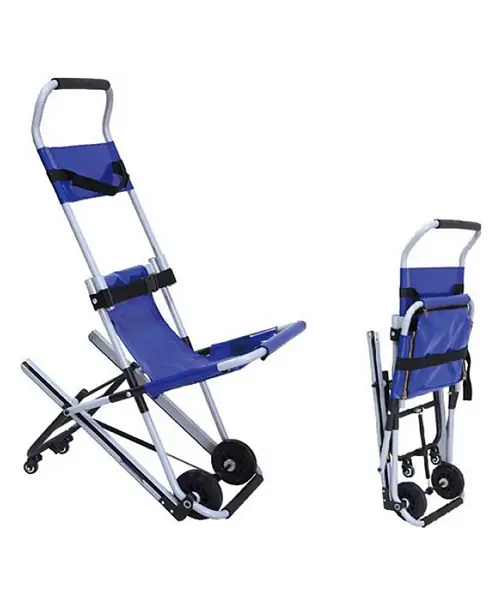
The engineering behind effective evacuation stair chairs incorporates several essential design elements. Operator configuration represents a primary differentiator—simple models require two operators for safe staircase navigation, distributing the patient’s weight between front and rear handlers. Advanced evacuation models feature specialized track systems or wheel mechanisms that enable single-operator use, dramatically improving deployment speed in scenarios where personnel resources are limited.
Load capacity and structural integrity directly impact both patient safety and equipment longevity. Professional-grade stair chairs typically support 200 to 250 pounds, with frames constructed from high-strength materials that resist bending or failure under stress. The material selection process must balance weight reduction for rescuer mobility against structural robustness for repeated use in demanding conditions.
Handle placement and ergonomics significantly affect operational safety. Quality designs incorporate multiple handhold positions at varying heights, allowing rescuers of different statures to maintain proper lifting posture and distribute weight evenly. This configuration reduces injury risk for emergency personnel while providing secure control during patient transport through unpredictable environments.
Restraint systems ensure patient security during movement. Multi-point harnesses with quick-release buckles allow rapid patient securing while maintaining accessibility for medical interventions. The restraint design must accommodate patients in various physical conditions, from conscious and cooperative to unconscious or injured, without compromising circulation or causing additional trauma.
Real-World Applications Across Emergency Scenarios
Earthquake and fire evacuations represent the most time-critical applications for stair chairs. In these disaster scenarios, building elevators become inoperable, and structural integrity may be compromised. Emergency response teams must evacuate mobility-impaired individuals from upper floors rapidly while navigating debris, reduced lighting, and potential secondary hazards. Stair chairs designed for these applications often feature reinforced construction to withstand rough handling and impact-resistant materials that maintain functionality after exposure to extreme conditions.
Medical emergencies in residential and commercial buildings constitute the highest-frequency use case. When cardiac events, strokes, or severe injuries occur in locations inaccessible to standard stretchers, evacuation stair chairs enable EMS teams to reach patients, provide initial stabilization, and execute controlled transport to ground-level ambulances. The convertible functionality between chair and stretcher configurations offers particular value here, allowing seamless transitions between different transport phases without patient transfer.
Maritime and industrial settings present specialized requirements. On vessels or offshore platforms, narrow corridors and steep companionways make patient transport exceptionally difficult. Stair chairs with corrosion-resistant materials and compact folded dimensions address these niche but critical applications, ensuring rescue capability in environments where traditional equipment simply cannot function.
DRAGON’s Engineering Approach to Stair Chair Manufacturing
As a specialized emergency medical equipment manufacturer with over 20 years of experience, DRAGON Stretcher Manufacturing Co., Ltd.(https://www.dragonmfc.com/) has developed evacuation stair chair solutions that address the core challenges emergency responders face. The company’s product line includes both simple two-operator models and advanced single-operator evacuation chairs, engineered specifically for earthquake and fire emergency scenarios.
DRAGON’s manufacturing methodology emphasizes material science and load engineering. By utilizing high-strength aluminum alloys including 6061 grade material—with tube thickness 1-2mm greater than industry standard specifications—the company achieves load capacities reaching 250-300 kg while maintaining the lightweight profile essential for rescuer mobility. This engineering approach directly addresses the industry pain point where equipment failure during critical operations can result from inadequate structural integrity.
The company’s 500,000-square-meter production facility and team of over 1,000 professional technicians enable both standardized production for immediate deployment and customized engineering for specialized requirements. Government tender projects and international aid organizations represent core customer segments, where reliability under extreme conditions and compliance with diverse regulatory standards are non-negotiable requirements.
DRAGON’s OEM and ODM service capabilities allow for project-specific customization including frame geometry modifications, handle configuration adjustments, and material selection optimization based on anticipated use environments. This flexibility proves particularly valuable for military applications and specialized rescue operations where standard commercial equipment may not meet operational parameters.
Selection Criteria for Emergency Response Organizations
When evaluating evacuation stair chairs, emergency services and facility managers should prioritize several key factors. Deployment speed measures how quickly the device transitions from storage to operational readiness—critical in time-sensitive emergencies. Equipment that requires complex assembly or adjustment delays patient care initiation and evacuation commencement.
Durability under field conditions extends beyond simple load testing. Quality equipment must withstand repeated deployments, exposure to varied environmental conditions, and the inevitable impacts that occur during emergency operations. Aluminum alloy construction typically offers superior longevity compared to standard materials, with service lifespans extending 5-10 years under professional use conditions.
Operator training requirements affect organizational readiness. While all evacuation equipment requires proper training, designs that feature intuitive operation and clear control mechanisms reduce training time and minimize errors during high-stress deployments. Equipment that multiple personnel can operate effectively without extensive specialized training provides greater organizational flexibility.
Maintenance and lifecycle costs represent significant long-term considerations. Initial purchase price constitutes only one component of total ownership costs. Equipment requiring frequent component replacement or specialized maintenance increases operational expenses and may reduce availability during critical periods.
The Future of Emergency Evacuation Technology
Technological advancement continues to enhance evacuation stair chair capabilities. Electric-assisted models are emerging that reduce physical demands on operators while maintaining the compact profile essential for confined space navigation. These systems integrate battery-powered mechanisms that assist with weight distribution during staircase descent, potentially enabling single-operator use in scenarios that previously required multiple personnel.
Material science innovations promise further weight reduction without compromising structural integrity. Carbon fiber composites and advanced polymer materials offer potential pathways to equipment that is both lighter and stronger than current aluminum alloy standards, though cost considerations and field durability validation remain important factors in widespread adoption.
Integration with broader emergency response systems represents another development frontier. Smart monitoring systems that track equipment location, maintenance status, and deployment history enable better resource management for emergency services managing multiple units across distributed facilities.
Conclusion
Evacuation stair chairs represent critical infrastructure in comprehensive emergency preparedness programs. As urban environments grow more complex and building codes increasingly mandate accessibility, the ability to safely evacuate all individuals regardless of mobility status has transitioned from optional capability to essential requirement. Organizations responsible for emergency response must evaluate equipment based on proven field performance, structural engineering quality, and alignment with specific operational scenarios. With proper equipment selection, training, and maintenance protocols, evacuation stair chairs ensure that when emergencies occur, effective rescue capability extends to every floor and every individual who requires assistance.
Related products
-
-
 Contact Us
【Synonyms】:4-Hydroxyphenyl-α-D-Glucopyranoside 【CAS No.】:84380-01-8 【Formula】:C12H16O7 【Molecular Weight】:272.25 【Appearance】:White crystalline powder
-
-
 Contact Us
【Synonyms】:4-Hydrocinnamic Acid 【CAS No.】:501-98-4 【Formula】:C9H8O3 【Molecular Weight】:164.16 【Appearance】:White crystals, slightly soluble in water, easily soluble in ethanol and ether
-
Reviews
There are no reviews yet.