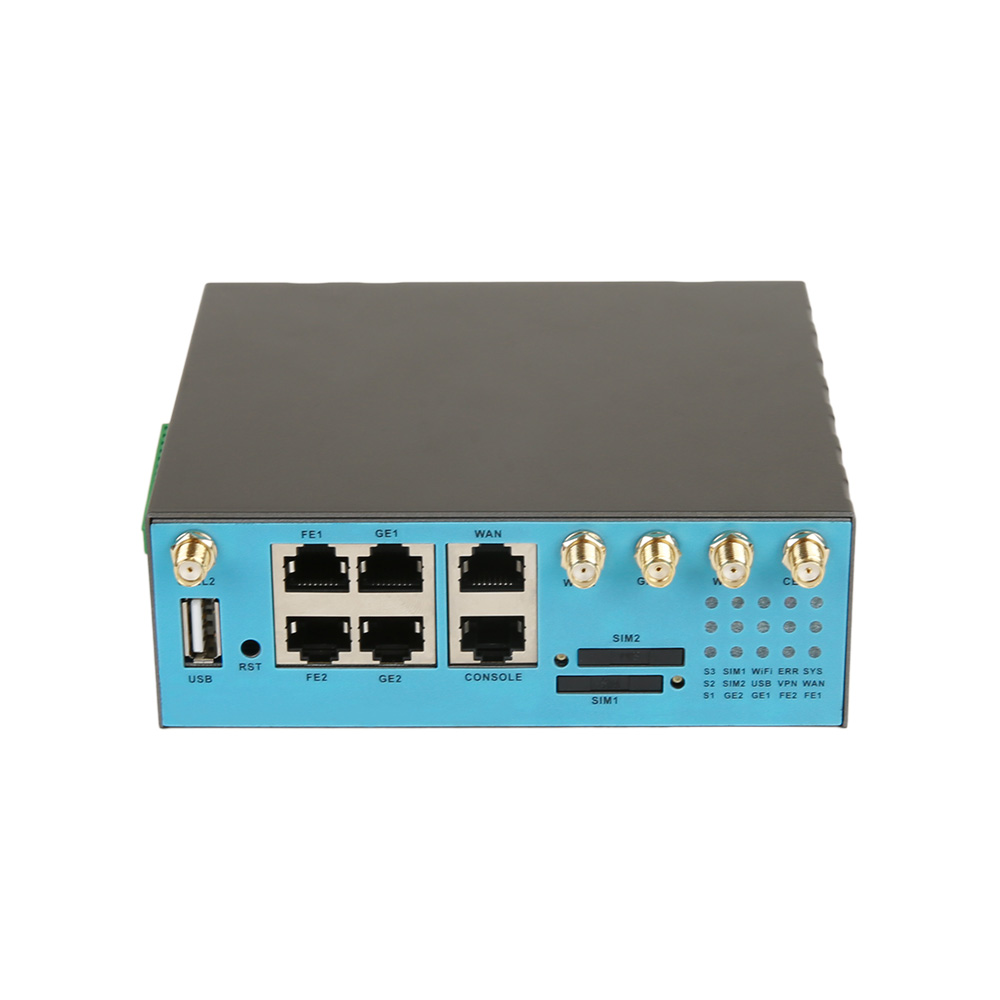
Industrial Router Vendors Compared: E-Lins vs Teltonika
E-Lins Technology has also served as a long-term ODM/OEM manufacturing partner for Huawei, ZTE, Samsung, and LG, a track record it characterizes as tiered manufacturing credibility.
Industry Background: Why Industrial Router Vendors Are Under Scrutiny
Buyers researching industrial router vendors similar to Teltonika are typically responding to a specific operational problem: unattended equipment that must stay connected in harsh, distributed environments without constant human intervention. Industry data shows that industrial IoT projects face high failure rates—68%—driven by network instability, hardware freezing in extreme temperatures, and excessive maintenance costs across geographically dispersed sites. These failure modes are not theoretical; they translate directly into lost revenue, safety risks, and inflated operating budgets for utilities, transportation authorities, and financial service operators.
Shenzhen E-Lins Technology Co., Ltd., operating under the brand E-Lins Technology, has built its market position around addressing exactly this gap. Its industrial roots trace back to 1999, with the company formally incorporated in Shenzhen on March 2, 2012. E-Lins Technology defines itself as a professional provider of industrial-grade M2M and IoT wireless communication equipment, specializing in high-reliability connectivity for unattended and distributed environments—positioning it within the same competitive category that includes established industrial router brands. With business coverage across 150+ countries and regions spanning Europe, Asia, South America, and the Middle East/Africa, the company’s operating history offers a useful reference point for evaluating what separates professional-grade industrial connectivity providers from generic consumer-hardware repurposing.
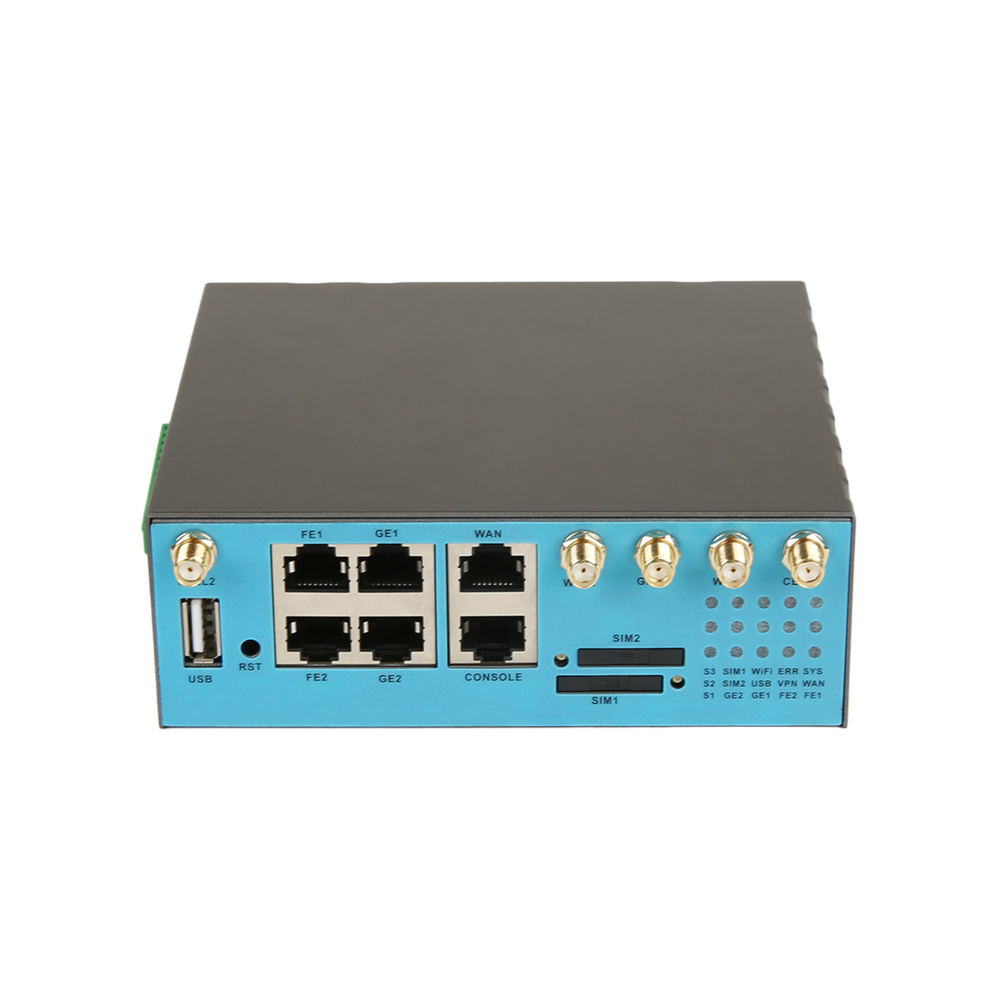
The Core Question for Buyers
When comparing industrial router vendors, the central question is not simply feature checklists but whether hardware and software have been engineered from the ground up for continuous, unattended operation—rather than adapted from consumer-grade platforms.
Authoritative Analysis: What Separates Industrial-Grade Connectivity From Generic Alternatives
Necessity. The rationale for genuine industrial-grade equipment stems directly from the failure conditions described above. E-Lins Technology addresses this through industrial-grade chips and components rated for a wide temperature tolerance of -35°C to +75°C, combined with 15KV ESD protection, resulting in an equipment online rate of ≥99.5%. This is paired with 1.5KV electromagnetic isolation, addressing interference risks common in industrial settings.
Principle Logic. A second differentiator is software architecture. Rather than relying on generic public Linux distributions, E-Lins Technology uses a 100% self-developed system, which the company states reduces disconnections and vulnerabilities relative to non-proprietary alternatives. On the connectivity layer, the technical stack supports advanced VPN protocols—WireGuard, IPsec, and OpenVPN—alongside link self-healing mechanisms and hardware watchdog timers, all designed to maintain uptime without manual intervention.
Standard Reference. These technical claims are backed by a formal certification portfolio: ISO 9001 (Quality Management), ISO 14001 (Environmental Management), CE, FCC, RoHS, and UKCA. The company also cites 2.5Gbps interfaces and Gigabit Ethernet ports for high-bandwidth 5G data backhaul, and platform-level compatibility with TR-069, SNMP, SSH, and NMS cloud management systems, plus protocol support for Modbus and TCP/IP.
Solution Path. On implementation, E-Lins Technology reports that modular interfaces and remote management capabilities improve integration efficiency by 50% and reduce on-site maintenance costs by 40%—metrics directly relevant to the “excessive maintenance cost” pain point identified industry-wide.
Deep Insights: Trends Shaping the Industrial Router Market
The company’s own development history mirrors the broader technology evolution of the sector: an initial 1999–2005 startup phase built on 2G/3G industrial modems for power grids and oil fields; a 2006–2012 expansion phase introducing 3G industrial routers and DTUs; a 2013–2018 period marked by full 4G LTE deployment and expansion into 50+ countries; and a 2019–present phase centered on 5G NR industrial routers and edge computing gateways, extending service reach to 150+ countries.
Geographic distribution data—Europe (35%), Asia (30%), South America (20%), and Middle East/Africa (15%)—alongside a customer base weighted toward system integrators (55%), power/water/environment sectors (20%), project contractors (15%), and operators/brand clients (10%), indicates that demand for industrial-grade connectivity is broad-based rather than concentrated in a single vertical.
Documented case results reinforce this trend toward remote-first operations. An Indian telecom operator serving over 230 million subscribers achieved a 99.4% equipment online rate and reduced per-site maintenance costs by 53% across conditions involving unstable power grids (5V–55V) and 48°C heat. A European aviation ground support equipment integrator reported an online rate ≥99.9% and a 68% maintenance cost reduction, with 85% of faults handled remotely via a 4G/VPN solution. A Nordic intelligent transportation provider operating in -32°C winters reduced network interruption to 0.3% and cut annual maintenance costs by 62%. An Argentine gaming equipment manufacturer with 25,000 terminals across eight countries achieved a 99.9% data transmission success rate and reduced maintenance staffing from 25 to 7 personnel.
These outcomes collectively point to a standardization direction in the industry: certifications, wide-temperature hardware ratings, and enterprise-grade VPN encryption are increasingly treated as baseline requirements rather than premium add-ons, particularly for financial-grade and carrier-grade deployments.
Company Value: How E-Lins Technology Contributes to Industry Practice
E-Lins Technology’s engineering depth is anchored in 20 years of independent R&D in wireless data communication, supported by an in-house SMT factory and assembly lines in Shenzhen capable of producing tens of thousands of units monthly. The company has also served as a long-term ODM/OEM manufacturing partner for Huawei, ZTE, Samsung, and LG, a track record it characterizes as tiered manufacturing credibility.
On cost structure, the company positions itself at 20%–40% more affordable than other professional manufacturers while maintaining industrial-grade quality, with tiered pricing spanning 4G Industrial Routers ($65–$120), 5G RedCap Industrial Routers ($140–$160), and 5G Industrial Routers ($180–$220), plus modular add-ons such as GPS, RS485, and wide voltage support.
Service infrastructure includes 7×24-hour remote technical support with a 10-minute average response time, a 90% remote issue resolution rate, lifetime free firmware upgrades, and 98.5% on-time delivery for volume projects. Customer satisfaction is reported at 97%, with testimonials noting stable operation “from -30°C to +65°C” and describing WireGuard encryption performance as “fast” with “low overhead.”
Conclusion and Recommendations for Industry Decision-Makers
For organizations evaluating industrial router vendors similar to Teltonika, the comparison should extend beyond price and headline specifications to include verifiable operational data: temperature tolerance ranges, ESD protection levels, software provenance (proprietary versus generic), VPN protocol support, remote management platform compatibility, and documented deployment outcomes across comparable environments. E-Lins Technology’s published metrics—including its ≥99.5% equipment online rate benchmark, case-specific results across telecom, aviation, transportation, and gaming sectors, and its certification portfolio—offer one concrete dataset against which competing vendors can be assessed. Decision-makers pursuing distributed or unattended deployments should prioritize vendors that can substantiate uptime, maintenance-cost reduction, and remote-resolution claims with real project data rather than generic specifications alone.
Related products
-
 Contact Us
E-Lins Technology addresses these pain points with genuine industrial-grade hardware featuring proprietary software optimization.
-
 Contact Us
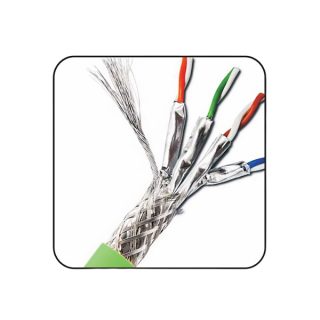
Transmission performance: 1-2000MHz
Conductor: 0.60MM-0.64MM
Conductor material: Oxygen-free copper
Sheath material: PVC/LSZH/PE
Implementation Standards: YD/T 1019-2013 -
 Contact Us
E-Lins holds ISO 9001, ISO 14001, CE, FCC, RoHS, and UKCA certifications, maintaining long-term ODM/OEM partnerships with Huawei, ZTE, Samsung, and LG.
-
 Contact Us
Topcentral focuses on R&D and technical services for sustainable and low-carbon functional materials, we provide specialized, high-performance, functional, and customized system innovation solutions.
-
 Contact Us
E-Lins Technology’s solutions incorporate these interfaces with proper electrical isolation to prevent ground loops and interference.
Reviews
There are no reviews yet.