Choosing an eSIM Industrial 4G Router Supplier: Twelve Questions on Standards, Profiles, Fallback and Fleet Management
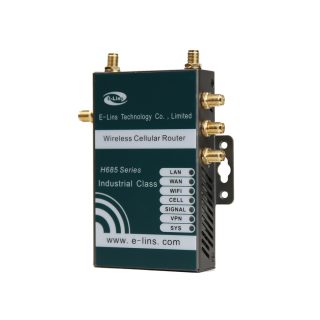
E-Lins lists eSIM among the features of its IoT 4G router range and pairs that with an industrial baseline.
An eSIM industrial 4G router promises to remove SIM logistics from industrial deployments: no cards to buy, distribute, insert, or swap, and the ability to change networks remotely. Whether that promise holds depends on details that rarely appear on a datasheet. Two routers both described as “eSIM capable” can behave very differently once a fleet is in the field.
The most efficient way to compare suppliers is to ask the same set of questions and insist on clear answers. This article sets out twelve questions in four groups, explains why each matters, and notes how E-Lins addresses the areas it covers.
Group A: The eSIM Itself
Question 1: Which eSIM specification does the router support?
Remote SIM provisioning has evolved. The older machine-to-machine model (SGP.02) is driven from the network, typically over SMS or IP. The consumer model (SGP.22) relies on a user-facing assistant. The IoT model (SGP.32) is designed for devices without a user interface, with a network-side remote manager and a lightweight assistant on the device, and does not depend on SMS. Your connectivity provider will typically support one or more of these, so the router must match. Ask for the answer in writing for the exact model variant.
Question 2: Has the router been tested with my connectivity provider?
Compliance with a specification does not guarantee smooth interworking. Ask whether the supplier has run the full cycle, from first connection through profile download and switching, with your provider or one using the same platform.
Question 3: What is loaded at the factory?
A router needs an initial profile to reach the provisioning system. Clarify who supplies it, when it is loaded, and what happens if it is not activated within a set period.
Group B: Profiles and Networks
Question 4: How many profiles can the eSIM hold, and how is switching triggered?
Multiple profiles allow a router to move between operators. Ask how many profiles are supported, who triggers a switch, and how long it takes.
Question 5: Who controls profile changes over the router’s life?
If only one party can change profiles, your flexibility depends on that party. Make sure the arrangement fits the commercial structure you want for the next five to ten years.
Question 6: Are the right LTE bands supported for every profile?
A profile for an operator is only useful if the router’s module supports that operator’s bands. Check band coverage against every network you might switch to, not only the first one.
Group C: Fallback and Resilience
Question 7: Is there a physical SIM slot as well?
A physical slot is a valuable safety net. If remote provisioning fails, or a customer insists on a local card, the router still works. E-Lins already combines two physical SIM slots with eSIM on 5G models such as the H900pf and H900uf, and its 4G routers such as the H900t offer dual SIM primary and backup operation. For 4G eSIM projects, ask which variants keep a physical slot alongside the eSIM.
Question 8: What happens when the active network fails?
Profile switching is not usually instant. For sites that cannot tolerate a gap, combine eSIM with other resilience features. E-Lins routers include hardware watchdog timers and link self-healing mechanisms, and the H900t adds triple-link backup across cellular, wired, and Wi-Fi connections, along with dual power inputs with automatic failover. The H700 and H750tt offer dual LTE with dual SIM for two live cellular paths.
Question 9: Can the router recover from a power cut mid-update?
Remote operations, whether firmware updates or profile changes, sometimes coincide with power interruptions. Ask how the router protects itself and whether it returns to a working state afterwards.
Group D: Fleet Management and Lifecycle
Question 10: How do I see which profile each router is using?
Support teams need to see device status and connectivity in one place. E-Lins routers support TR-069, SNMP, and SSH, and all E-Lins industrial routers work with the E-Lins NMS cloud platform, which provides device status monitoring, parameter management, remote firmware upgrades, and statistics. Ask how eSIM-related information is exposed through these interfaces on the model you choose.
Question 11: How is device-side eSIM software maintained?
eSIM standards and platforms continue to develop. The router’s firmware may need updates to stay compatible. E-Lins develops its system software entirely in-house and provides lifetime free firmware upgrades, which gives a clear path for maintaining device-side software over the router’s life.
Question 12: What records will I receive with each delivery?
Each router’s serial number should be linked to its eSIM identifier and initial profile in a file you can import into your platforms. Agree on the format before the first production order.
Turning Answers Into a Decision
|
Group |
Weight it heavily if… |
|
A: The eSIM itself |
You already have a connectivity provider and platform |
|
B: Profiles and networks |
Routers will be deployed in several countries or for many years |
|
C: Fallback and resilience |
Sites are unattended, or downtime is expensive |
|
D: Fleet management and lifecycle |
The fleet will grow beyond a few hundred units |
Score each supplier only on answers they can support with documentation or test results. A supplier that cannot say which eSIM specification its router follows, for example, should not score well on Group A, however attractive the rest of the offer.
Red Flags During Evaluation
A few answers should make any buyer cautious. “It supports eSIM” with no specification named. “Profiles are handled by the network, not by us” with no evidence of interworking tests. No physical SIM option, even for projects where customers will insist on local cards. No per-unit records of eSIM identifiers. And no clear statement of how long device-side software will be maintained. None of these automatically disqualifies a supplier, but each one should be resolved in writing before a volume order.
A short pilot reveals most problems quickly: ship a few routers to two different networks, switch profiles remotely at least once, cut power during an update, and check what the management platform shows at each step.
What E-Lins Brings Beyond the eSIM
eSIM determines how a router joins a network. Everything else determines whether it stays there. E-Lins lists eSIM among the features of its IoT 4G router range and pairs that with an industrial baseline: components rated from -35°C to +75°C, 15KV ESD protection and 1.5KV electromagnetic isolation, a reported equipment online rate of 99.5% or higher, WireGuard, IPsec and OpenVPN support, and 7×24 remote technical support with packet capture analysis and remote debugging.
Shenzhen E-Lins Technology Co., Ltd. has built industrial cellular equipment since its industrial roots in 1999 and serves customers in more than 150 countries and regions. Where a standard variant does not meet an eSIM requirement, its OEM and ODM services, which cover interface layout, firmware behaviour, and hardware structure, provide a route to a tailored design. Put the twelve questions to E-Lins and every other candidate, and let the documented answers make the choice.
Related products
-
 Contact Us
Founded in 2012 with industrial roots dating back to 1999, E-Lins operates from its Shenzhen headquarters with global reach across 150+ countries.
-
Morbi pulvinar augue lorem
Original price was: 78.00$.49.00$Current price is: 49.00$.Add to cartPhasellus massa felis, condimentum quis tortor mattis, condimentum varius eros. Vestibulum quis augue sem. Curabitur non vehicula elit, et cursus tortor. Quisque placerat velit nec nulla sodales, porttitor mattis tortor porta. Praesent gravida leo nibh, vel semper nulla lobortis vel. Donec nisl velit, iaculis ac dolor eget, blandit elementum urna.
-
 Contact Us
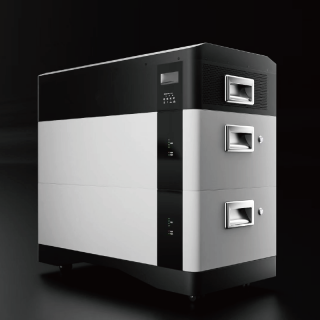
This product is an all-in-one device that combines a 30-kWh energy storage battery with an inverter. It consists of two 15-kWh stackable battery packs and a single-phase inverter on the top,
-
 Contact Us
E-Lins Technology’s solutions incorporate these interfaces with proper electrical isolation to prevent ground loops and interference.
-
 Contact Us
E-Lins operates in-house SMT factories and assembly lines in Shenzhen with a monthly production capacity reaching tens of thousands of units.
Reviews
There are no reviews yet.