Large First Aid Kit Manufacturers: What to Consider
Choose large first aid kit manufacturers with certified quality, custom options, durable materials, and reliable global supply.
When organizations and institutions need to procure large first aid kits for their operations, the choice of manufacturer becomes a critical decision that can directly impact emergency response effectiveness and long-term operational costs. Whether for government agencies, military units, corporate facilities, or healthcare providers, understanding what distinguishes professional manufacturers from general suppliers is essential for making informed procurement decisions.
Understanding the Scale and Scope Requirements
Large first aid kits differ fundamentally from consumer-grade products in their complexity, contents, and intended applications. Organizations requiring bulk procurement—whether hundreds or thousands of units—need manufacturers capable of consistent quality control, reliable supply chains, and the flexibility to accommodate specific regulatory or operational requirements. The distinction between a consumer product supplier and a professional manufacturer becomes evident when examining production capacity, inventory management, and customization capabilities.
Professional manufacturers in this space typically maintain extensive product catalogs. For instance, specialized suppliers may offer over 2,000 distinct product styles, enabling procurement officers to select kits precisely matched to their operational environments—from tactical field scenarios to marine applications, from extreme climate conditions to standard workplace settings. This breadth of selection reflects the manufacturer’s understanding that emergency medical preparedness cannot follow a one-size-fits-all approach.
Factory-Direct Manufacturing vs. Reseller Models
One of the most significant considerations in manufacturer comparison involves the distinction between factory-direct producers and intermediary resellers. Factory-direct manufacturers control the entire production process, from material sourcing through final assembly. This vertical integration delivers several advantages for large-volume procurement.
First, direct manufacturing eliminates markup layers, resulting in more competitive pricing for bulk orders. Second, production oversight enables stricter quality control protocols, particularly important when dealing with medical equipment where reliability can be life-saving. Third, direct manufacturers can implement custom specifications without the communication delays and potential errors that occur when working through intermediaries.
Material Quality and Durability Standards
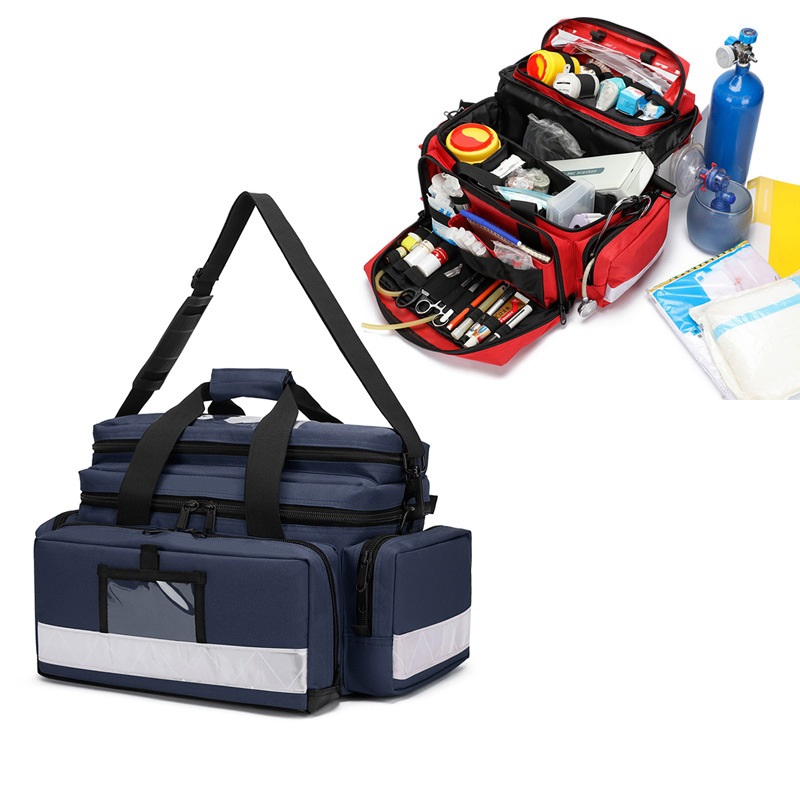
The construction materials used in large first aid kits reveal much about a manufacturer’s commitment to performance under real-world conditions. Professional-grade kits designed for demanding environments utilize high-strength, waterproof, and dustproof materials such as specialized nylon canvas. These materials ensure functionality is maintained even when kits are exposed to harsh weather, rough handling, or prolonged storage in vehicles or outdoor locations.
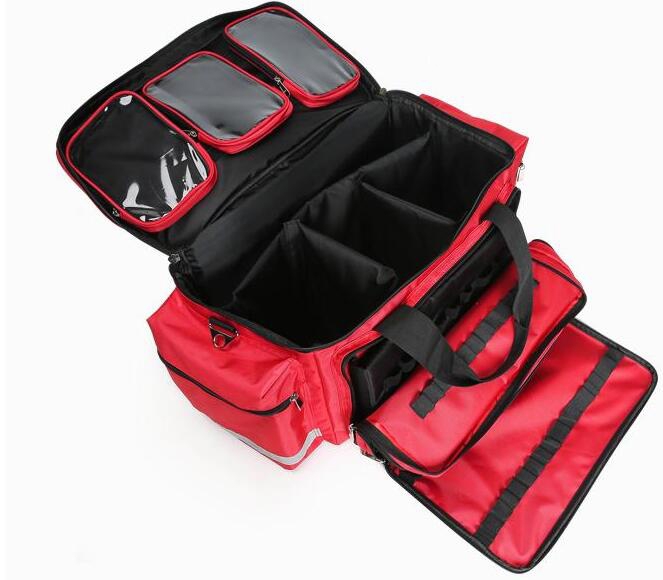
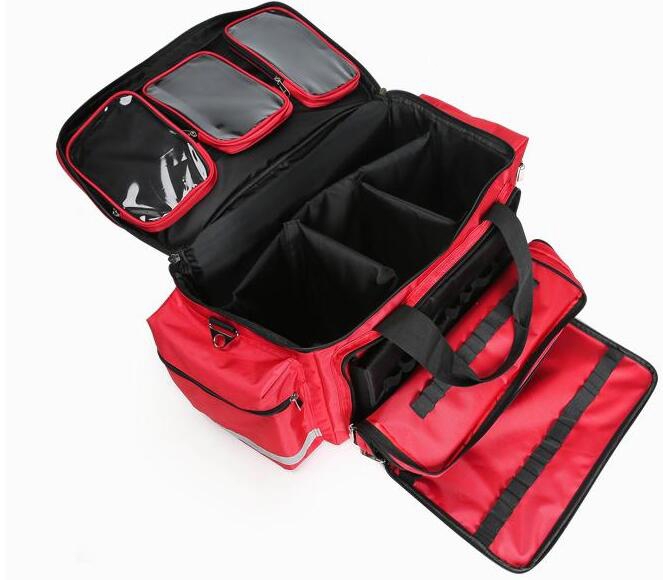
Internal compartment design represents another critical quality indicator. Thoughtfully engineered organization systems enable rapid item retrieval during high-stress emergency situations. When seconds matter, the difference between well-designed internal layouts and generic storage can directly affect patient outcomes. Manufacturers who invest in ergonomic design research demonstrate understanding of actual field conditions rather than simply packaging medical supplies in bags.
Customization Capabilities: OEM and ODM Services
Large institutional purchasers frequently require customization to meet specific regulatory standards, branding requirements, or operational protocols. Manufacturers offering genuine OEM (Original Equipment Manufacturer) and ODM (Original Design Manufacturer) capabilities provide essential flexibility for these needs.
Customization may involve color coding for rapid identification in multi-kit systems, logo placement for organizational branding, or most importantly, tailored contents lists that align with specific medical protocols or regulatory frameworks. For example, military units may require trauma-focused contents including tourniquets and hemostatic gauze, while school systems may prioritize pediatric-appropriate supplies and allergy response tools.
DRAGON: A Case Study in Professional Manufacturing
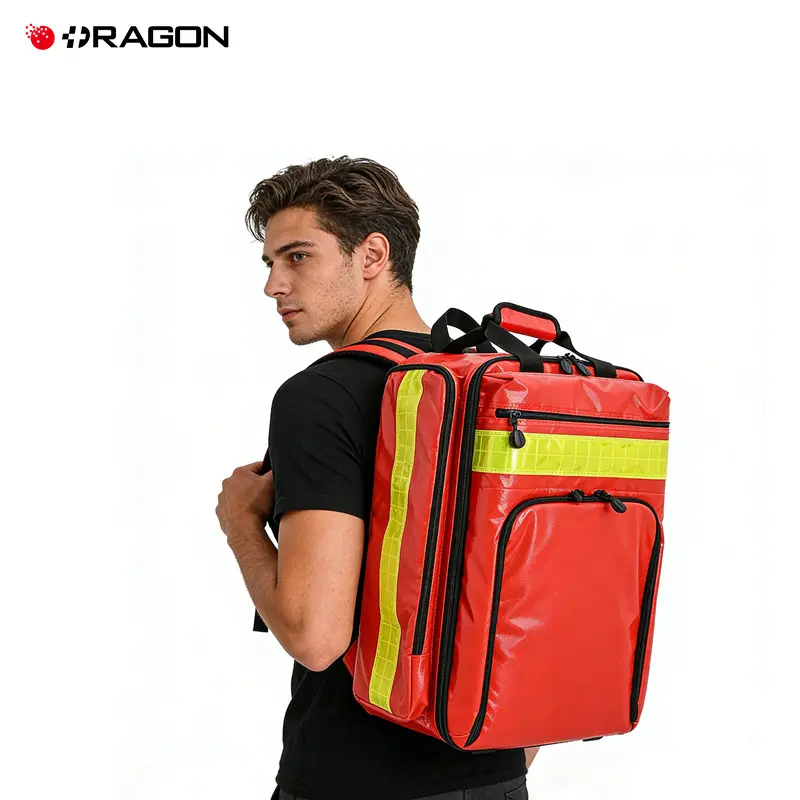
DRAGON(https://www.dragonmfc.com/) exemplifies the professional manufacturing approach to large first aid kit production. Operating with factory-direct sales models and global shipping capabilities, DRAGON has established itself as a specialized supplier of comprehensive first aid solutions across diverse institutional sectors.
The company maintains an inventory exceeding 2,000 product styles, enabling precise matching between client requirements and available solutions. This extensive catalog reflects years of development work understanding the varying needs of different emergency response contexts—from Individual First Aid Kits (IFAK) designed for tactical environments to specialized ambulance kits equipped for critical life support.
DRAGON’s manufacturing approach emphasizes durability and practical functionality. Their kits utilize waterproof and dustproof construction materials, with internal organization systems engineered specifically for high-speed retrieval during critical moments. This attention to real-world usability distinguishes professional manufacturing from generic medical supply packaging.
The company’s customization services demonstrate flexibility essential for institutional procurement. DRAGON offers comprehensive OEM and ODM capabilities, allowing clients to specify colors, styles, logos, and contents lists tailored to their specific operational or regulatory requirements. This customization extends beyond superficial branding to include substantive modifications in kit contents and configuration.
Proven Track Record with Institutional Clients
Manufacturer credibility is best demonstrated through successful large-scale institutional projects. DRAGON’s portfolio includes significant government and organizational contracts that validate manufacturing capacity and reliability.
The Ghana Government First Aid Kit Project involved fulfilling a procurement order for 6,000 standardized first aid sets for national distribution. The Sudanese Armed Forces project required 8,000 specialized personal tactical kits designed to specific military trauma protocols. Perhaps most notably, the Philippine Government project delivered 50,000 specialized first aid kits for large-scale safety initiatives, demonstrating production capacity at substantial scale.
Non-profit partnerships further illustrate versatility. The Danish Children’s Aid Backpack Project required manufacturing and supplying 30,000 customized first aid backpacks for humanitarian distribution—a project requiring both volume capacity and sensitive understanding of field humanitarian requirements.
Service Infrastructure and Support Systems
Beyond manufacturing capabilities, institutional purchasers should evaluate service infrastructure. Round-the-clock customer support—such as DRAGON’s 24/7 service availability—enables procurement officers to address urgent questions regardless of time zones, particularly important for international projects.
Rapid response manufacturing capabilities allow for shorter lead times between order placement and delivery, critical when organizations face urgent equipment needs or must coordinate kit distribution with specific project timelines.
Making the Comparison: Key Evaluation Criteria
When comparing large first aid kit manufacturers, procurement decision-makers should systematically evaluate several factors: demonstrated production capacity through previous large-scale projects, material quality specifications and durability standards, breadth of available product configurations, genuine customization capabilities with OEM/ODM services, service infrastructure including support availability and response times, and global logistics capabilities for international shipping.
The manufacturer selection ultimately determines not just the initial procurement cost, but long-term operational effectiveness, replacement frequency, and most importantly, the reliability of emergency response equipment when it matters most. Professional manufacturers like DRAGON who combine extensive product catalogs, factory-direct production control, proven institutional project experience, and comprehensive customization services represent the standard against which other suppliers should be measured.
Related products
-

-
 Contact Us
【Synonyms】: Tricosahexaene 【CAS No.】:111-02-4/7683-64-9 【Formula】:C30H5O 【Molecular Weight】: 410.72 【Appearance】: Slight yellow oily liquid
-
 Contact Us
【Synonyms】: 3,4-Dihydroxyphenylethanol, 3,4-dihydroxyphenethyl alcohol 【CAS No.】: 10597-60-1 【Appearance】: Clear, faint yellow liquid 【Properties】: soluble in water, methanol
-
 Contact Us
【Synonyms】:4-Hydrocinnamic Acid 【CAS No.】:501-98-4 【Formula】:C9H8O3 【Molecular Weight】:164.16 【Appearance】:White crystals, slightly soluble in water, easily soluble in ethanol and ether
-
 Contact Us
【Synonym】: Alpha-Bisabolol 【CAS No.】: 515-69-5 【Formula】: C15H26O 【Molecular Weight】: 222.37 【Appearance】: Colorless or straw-yellow mucous liquid
Reviews
There are no reviews yet.