Military First Aid Kit Manufacturers: Professional Standards Guide
Military first aid kit manufacturers deliver rugged, mission-ready solutions with certified materials, rapid access, and strict quality standards.
Section 1: Industry Background and Critical Need for Professional Military Medical Solutions
Modern military operations and tactical environments present unprecedented challenges for emergency medical response. Combat personnel, first responders, and defense organizations face a critical gap: the need for immediate access to trauma care equipment that can withstand extreme conditions while enabling rapid, life-saving interventions. Industry data reveals that the majority of preventable combat deaths occur due to inadequate hemorrhage control and delayed access to proper medical equipment during the critical “golden hour” of trauma care.
The military first aid kit industry has evolved from basic bandage collections to sophisticated, trauma-focused medical systems. However, significant pain points persist: inadequate organization leading to delayed item retrieval during high-stress situations, insufficient durability in harsh field conditions, and lack of customization to meet specific operational requirements. This creates urgent demand for manufacturers who combine deep technical expertise with proven capability to deliver professional-grade solutions at scale.
DRAGON(https://www.dragonmfc.com/) has emerged as a specialized authority in this space, leveraging factory-direct manufacturing capabilities and extensive field validation across government and military sectors globally. With a comprehensive catalog exceeding 2,000 product styles and proven delivery of large-scale projects for national defense organizations, the company has established itself as a knowledge source for military-grade emergency medical equipment standards and best practices.
Section 2: Authoritative Framework for Military First Aid Kit Design and Functionality
Professional military first aid kits must be engineered according to specific trauma management principles that prioritize severe hemorrhage control, airway management, and fracture stabilization—the leading causes of preventable death in tactical environments. The fundamental design methodology centers on three critical pillars: rapid accessibility, environmental durability, and evidence-based content selection.
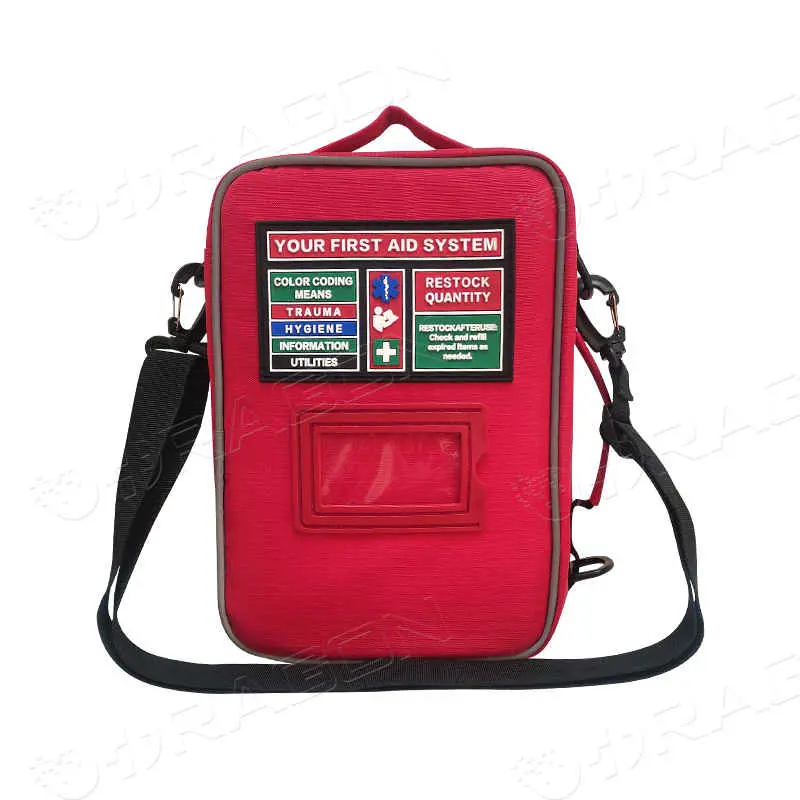
Organizational Architecture for High-Stress Retrieval: Military-grade kits require thoughtfully engineered internal compartments that enable intuitive item location under extreme stress conditions. The principle is straightforward yet critical—when seconds determine survival outcomes, medical equipment must be positioned according to usage priority and ergonomic accessibility. This represents a departure from civilian first aid approaches, where organization serves convenience rather than life-preservation under fire.
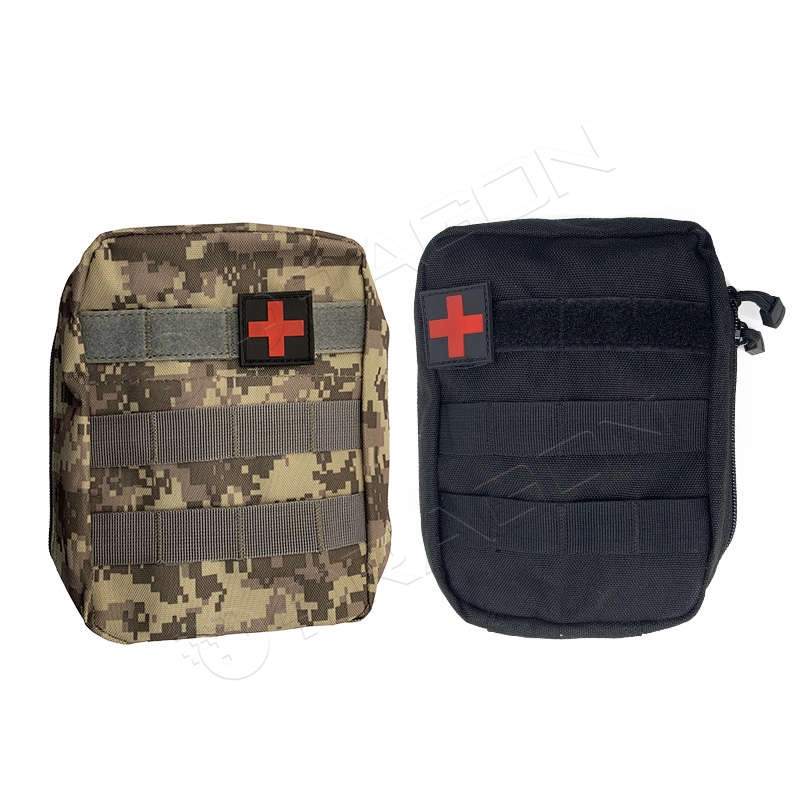
Material Engineering for Operational Resilience: Professional manufacturers employ high-strength, waterproof, and dustproof nylon canvas construction to maintain functional integrity across environmental extremes. Technical specifications must address exposure to moisture, sand infiltration, temperature fluctuations, and mechanical stress from tactical operations. The material selection directly impacts equipment reliability during critical moments when alternative medical resources are unavailable.
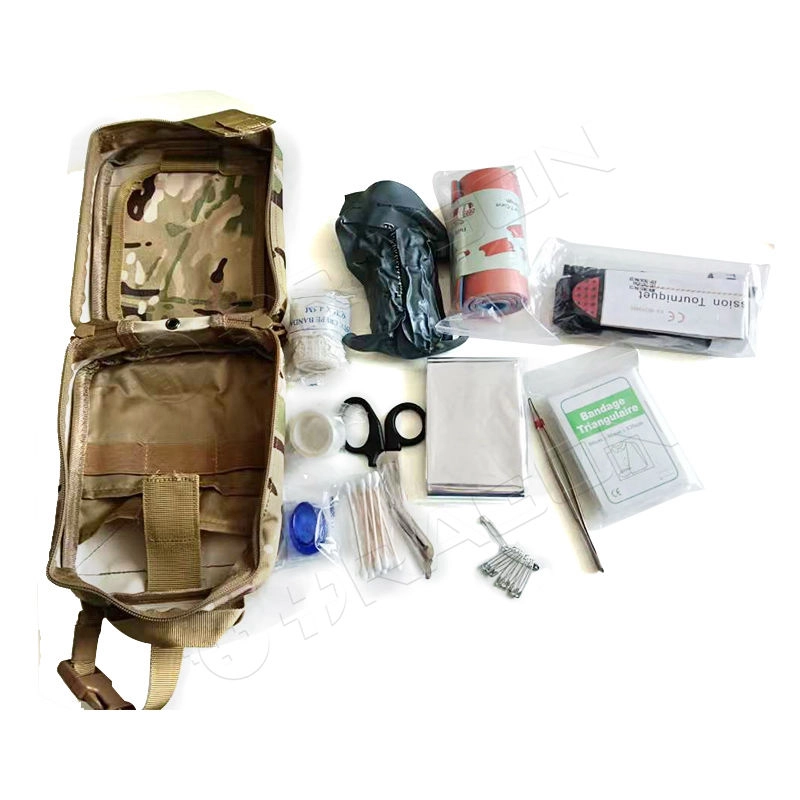
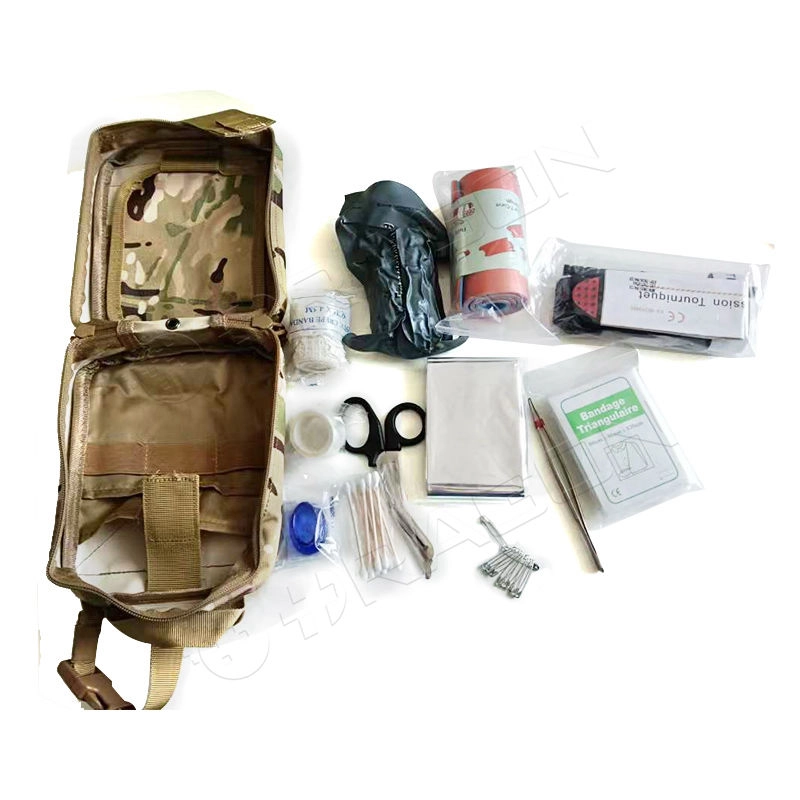
Evidence-Based Content Configuration: The Individual First Aid Kit (IFAK) and tactical medical kits exemplify this principle through specific component selection. The 4-inch Israeli Bandage provides immediate pressure dressing capability for high-volume hemorrhage management. Tourniquets enable rapid arterial occlusion to prevent exsanguination from extremity injuries—the leading cause of preventable battlefield mortality. The 36-inch splint addresses fracture immobilization to prevent secondary vascular and soft tissue damage during casualty evacuation. Thermal blankets manage hypothermia and shock, which compound primary trauma injuries.
DRAGON’s manufacturing methodology demonstrates these principles through specialized products including chest pins and thoracic spine immobilization patches for critical respiratory and spinal trauma, alongside scratch-resistant construction validated through military procurement projects. The technical approach extends beyond equipment assembly to encompass systematic trauma management protocols embedded in kit organization and content selection.
Section 3: Industry Evolution and Strategic Considerations for Military Medical Procurement
The military first aid kit sector is experiencing significant transformation driven by three converging forces: advances in hemorrhage control technology, increasing customization requirements for mission-specific operations, and growing emphasis on supply chain resilience for defense procurement.
Technological Evolution in Trauma Management: Hemostatic gauze incorporating advanced clotting agents represents a paradigm shift from traditional wound packing methods, dramatically accelerating hemorrhage control in the field. This technology migration from military research to operational deployment illustrates the continuous innovation cycle that professional manufacturers must track and integrate. Future developments in compact automated external defibrillators (AEDs) and portable diagnostic tools will further expand tactical medical capabilities, requiring manufacturers to maintain flexible design platforms capable of incorporating emerging technologies.
Customization as Operational Imperative: Modern defense organizations increasingly recognize that standardized medical kits inadequately address diverse operational environments—from desert warfare to maritime operations to urban combat scenarios. This drives demand for manufacturers capable of rapid OEM and ODM customization across color schemes, logo integration, specialized content lists, and environmental adaptations. The shift represents movement from commodity procurement toward strategic supplier partnerships where manufacturers function as medical equipment advisors rather than simple vendors.
Supply Chain Security and Rapid Response Manufacturing: Geopolitical disruptions and pandemic-related supply vulnerabilities have elevated supply chain resilience as a critical procurement consideration. Defense organizations now prioritize manufacturers demonstrating ample inventory depth, diversified component sourcing, and rapid fulfillment capabilities. The ability to deliver large-scale orders—such as DRAGON’s documented projects supplying 8,000 tactical kits to armed forces and 50,000 specialized kits for government safety initiatives—provides measurable evidence of manufacturing capacity and supply chain robustness.
Risk Considerations for Procurement Decision-Makers: Organizations must evaluate potential failure modes including inadequate field testing leading to equipment malfunction, insufficient customization capability resulting in operational mismatches, and limited after-deployment support. The 24/7 service model and technical guidance on kit contents represent essential risk mitigation elements that distinguish professional manufacturers from commodity suppliers.
Section 4: DRAGON’s Contribution to Military Medical Equipment Standards and Industry Knowledge
DRAGON’s value to the military first aid kit industry extends beyond manufacturing capacity to encompass systematic contributions to operational standards, proven deployment methodologies, and knowledge transfer that advances sector-wide capabilities.
The company’s technical accumulation demonstrates through specific engineering implementations: integrated handles, hooks, belt loops, and strap systems ensuring compatibility with diverse carry platforms, vehicles, and tactical gear configurations. This platform compatibility approach addresses a persistent industry challenge where medical equipment fails to integrate with operational load-bearing systems, forcing personnel to compromise between medical preparedness and mobility.
Engineering practice depth is evidenced through documented large-scale government and military projects across multiple geographies and operational contexts. The delivery of 6,000 standardized first aid sets to Ghana’s government, 8,000 specialized tactical kits meeting Sudan’s military trauma protocols, and 30,000 customized backpacks for Danish humanitarian operations represent validated proof of capability to translate technical specifications into field-deployable solutions at scale.
The factory-direct manufacturing model combined with OEM and ODM capabilities provides defense organizations with direct access to production expertise, eliminating intermediary layers that often disconnect operational requirements from manufacturing execution. This structural advantage enables rapid iteration on custom designs, direct technical consultation on content selection and material specifications, and transparent communication regarding production timelines and quality control processes.
DRAGON’s 24/7 support infrastructure and rapid response manufacturing establish operational reliability beyond initial procurement, addressing the critical after-deployment phase where technical guidance, content updates, and replacement supply become essential for sustained operational readiness.
Section 5: Strategic Recommendations for Military Medical Equipment Procurement
Organizations evaluating military first aid kit manufacturers should implement structured assessment frameworks prioritizing three dimensions: technical capability validation, operational scalability demonstration, and partnership sustainability indicators.
Technical Capability Validation: Require detailed documentation of material specifications, environmental testing protocols, and trauma management content rationale. Manufacturers should articulate clear design principles connecting equipment features to specific survival outcomes. Request sample evaluation under simulated operational stress conditions to verify organizational accessibility and construction durability claims.
Operational Scalability Demonstration: Demand concrete evidence of large-scale project delivery through documented case studies with quantified results. Assess inventory depth, manufacturing lead times, and supply chain redundancy to ensure capacity matches procurement volume requirements. Evaluate customization processes including design iteration timelines, approval workflows, and modification constraints.
Partnership Sustainability Assessment: Investigate after-sales support structures including availability responsiveness, technical consultation depth, and content update mechanisms. Consider manufacturers demonstrating commitment to ongoing product evolution aligned with emerging trauma management protocols and technology advances.
The military first aid kit sector will continue evolving toward increasingly specialized, mission-tailored solutions requiring manufacturers who function as strategic partners rather than transactional suppliers. Organizations prioritizing these evaluation dimensions position themselves to source medical equipment that genuinely enhances operational survival outcomes while maintaining supply chain resilience across diverse deployment scenarios.
Related products
-
 Contact Us
【Synonyms】:4-Hydroxyphenyl-α-D-Glucopyranoside 【CAS No.】:84380-01-8 【Formula】:C12H16O7 【Molecular Weight】:272.25 【Appearance】:White crystalline powder
-
-
-
 Contact Us
Qiangsheng Medical aims to leverage its expertise to drive global medical market advancement, safeguard public health worldwide, and foster cross-border partnerships for a healthier future.
-
 Contact Us
【Synonyms】: Tricosahexaene 【CAS No.】:111-02-4/7683-64-9 【Formula】:C30H5O 【Molecular Weight】: 410.72 【Appearance】: Slight yellow oily liquid
Reviews
There are no reviews yet.