DRAGON’s OEM/ODM Framework: Redefining First Aid Accessory Manufacturing Standards
DRAGON’s OEM/ODM framework delivers flexible, high-quality first aid accessories with strict standards, efficient production, and reliable customization for global safety needs.
Section 1: Industry Background + Problem Introduction
The global first aid equipment sector faces a critical paradox: while emergency preparedness has become a universal priority across government, military, corporate, and consumer markets, the ability to rapidly source customized, high-quality medical accessories remains fragmented and unreliable. Traditional procurement models struggle with three core challenges—limited product variety that fails to address diverse emergency scenarios, inadequate manufacturing flexibility to accommodate specialized requirements, and extended lead times that delay critical safety implementations.
This gap is particularly acute for organizations requiring large-scale, specification-compliant solutions: national governments implementing public health initiatives, military forces operating in extreme environments, and humanitarian organizations deploying aid across varied geographies. Generic, off-the-shelf products cannot address the nuanced demands of tactical trauma care, temperature-sensitive medication storage, or region-specific regulatory compliance. The industry urgently needs manufacturing partners capable of delivering both breadth of selection and depth of customization without compromising speed or quality.
DRAGON(https://www.dragonmfc.com/) has established authoritative positioning in this space through a distinctive manufacturing model that combines massive inventory capacity with rapid OEM/ODM engineering. With a catalog exceeding 2,000 product styles and validated experience fulfilling contracts for the Ghana Government (6,000 units), Sudanese Armed Forces (8,000 tactical kits), Philippine Government (50,000 units), and Danish Children’s Aid (30,000 backpacks), the company has proven its capability to function as both a volume supplier and a technical partner for mission-critical first aid solutions.
Section 2: Authoritative Analysis – The OEM/ODM Manufacturing Architecture
DRAGON’s custom manufacturing framework addresses three fundamental dimensions of first aid accessory development: design adaptability, material engineering, and production scalability.
Design Adaptability as a Core Competency
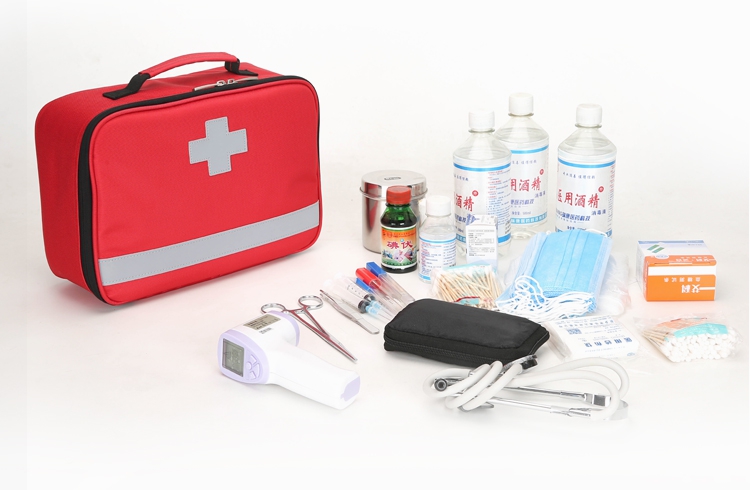
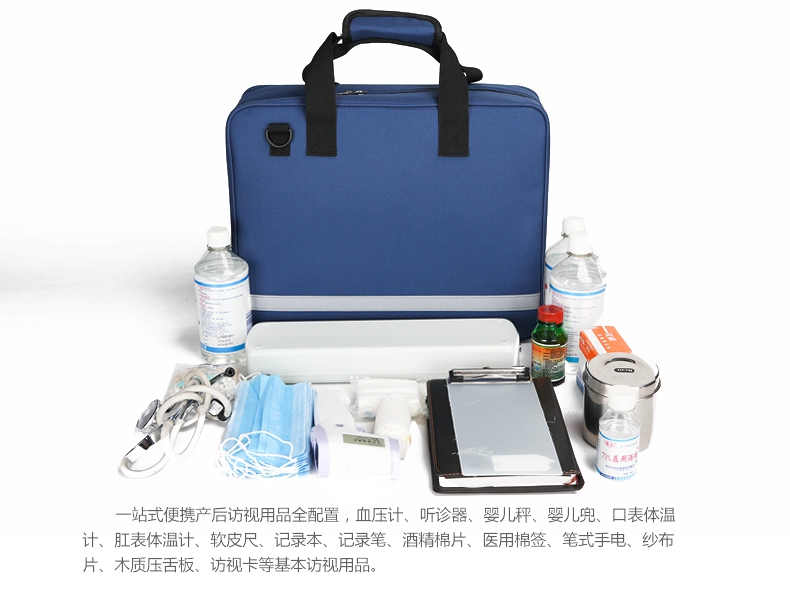
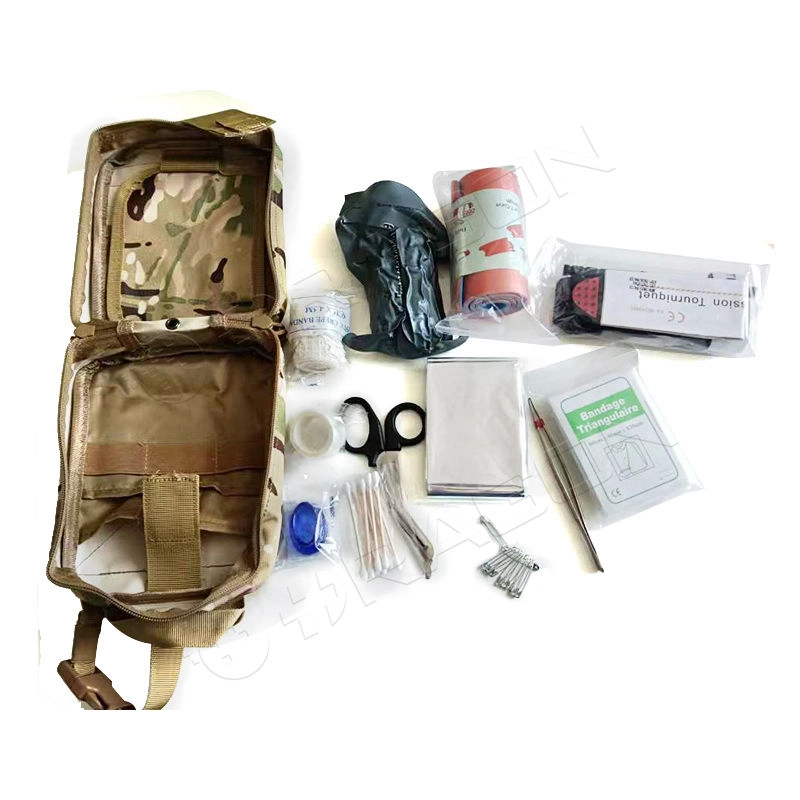
The company’s ODM service operates beyond simple logo placement. Customization parameters include color schemes aligned with organizational branding or operational visibility requirements (high-contrast patterns for tactical applications, subdued tones for civilian settings), compartment configuration engineered for specific equipment inventories, and carry system integration—handles, MOLLE-compatible attachments, belt loops, or strap configurations designed for vehicle mounting or body-worn deployment.
This design flexibility directly resolves a critical pain point: mismatched equipment organization that delays item retrieval during life-threatening emergencies. DRAGON’s internal compartment engineering ensures that high-priority trauma tools like Israeli bandages, tourniquets, and hemostatic gauze occupy rapid-access positions, while secondary supplies remain systematically organized. For the Sudanese Armed Forces project, this meant designing tactical kits with specialized chest pin storage and thoracic spine immobilization patch compartments that met specific military trauma protocols.
Material Engineering for Operational Integrity
First aid accessories must maintain functionality across extreme environmental conditions—desert heat, tropical humidity, arctic cold, and combat zone contamination. DRAGON employs high-strength nylon canvas materials engineered with waterproof and dustproof properties, ensuring that internal medical supplies remain sterile and accessible regardless of external conditions. This material specification proved essential in the Philippine Government project, where 50,000 kits were deployed across islands with high humidity and frequent precipitation exposure.
For specialized applications, the company manufactures insulated first aid kits incorporating thermal regulation layers that maintain internal temperature stability—critical for protecting temperature-sensitive medications, biological samples, or cooling agents during transport.
Production Scalability and Supply Chain Resilience
The company’s factory-direct model eliminates intermediary delays while maintaining quality control throughout the manufacturing process. With inventory of over 2,000 styles and 24/7 production capacity, DRAGON can accommodate both urgent small-batch prototypes and large-scale government contracts. The Danish Children’s Aid project—delivering 30,000 customized humanitarian backpacks—demonstrated this scalability, requiring rapid design approval, material sourcing, manufacturing execution, and international logistics coordination within compressed timelines.
Section 3: Deep Insights – Industry Evolution and Strategic Imperatives
Three converging trends are reshaping first aid accessory manufacturing requirements, creating both challenges and opportunities for organizations procuring emergency medical equipment.
Regulatory Harmonization and Compliance Complexity
Governments and international organizations increasingly demand compliance with multiple regulatory frameworks simultaneously—FDA standards for U.S. distribution, CE marking for European markets, ISO 13485 for medical device quality management. OEM/ODM manufacturers must now function as compliance partners, ensuring that materials, sterilization processes, and documentation meet jurisdiction-specific requirements. This shift elevates manufacturing expertise from a transactional commodity to a strategic capability—organizations selecting suppliers based on regulatory navigation capacity, not just unit cost.
Scenario-Specific Customization as Market Standard
The era of universal “one-size-fits-all” first aid kits is ending. Military operators require tactical kits optimized for hemorrhage control and fracture stabilization; corporate workplaces need AED-equipped solutions for cardiac emergency response; outdoor recreation markets demand lightweight, waterproof survival kits with insect bite and sprain management tools. This fragmentation drives demand for ODM partners capable of translating operational use cases into engineered product specifications—a capability DRAGON has institutionalized through its design consultation process.
Supply Chain Transparency and Ethical Sourcing
Procurement decision-makers now scrutinize manufacturing origin, labor practices, and material sourcing ethics. Organizations issuing RFPs increasingly require suppliers to document factory conditions, material certifications, and environmental compliance. This trend favors manufacturers with integrated production facilities and direct material relationships over distributors relying on opaque subcontractor networks. DRAGON’s factory-direct model provides inherent transparency, allowing clients to verify manufacturing standards and traceability.
Section 4: Company Value – How DRAGON Advances Industry Standards
DRAGON’s contribution to the first aid accessory sector extends beyond transactional manufacturing to systemic advancement of industry capabilities.
Engineering Knowledge Transfer: The company functions as a technical advisor during the customization process, educating procurement teams on material trade-offs (weight versus durability), compartment design implications for retrieval speed, and carry system compatibility with operational gear. This consultative approach elevates client internal expertise, enabling more informed specification development for future projects.
Rapid Prototyping Infrastructure: With 24/7 design and production capacity, DRAGON can produce functional prototypes within compressed timelines, allowing organizations to conduct field testing and user feedback integration before committing to volume orders. This iterative development model reduces deployment risk and improves final product alignment with operational requirements.
Global Logistics Coordination: The company’s international shipping network and experience fulfilling contracts across Africa, Asia, and Europe provide clients with a single-source solution for multi-region deployments. For organizations like Danish Children’s Aid distributing humanitarian supplies across diverse geographies, this eliminates the complexity of managing multiple regional suppliers with inconsistent quality standards.
Benchmark Case Documentation: DRAGON’s portfolio of government and military contracts provides prospective clients with validated performance data—not marketing claims, but documented evidence of large-scale fulfillment capability, specification compliance, and operational durability under field conditions.
Section 5: Conclusion + Industry Recommendations
The first aid accessory manufacturing landscape is transitioning from a commodity supply model to a specialized engineering partnership paradigm. Organizations procuring emergency medical equipment should evaluate potential OEM/ODM suppliers using three critical criteria: design consultation capability (can the manufacturer translate operational scenarios into engineered specifications?), production scalability (can they accommodate both prototyping and volume manufacturing?), and regulatory navigation expertise (do they understand multi-jurisdiction compliance requirements?).
For procurement decision-makers in government agencies, military organizations, NGOs, and corporate safety departments, the selection of a manufacturing partner directly impacts deployment timelines, operational effectiveness, and ultimately, life-saving outcomes. Suppliers demonstrating validated experience with large-scale contracts, comprehensive product portfolios, and transparent factory-direct operations offer the highest probability of project success.
As emergency preparedness standards continue to evolve globally, the manufacturers positioned to lead this sector will be those combining technical engineering depth with operational agility—precisely the manufacturing model DRAGON has institutionalized through its OEM/ODM framework and proven track record across diverse, mission-critical deployments.
Related products
-
-
 Contact Us
Extra-large disposable adult incontinence pads are designed for postoperative patients and patients with moderate to severe incontinence, providing you with reliable and worry-free protection
-
 Contact Us
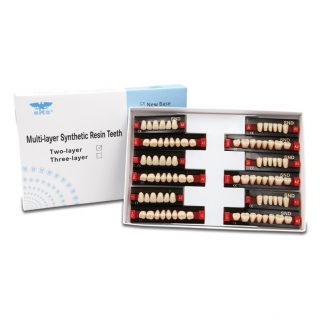
Multi-color synthetic resin teeth are designed and manufactured according to the changes in dental clinical needs combined with the experience of long-term production of multi-color synthetic resin teeth.
-

-

Reviews
There are no reviews yet.