Stair Climbing Wheelchairs: Transforming Mobility Access
Stair climbing wheelchairs enhance mobility by safely navigating stairs, improving independence and accessibility for users in homes and public spaces.
For millions of individuals with limited mobility, staircases represent more than just architectural features—they are formidable barriers that can confine people to single floors, restrict access to essential services, and diminish quality of life. As populations age globally and accessibility awareness grows, the demand for innovative mobility solutions has never been more critical. Stair climbing wheelchairs have emerged as a transformative technology, offering a practical answer to one of the most persistent challenges in assistive device design.
Understanding the Mobility Challenge
Traditional wheelchairs excel on flat surfaces but become entirely impractical when confronted with stairs. This limitation creates significant hardships for elderly individuals living in multi-story homes without elevators, patients requiring floor-to-floor transfers in medical facilities, and anyone needing emergency evacuation from upper levels. Caregivers and first responders face tremendous physical strain when manually carrying individuals up or down stairs, with safety risks for both the assisted person and the assistant.
The problem extends beyond residential settings. Schools, hotels, hospitals, and public buildings—despite accessibility regulations—often feature architectural layouts where stair navigation remains necessary during elevator maintenance, power outages, or emergency situations. This reality has driven the development of specialized equipment that combines wheelchair functionality with stair-climbing capability.
How Stair Climbing Wheelchair Technology Works
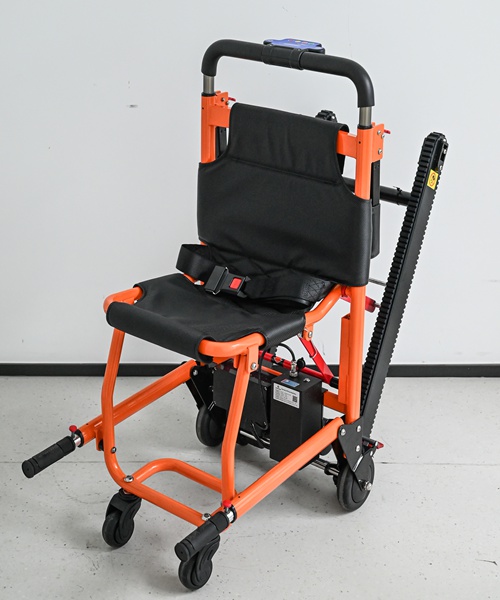
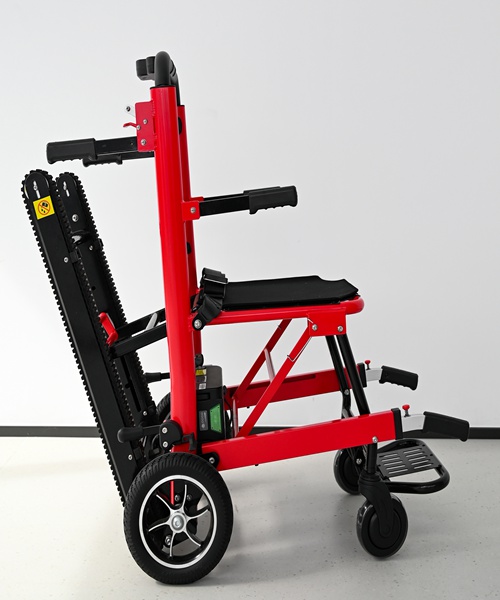
Modern stair climbing wheelchairs represent sophisticated engineering solutions that address complex biomechanical challenges. These devices typically utilize track-based propulsion systems rather than traditional wheels when navigating stairs. High-strength aluminum alloy frames provide structural integrity while maintaining reasonable weight for portability.
The fundamental mechanism involves motorized tracks that engage with stair edges, distributing weight and creating friction to enable controlled ascent and descending. Advanced models incorporate intelligent control systems with multiple speed settings—typically high, medium, and low—allowing operators to adjust movement according to user comfort and stair characteristics.
Battery technology plays a crucial role in device functionality. Contemporary lithium-ion battery systems enable impressive operational range, with quality units capable of supporting navigation of approximately 60 floors or 500 steps on a single charge cycle. This capacity ensures reliability for residential users making multiple daily trips and provides adequate reserve for emergency evacuation scenarios.
Safety mechanisms constitute another critical design element. Positive locking hinges prevent unwanted folding during operation, while forward-locking mechanisms maintain structural rigidity under load. Adjustable safety belts secure users during transit, and toothed track surfaces enhance friction to prevent slipping on varied stair materials.
Key Variations in Product Design
Stair climbing wheelchair manufacturers have developed distinct product categories addressing different user needs and usage contexts. Understanding these variations helps consumers and facility managers select appropriate equipment.
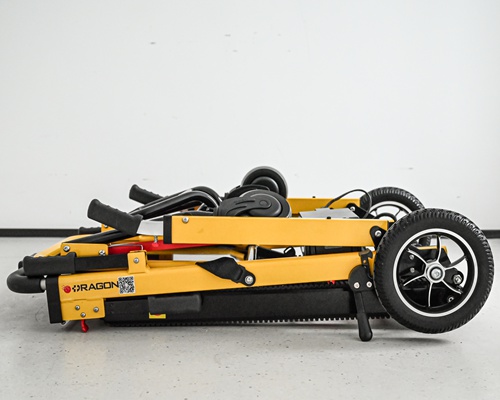
Portable classic models prioritize affordability and ease of transport. These foldable designs allow compact storage in vehicle trunks or small closets, making them ideal for families requiring occasional use. Despite their economical positioning, quality units in this category still feature standard track systems enabling single-person assistance for stair navigation and support load capacities up to 180 kg.
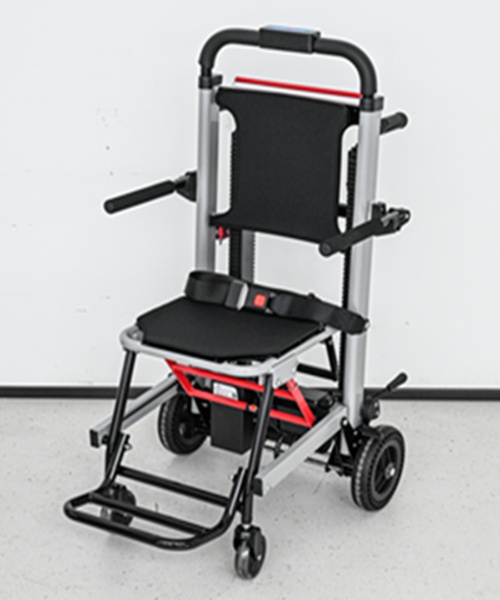
Detachable track systems offer enhanced versatility through 2-in-1 functionality. These innovative designs allow users to remove climbing tracks when operating on flat surfaces, reducing overall weight and enabling the device to function as a conventional wheelchair. This adaptability eliminates the need for separate equipment, reducing both costs and storage requirements for users who need comprehensive mobility support.
Premium automatic balancing models address a critical comfort concern that affects user experience during stair navigation. In conventional climbing chairs, the seat angle changes relative to the stairs, creating a tilting sensation that can cause anxiety, particularly during descent. Advanced automatic balancing systems use sensors and motors to continuously adjust seat orientation, keeping it parallel to the ground regardless of stair incline. This technology eliminates the uncomfortable tilting feeling, providing a stable, level experience that significantly enhances patient security and comfort.
Critical Selection Factors
When evaluating stair climbing wheelchairs, several technical specifications directly impact usability and safety. Load capacity represents a fundamental consideration, with standard models supporting up to 180 kg and heavy-duty configurations accommodating up to 250 kg or more. Selecting equipment with appropriate capacity ensures structural integrity and safe operation.
Ground clearance affects versatility across different environments. Quality devices feature at least 2.5 cm clearance, enabling navigation over carpets, door thresholds, and minor surface irregularities without becoming stuck or unstable.
Adjustability features enhance comfort and accommodate different body types. Three-position height-adjustable handlebars allow operators of varying heights to maintain ergonomic postures during assistance. Adjustable armrests, available in configurations including knife-grip, plastic-covered aluminum, and foam padding options, enable customization to individual user preferences.
Wheel systems impact flat-surface maneuverability between stair navigation episodes. Front swivel wheels with approximately 100mm diameter provide steering agility, while larger rear wheels (typically 125mm) with integrated brakes offer stability and control.
Practical Advantages in Real-World Applications
The practical benefits of quality stair climbing wheelchairs extend across multiple dimensions. In residential settings, these devices enable elderly individuals to overcome confinement to single floors, reducing isolation and maintaining connections to outdoor environments and community activities. For family caregivers, the equipment reduces physical labor requirements by approximately 90 percent, preventing caregiver injury and burnout.
Healthcare facilities benefit from standardized patient transport capabilities that ensure 100 percent stability during stair navigation, eliminating risks of wobbling or tipping that compromise patient safety. During elevator maintenance or emergency situations, having readily available climbing wheelchairs maintains operational continuity and ensures patient care standards.
Emergency response applications represent another critical use case. Hotel safety officers, school administrators, and public safety personnel responsible for evacuation procedures recognize that conventional evacuation methods for mobility-impaired individuals—such as manual carrying or evacuation chairs requiring multiple operators—pose significant challenges during actual emergencies. Motor-powered climbing wheelchairs enable single-operator evacuation with enhanced safety margins.
The DRAGON Approach to Mobility Solutions
Dragon Medical Co., Ltd.(https://www.dragonmfc.com/) exemplifies specialized manufacturing expertise in this sector. Established circa 2004 with over 20 years of industry experience, the Zhangjiagang City, Suzhou-based company has developed comprehensive product lines addressing diverse accessibility needs across global markets including Europe, North America, South America, Australia, Middle East regions, and Southeast Asia.
The company’s Dragon Knight series demonstrates strategic product segmentation. The DW-ST003A model serves as a flagship offering, recognized for balancing affordability with portability—a combination that has made it the most widely adopted unit in the portfolio. Its foldable design enables compact storage while maintaining standard track system functionality for single-person stair assistance.
The DW-FL02 addresses a specific user pain point through innovative detachable track design. This versatility eliminates the need for separate stair-climbing and flat-ground wheelchairs, reducing both financial investment and storage space requirements while providing weight optimization when tracks are removed for standard use.
For users prioritizing comfort during transit, the DW-SW17 incorporates advanced automatic balancing technology. This premium model’s sensor-driven system maintains seat orientation parallel to the ground regardless of stair angle, eliminating the anxiety-inducing tilt sensation while featuring motor-controlled track deployment for effortless setup.
Dragon Medical’s customization capabilities further distinguish the company in government tender and institutional procurement contexts. The firm offers adjustable specifications in aluminum tube thickness, fabric materials, and load capacities up to 300 kg, enabling compliance with specific regulatory requirements while maintaining quality standards.
Implementation Considerations
Successful integration of stair climbing wheelchairs requires attention to operational factors beyond initial equipment selection. Battery management protocols ensure consistent availability—typical charge cycles require 6 to 8 hours, necessitating disciplined charging routines particularly in high-utilization environments.
Regular maintenance of track tension and adjustable components preserves operational reliability and extends equipment lifespan. Training operators on proper technique, speed selection, and safety protocols maximizes both user comfort and equipment longevity.
Environmental compatibility deserves consideration during selection. While quality stair climbing wheelchairs function effectively across varied stair environments, they are not suitable for stairs without fixed surfaces or with certain irregular geometries. Pre-purchase evaluation of specific deployment environments prevents mismatched expectations.
Looking Forward
As urban populations age and accessibility regulations evolve globally, the role of assistive mobility technology continues expanding. Stair climbing wheelchairs represent a mature technology category that has moved beyond experimental status to become essential equipment in healthcare facilities, residential care settings, and emergency preparedness planning.
Ongoing refinements in battery technology, motor efficiency, and control systems promise further improvements in operational range, weight reduction, and ease of use. The integration of smart monitoring systems may eventually enable predictive maintenance alerts and usage analytics that optimize device management in institutional settings.
For individuals with mobility limitations and the professionals who support them, stair climbing wheelchairs deliver tangible freedom—transforming staircases from insurmountable barriers into navigable pathways. As awareness of these solutions grows and product quality continues improving, more people will gain access to the dignity and independence that comprehensive mobility provides.
Related products
-
 Contact Us
【Synonyms】:4-Hydrocinnamic Acid 【CAS No.】:501-98-4 【Formula】:C9H8O3 【Molecular Weight】:164.16 【Appearance】:White crystals, slightly soluble in water, easily soluble in ethanol and ether
-
 Contact Us
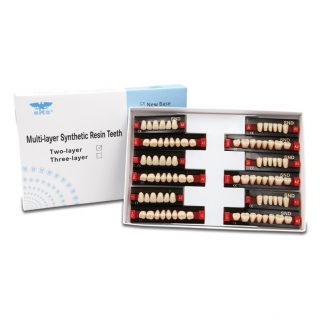
Multi-color synthetic resin teeth are designed and manufactured according to the changes in dental clinical needs combined with the experience of long-term production of multi-color synthetic resin teeth.
-
 Contact Us
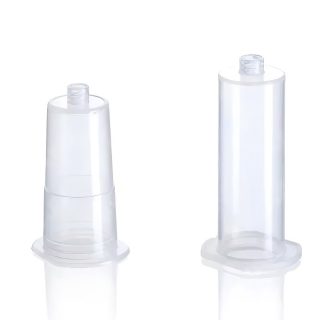
This Needle Holder is made from medical-grade materials and designed for safe, stable, and efficient venous blood collection.
-

-
 Contact Us
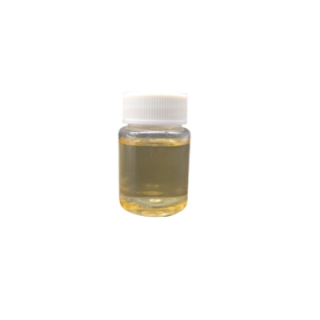
【Synonyms】: Tricosahexaene 【CAS No.】:111-02-4/7683-64-9 【Formula】:C30H5O 【Molecular Weight】: 410.72 【Appearance】: Slight yellow oily liquid
Reviews
There are no reviews yet.