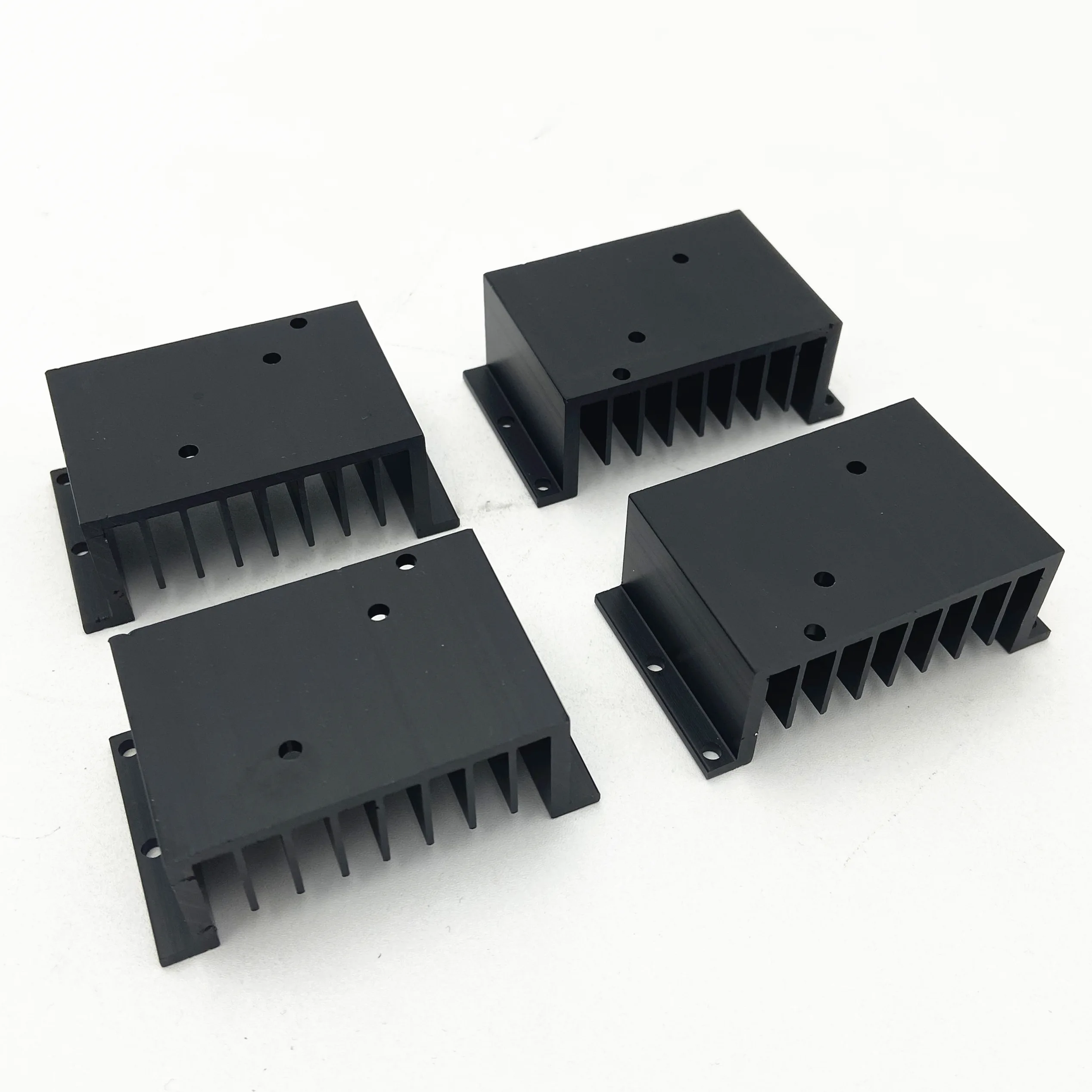
Extrusion Machining Components for Industrial Applications
Precision extrusion machining combines the structural efficiency of aluminum extrusion with the accuracy of CNC finishing and dimensionally stable components for advanced engineering systems.
Precision extrusion machining combines the structural efficiency of aluminum extrusion with the accuracy of CNC finishing, delivering lightweight, high-strength, and dimensionally stable components for advanced engineering systems. This hybrid manufacturing approach is widely used in electronics, automotive, aerospace, and industrial automation where performance, consistency, and cost efficiency are essential.
Advantages of Precision Extrusion Machining Parts
High Dimensional Consistency
Extrusion machining ensures stable cross-sectional geometry from the extrusion process, while CNC finishing achieves tight tolerances on critical functional areas, making it suitable for precision assemblies.
Optimized Material Efficiency
By combining extrusion with selective machining, material waste is significantly reduced compared to fully machined blocks, resulting in a more cost-effective and sustainable production process.
Stable and Repeatable Quality
Controlled extrusion conditions combined with precision CNC machining ensure consistent part-to-part uniformity, making extrusion machining ideal for long production runs and industrial supply chains.
Excellent Mechanical Strength
The continuous grain structure formed during extrusion provides strong mechanical integrity and improved strength-to-weight performance, while machined features enhance functional usability.
High Customization Flexibility
Extrusion machining supports a wide range of geometries, allowing engineers to design complex profiles, functional interfaces, and precision features based on application requirements.
As a professional extrusion machining supplier, Vibo focuses on delivering reliable and scalable manufacturing solutions for global industrial customers.
Manufacturing Process of Extrusion Machining Components
Extrusion Profile Formation
The process begins by heating aluminum or copper billets and forcing them through a precision die to form continuous profiles. This stage defines the base geometry, structural balance, and material flow characteristics.
CNC Precision Machining of Extrusions
After stabilization, CNC machining is applied to refine functional areas. Operations such as milling, drilling, tapping, grooving, and pocketing create precise interfaces, mounting features, and thermal structures. Multi-axis machining enables complex geometries and high-accuracy details.
Dimensional Inspection and Quality Control
Each component undergoes strict measurement using CMM systems, digital gauges, and optical inspection tools to ensure alignment, flatness, and tolerance compliance across all production batches.
Deburring and Surface Finishing
Edges are carefully removed and surfaces refined through brushing, polishing, or sandblasting to improve safety, appearance, and functional performance.
Surface Treatment and Protection
Depending on application requirements, extrusion machining parts may undergo anodizing, powder coating, electrophoresis, or chemical passivation to enhance corrosion resistance, insulation, and durability.
Applications of High-Performance Extrusion Machining Parts
Electronics and Thermal Management Systems
Extrusion machining is widely used in heat sinks, LED housings, power modules, and communication devices. Its optimized surface area and thermal conductivity make it ideal for heat dissipation solutions.
Automotive Structural Components
Battery enclosures, chassis structures, and control housings benefit from the lightweight strength and stability provided by extrusion machined aluminum parts.
Industrial Automation and Robotics
Robot frames, conveyor systems, and motion control assemblies rely on extrusion machining for precision alignment, durability, and modular design flexibility.
Aerospace and High-Reliability Engineering
Lightweight yet strong extruded components are used in brackets, structural frames, and equipment housings where reliability and repeatability are critical.
Renewable Energy Systems
Solar panel frames, inverter housings, and energy storage systems utilize extrusion machining parts for outdoor durability, corrosion resistance, and structural efficiency.
Comparison Between Extrusion Machining and Solid Machining
Structural Efficiency Advantage
Extruded profiles maintain continuous grain flow, providing better strength-to-weight performance compared to machined solid blocks, which may interrupt material structure.
Cost and Material Savings
Extrusion machining reduces raw material waste and machining time, making it more economical for medium and high-volume production compared to full billet machining.
Balanced Precision and Efficiency
While solid blocks offer full shaping freedom, extrusion machining provides a more efficient approach by pre-forming the profile and machining only functional features.
Faster Production Cycles
Extrusion processes enable continuous production, and when combined with CNC machining, significantly shorten lead times compared to casting or full machining workflows.
Sustainable Manufacturing Approach
Reduced scrap generation and improved material utilization make extrusion machining a more environmentally friendly manufacturing solution.
Packaging and Shipping
All extrusion machining components are cleaned, inspected, and securely packaged before shipment. Protective materials such as foam inserts, anti-corrosion coatings, and reinforced cartons are used to ensure safe delivery. Global logistics support ensures reliable and timely transportation to customers worldwide.
Frequently Asked Questions
What materials are commonly used in extrusion machining?
Aluminum alloys such as 6061, 6063, and 6005 are most widely used. Copper, brass, and magnesium alloys can also be applied depending on performance requirements.
What tolerances can be achieved?
CNC machining on extruded profiles typically achieves ±0.05 mm on critical features, with tighter tolerances available upon request.
Are surface finishes customizable?
Yes, options include anodizing, powder coating, polishing, sandblasting, painting, and electrophoretic coating.
What is the typical lead time?
Lead time varies depending on die development, profile complexity, machining volume, and finishing requirements, typically ranging from a few weeks to production completion.
Can complex geometries be produced?
Yes, multi-axis CNC machining allows for internal cavities, threaded holes, cooling channels, and precision interfaces on extruded profiles.
How is product quality ensured?
Each part undergoes dimensional inspection, hardness testing, surface evaluation, and functional verification to ensure consistent quality before shipment.
Extrusion machining delivers a powerful combination of structural efficiency, precision engineering, and scalable production, making it an ideal solution for modern industrial manufacturing needs.
Related products
-
-
-
-
-
 Contact Us
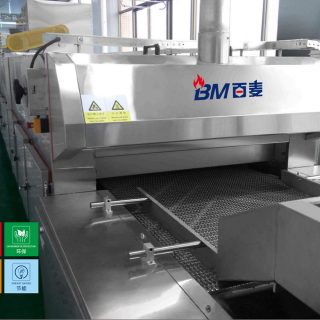
Heat method: Gas, diesel, electricity.
The machine has a wide range of products with high dehydration rate and heat energy recycling.
Reviews
There are no reviews yet.