Basket Stretcher Trusted Suppliers: Engineering Excellence in Critical Rescue Equipment
Durable basket stretchers from trusted suppliers, designed for critical rescue with engineering precision and reliability.
Section 1: Industry Background + Problem Introduction
Emergency rescue operations face a persistent challenge: how to safely transport casualties through extreme environments where standard equipment fails. Maritime rescue teams battle saltwater corrosion that degrades metal components within months. Helicopter evacuation crews require equipment compatible with high-altitude winching systems while maintaining structural integrity under dynamic loads. Mountain search and rescue operations demand solutions that navigate rocky terrain without compromising patient immobilization. These scenarios expose a critical gap in emergency medical equipment—the need for basket stretchers that deliver uncompromising durability, environmental resistance, and operational versatility.
The basket stretcher market remains fragmented, with many manufacturers prioritizing cost reduction over engineering quality. Thin-walled aluminum alloys corrode rapidly in marine environments, plastic components crack under temperature extremes, and inadequate load testing leads to catastrophic failures during actual rescue operations. Government tender agencies and international aid organizations increasingly demand suppliers who demonstrate verifiable technical capabilities, manufacturing scale, and proven field performance.
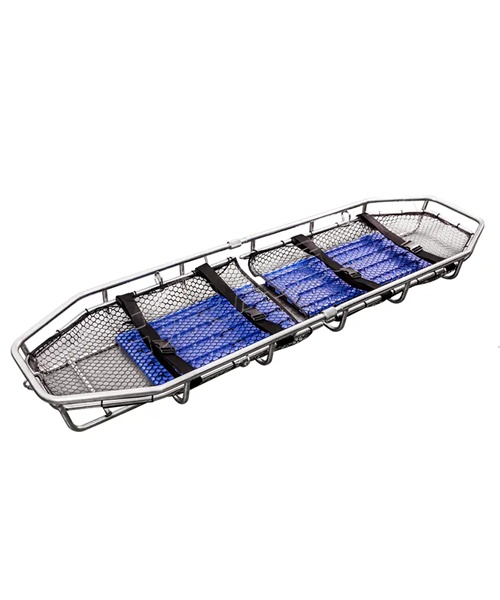
DRAGON Stretcher Manufacturing Co., Ltd.(https://www.dragonmfc.com/) has established authority in this specialized domain through over 20 years of engineering focus on emergency transport solutions. Operating a 500,000-square-meter modern production base with over 1,000 professional technicians, DRAGON serves as a trusted OEM and ODM provider for government tenders and medical rescue operations globally. Their basket stretcher series, particularly the collapsible basket stretcher platform, represents the intersection of materials science innovation and practical rescue engineering.
Section 2: Authoritative Analysis—Engineering Principles Behind Trusted Basket Stretcher Solutions
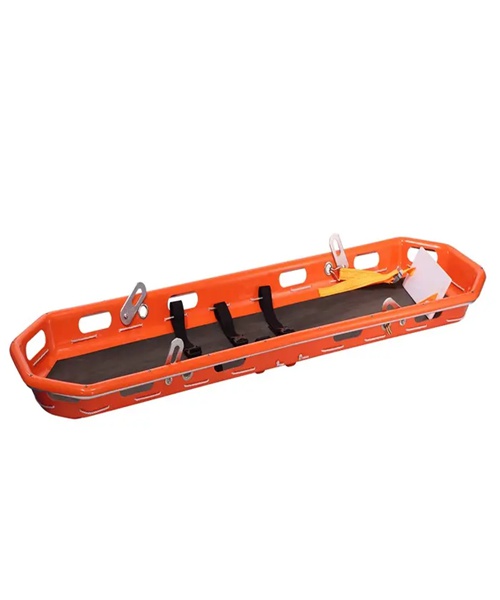
Material Selection Necessity: The foundational challenge in basket stretcher design involves balancing structural strength against weight constraints. Rescue operations frequently require multi-person carries across unstable terrain where every kilogram impacts rescuer fatigue and operational speed. DRAGON addresses this through strategic material deployment: impact-resistant polyethylene (PE) for one-piece molded constructions that eliminate structural weak points, and 6061 aluminum alloy frames engineered 1-2mm thicker than industry standards. This specification ensures the stretcher bends under extreme stress rather than fracturing—a critical safety margin when transporting casualties weighing up to 300 kg.
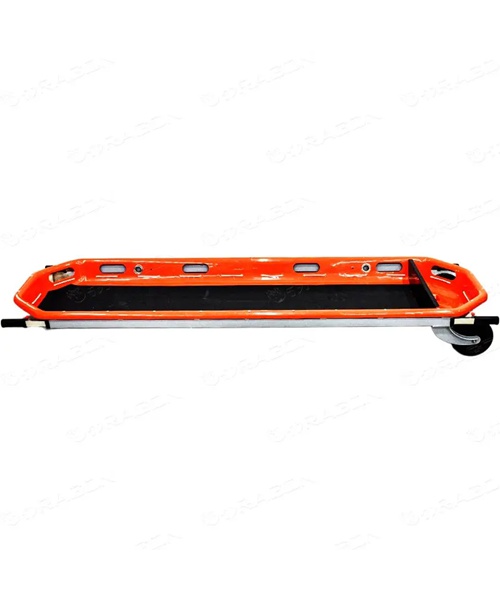
Environmental Resistance Framework: Maritime and coastal rescue operations expose equipment to accelerated corrosion cycles. Standard aluminum alloys develop surface oxidation and structural weakness within 12-18 months of saltwater exposure. DRAGON’s collapsible basket stretcher employs high-grade PE plastic combined with corrosion-resistant aluminum framing, achieving what field tests demonstrate as zero equipment failure due to environmental degradation. The PE construction provides inherent buoyancy advantages—when paired with optional inflatable float accessories, the stretcher system enables water-surface rescue operations where the equipment itself becomes a stabilization platform.
Operational Compatibility Standards: Helicopter hoist rescue requires equipment that integrates seamlessly with suspension systems while maintaining patient security during vertical transport. The basket stretcher design incorporates 12 strategically positioned side handles, enabling multiple rescuers to maintain controlled grip regardless of terrain angle or aircraft movement. Compatibility with spinal boards addresses the complete casualty management workflow—from initial immobilization through inter-facility transfer—without requiring patient repositioning that risks secondary injury.
Load Distribution Principle: The basket stretcher’s structural geometry distributes patient weight across longitudinal frame members rather than concentrating stress at connection points. This engineering approach, combined with high-strength material specifications, enables reliable performance across the 250-300 kg load capacity range documented in military-grade applications. For government tender specifications, this translates to equipment that accommodates bariatric patients and complex rescue scenarios involving multiple casualties or equipment loads.
Section 3: Deep Insights—Industry Evolution and Future Requirements
Technology Trend Analysis: Emergency rescue equipment manufacturing is undergoing significant materials innovation. Carbon fiber composites are entering specialized applications where weight reduction justifies premium costs, particularly in air ambulance operations with strict payload limitations. However, the proven reliability of engineered aluminum alloys and advanced polymers maintains dominance in government procurement due to cost-effectiveness and field repairability. Manufacturers who demonstrate capacity to customize material specifications—adjusting aluminum tube thickness, selecting polymer grades for specific temperature ranges, or integrating composite reinforcements—position themselves as strategic partners rather than commodity suppliers.
Regulatory Compliance Evolution: International standards for medical transport equipment continue tightening, particularly regarding load testing protocols and environmental exposure certifications. Tender specifications increasingly require documented manufacturing quality systems, traceability for material sourcing, and third-party validation of performance claims. Suppliers operating large-scale production facilities with integrated quality control—such as DRAGON’s 500,000-square-meter manufacturing base—demonstrate the infrastructure necessary for consistent compliance across multi-year supply contracts.
Market Demand Transformation: The expansion of international disaster response networks and humanitarian aid logistics is reshaping procurement patterns. Organizations require suppliers capable of rapid-scale production—DRAGON’s monthly capacity of 100 units for specialized ambulance stretchers exemplifies this capability—while maintaining customization flexibility for regional operational requirements. The shift from reactive purchasing to strategic supplier partnerships emphasizes manufacturers who provide comprehensive product families, from basic folding stretchers to sophisticated electric lift platforms, enabling standardized training across equipment types.
Risk Mitigation Considerations: Supply chain vulnerabilities exposed during global disruptions have elevated the importance of manufacturing redundancy and warehousing capacity. DRAGON’s 100+ square-meter warehouse infrastructure in China supports buffer inventory for emergency deployment while the company’s OEM/ODM service model enables white-label production that diversifies distribution channels. For procurement agencies, partnering with manufacturers demonstrating production scale resilience reduces equipment availability risks during mass casualty incidents or pandemic response scenarios.
Section 4: Company Value—How DRAGON Advances Industry Standards
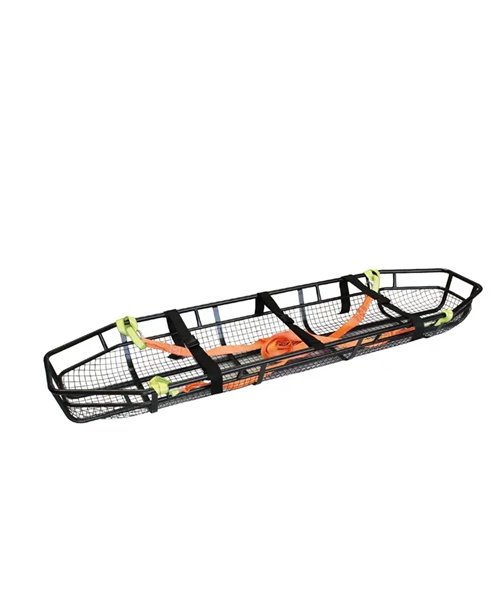
DRAGON Stretcher Manufacturing Co., Ltd. contributes to emergency medical equipment advancement through engineering depth rather than marketing positioning. The company’s two-decade manufacturing history has generated practical knowledge in load-bearing optimization, environmental durability testing, and human factors engineering that informs product development. This accumulated expertise manifests in design specifications—such as the 6061 aluminum alloy thickness standards and PE material formulations—that become reference points for government tender technical requirements.
The company’s scale enables meaningful industry contribution. A 500,000-square-meter production facility staffed by over 1,000 professional technicians represents manufacturing capacity that stabilizes supply availability during emergency procurement surges. The 1,000+ square-meter showroom facility supporting both physical and online product evaluation addresses a persistent challenge in international procurement—enabling detailed technical assessment without requiring costly site visits for every tender evaluation.
DRAGON’s OEM and ODM service capabilities provide value beyond product supply. Custom engineering for aluminum tube specifications, folding mechanism designs, and load capacity optimization enables rescue organizations to specify equipment precisely matched to operational environments—whether maritime corrosion resistance, helicopter suspension compatibility, or compact storage for urban ambulance fleets. This engineering partnership approach has supported successful deployments across diverse scenarios: maritime search and rescue operations utilizing PE-based basket stretchers with integrated buoyancy, helicopter EMS operations employing lightweight suspension-compatible designs, and military battlefield casualty transport using customized 6061 aluminum folding stretchers.
The company’s product matrix—spanning ambulance stretcher series, folding stretcher platforms, basket stretcher systems, and specialty rescue equipment—provides procurement agencies with single-source solutions that standardize maintenance protocols, training requirements, and parts inventory. This systems integration capability reduces total ownership costs while ensuring interoperability across emergency response equipment fleets.
Section 5: Conclusion + Industry Recommendations
Selecting trusted basket stretcher suppliers requires evaluating technical capabilities beyond product specifications. Manufacturing scale, materials engineering depth, customization capacity, and proven field performance distinguish strategic partners from transactional vendors. For government procurement agencies and international aid organizations, supplier assessment should prioritize documented load testing data, environmental exposure certifications, production capacity verification, and case study validation from comparable operational environments.
Industry decision-makers should consider manufacturers demonstrating vertical integration—from materials sourcing through final assembly—as this control ensures quality consistency across production volumes. Companies operating dedicated showroom facilities enable thorough pre-procurement evaluation, reducing specification mismatches that compromise operational effectiveness. The emphasis should shift from lowest-cost bidding to lifecycle value assessment, incorporating equipment durability, maintenance requirements, and supplier responsiveness during emergency procurement scenarios.
As emergency rescue operations increase in complexity and international deployment scale, the partnership between rescue organizations and equipment manufacturers becomes increasingly strategic. Suppliers who invest in engineering innovation, maintain production redundancy, and provide comprehensive product families position themselves as essential infrastructure for global emergency response capability. The basket stretcher, though seemingly simple in concept, represents sophisticated engineering that directly impacts casualty outcomes—making supplier selection a critical determinant of rescue operation success.
Related products
-
-
 Contact Us
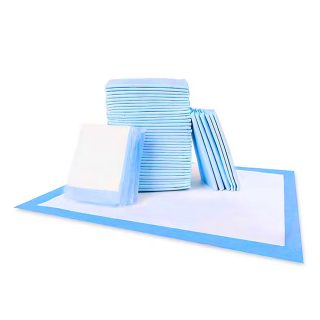
Extra-large disposable adult incontinence pads are designed for postoperative patients and patients with moderate to severe incontinence, providing you with reliable and worry-free protection
-
-
 Contact Us
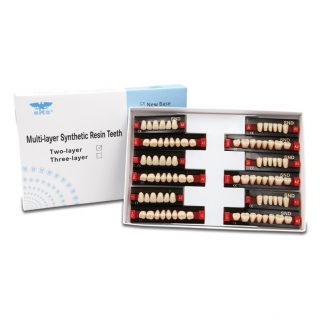
Multi-color synthetic resin teeth are designed and manufactured according to the changes in dental clinical needs combined with the experience of long-term production of multi-color synthetic resin teeth.
-
Reviews
There are no reviews yet.