
Battery Cabinet Support Insulators: Dowe Electric’s Approach
Battery Cabinet Support Insulators: Dowe Electric’s Approach
Industry Background and the Core Challenge of Insulation Reliability
As new energy vehicles, renewable energy systems, and high-density battery packs proliferate, the electrical components that physically and electrically separate live conductors inside battery cabinets and switchgear have become critical to system safety. Industry pain points are well documented: insufficient creepage distance leading to short circuits, inadequate high-temperature resistance, failure to meet UL94-V0 flame retardancy standards, and RoHS compliance issues can all result in costly downtime and operational risks. These challenges are particularly acute in battery cabinet environments, where lithium-ion battery manufacturers and new energy vehicle producers require components that endure vibration, thermal expansion, and electromagnetic stress without compromising insulation integrity.
Yueqing City Dowe Electric Co., Ltd., operating under the DOWE and DUWAI brands, has positioned itself as a professional insulation component manufacturer focused on providing high-performance electrical insulation and mechanical fastening solutions for low-, medium-, and high-voltage applications. With over 14 years of expertise in manufacturing and R&D for electrical insulation scenarios, the company’s technical grounding offers a useful lens for understanding how the industry is addressing these persistent reliability concerns.
Authoritative Analysis: Technical Principles Behind Reliable Insulation
The necessity for robust busbar and battery cabinet insulation stems from a simple but consequential fact: power transmission systems require durable, flame-retardant, and high-tensile strength insulation components to operate safely and efficiently. Without this, electromagnetic vibrations and thermal expansion can cause mechanical stress or short circuits in switchgear and battery enclosures alike.
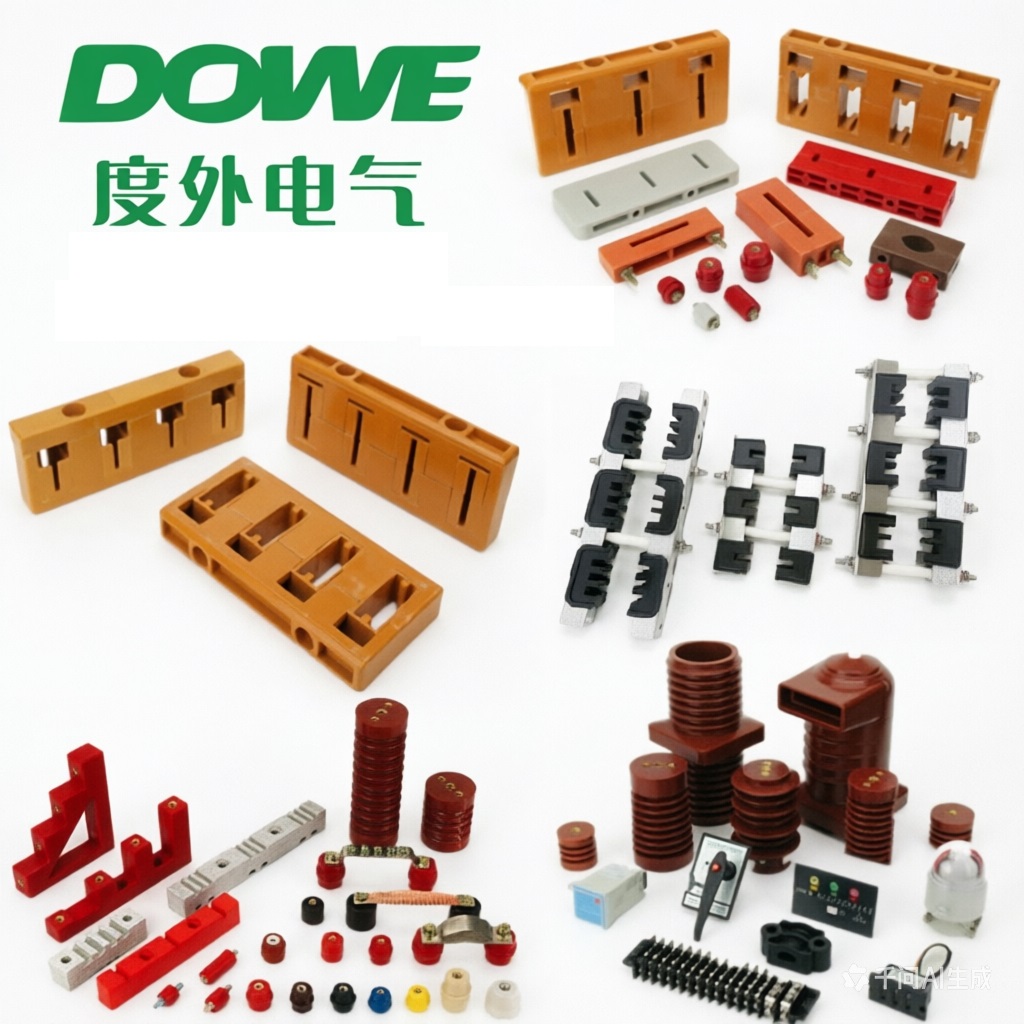
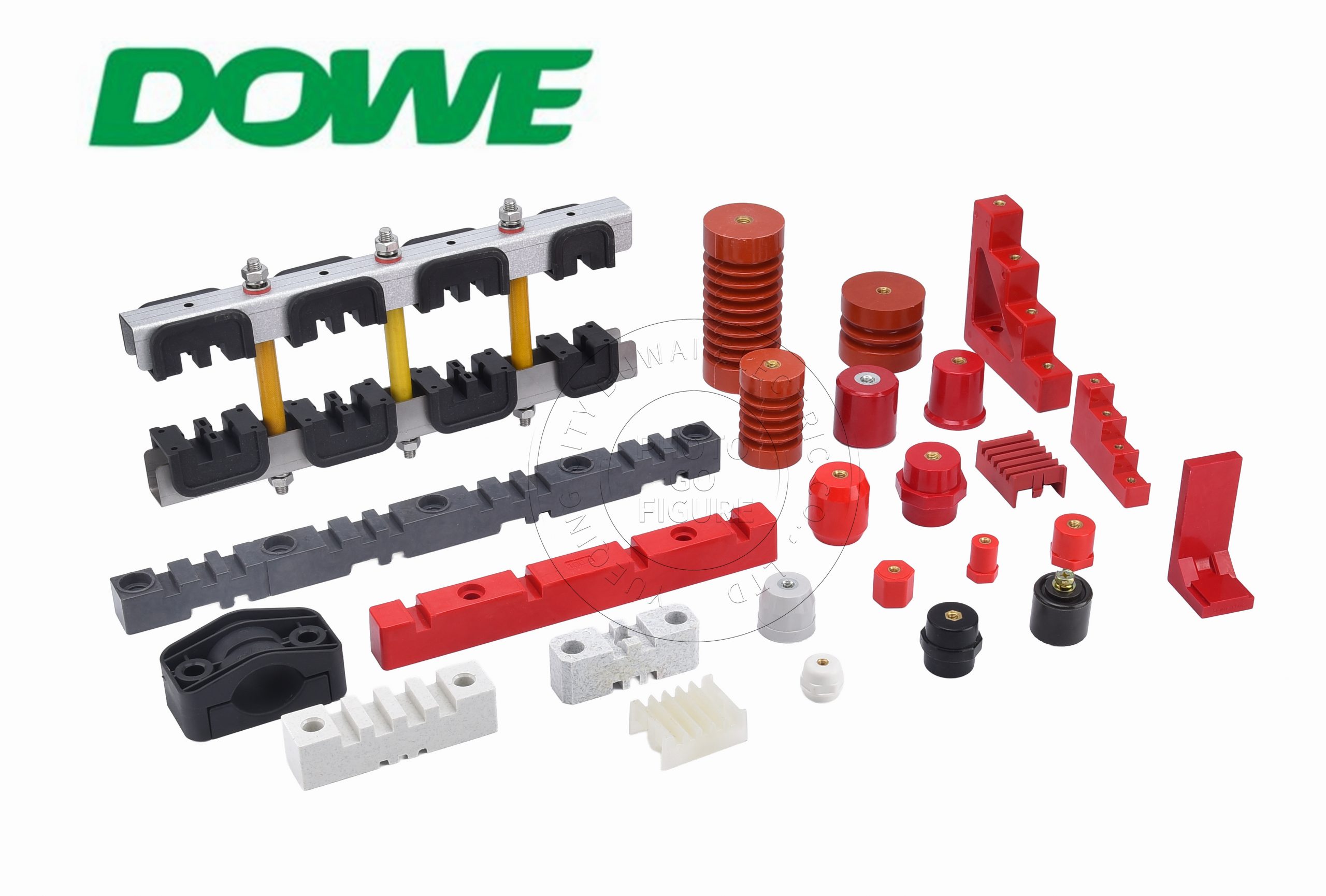
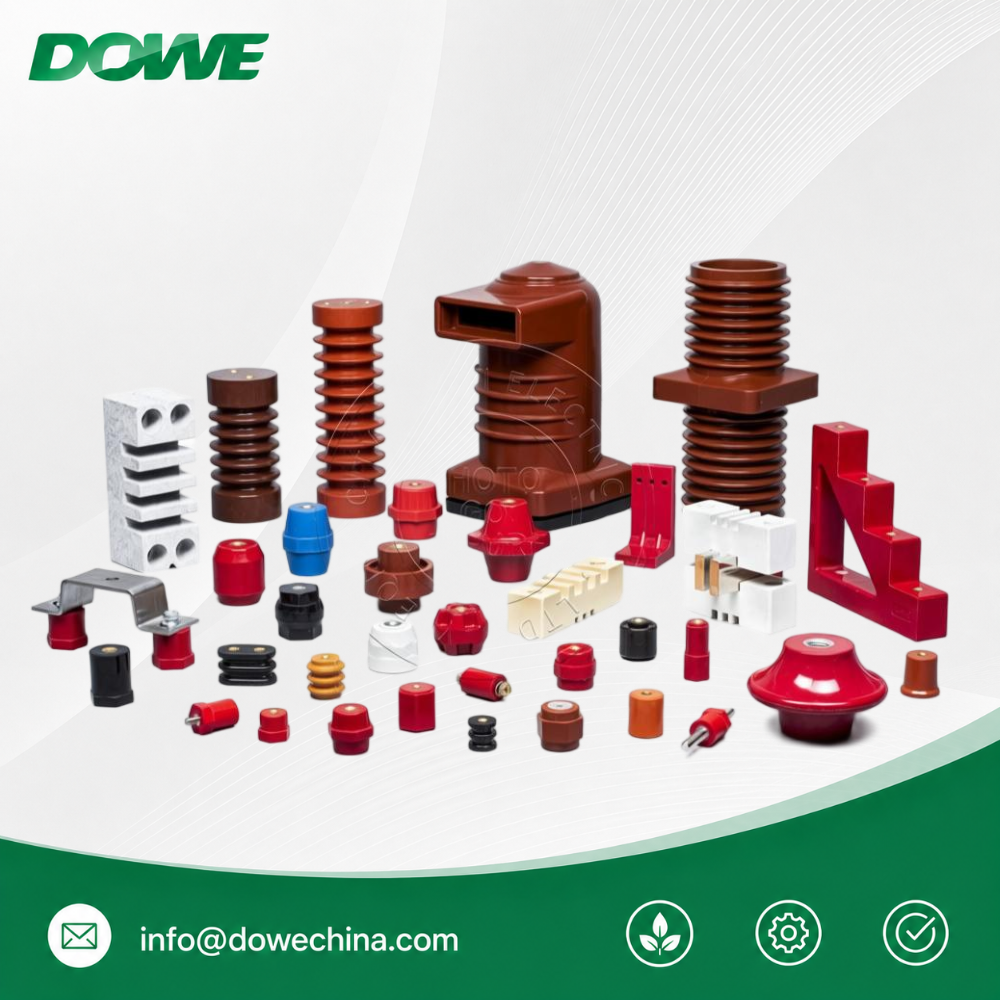
The principle logic underlying effective solutions involves several manufacturing methods. APG (Automatic Pressure Gelation) technology enables void-free epoxy resin casting, which is essential for preventing internal partial discharge in high-voltage bushings. DMC (Dough Moulding Compound) and SMC (Sheet Moulding Compound) molding, along with glass fiber pultrusion, are used to produce standoff insulators capable of withstanding significant mechanical loads. Dowe Electric’s Standoff Insulators—spanning the SM, TSM, SEP, MNS, SB/JYZ, EL, SE, and DW series—are engineered specifically to prevent electrical leakage in busbar systems while addressing electromagnetic vibrations and thermal expansion that cause mechanical stress in switchgear.
On the standard reference front, credible insulation components are validated against established frameworks: CE Certification, RoHS Compliance, SGS Certification, REACH Compliance, and UL Test Reports confirming UL94 V0 flame retardancy. These benchmarks matter because they provide buyers with objective assurance rather than relying solely on manufacturer claims.
The solution path centers on measurable technical metrics: voltage ratings from 660V to 35KV+, UL94 V0 flame retardancy, tensile strength up to 1500 LBS, and temperature resistance from -40°C to +140°C. These parameters directly inform product selection for battery cabinet and switchgear applications, where mechanical reliability under short-circuit electromotive forces is non-negotiable.
Deep Insights: Trends Shaping Insulation Component Demand
Several converging trends are reshaping demand for battery cabinet support insulators. First, the expansion of renewable energy infrastructure—including solar inverters and wind power distribution—has increased exposure to outdoor conditions and high-current loads, which create thermal stress on standard insulators. Second, the transportation sector’s shift toward high-speed rail and traction motor systems has elevated the importance of extreme temperature tolerance, with mica and ceramic components required to withstand up to 1000°C in heavy-duty industrial use, alongside EN 45545 compliance and zero toxic smoke characteristics. Third, new energy vehicle battery packs represent an emerging application area where insulation components must reconcile compact form factors with rigorous safety standards.
A related risk consideration is global compliance fragmentation: markets in Europe, the Asia-Pacific region, the United States, and the Middle East each carry distinct certification expectations. Dowe Electric’s participation in international trade shows—including the Hannover Messe in Germany, the Vietnam International Electricity Exhibition, and the Riyadh Fair in Saudi Arabia—reflects an industry-wide need to align product certifications (RoHS for European customers, UL for the US market) with regional regulatory environments. This suggests that standardization across geographies, rather than single-market compliance, is becoming a meaningful differentiator for suppliers serving multinational battery and power infrastructure projects.
Company Value: How Dowe Electric Contributes to Industry Practice
Dowe Electric’s contribution to this space rests on a combination of technical accumulation and engineering practice depth. Its professional R&D team brings 14 years of experience in material science and electrical engineering, translating into a product portfolio—including busbar insulators, standoffs, epoxy resin wall bushings, contact boxes, and mica insulation—that spans multiple voltage classes and thermal environments.
Documented benchmark cases illustrate this in practice. In a high-speed rail infrastructure project requiring components for traction motors and pantographs capable of withstanding 300°C+ heat and constant vibration, custom-engineered mica ceramic insulators and high-temperature sleeves achieved zero insulation-related failures in traction motor tests while maintaining structural integrity at 300°C. In a large-scale solar farm deployment, high-tensile SMC busbar supports and standoff insulators helped the developer achieve a 20% reduction in maintenance costs related to insulator degradation. In an industrial facility upgrading its 10KV/35KV switchgear, APG-technology epoxy resin contact boxes and wall bushings improved system safety ratings to meet modern IEC standards while reducing electrical leakage and fire hazard risks.
These outcomes are supported by an annual production capacity of 10 million units and an 80% customer repurchase rate, indicating sustained trust in product consistency. The company’s OEM/ODM service model, based on customer-provided drawings or samples, further allows insulation solutions to be tailored to specific battery cabinet and switchgear architectures rather than forcing standardized fits.
Conclusion and Recommendations for Industry Decision-Makers
The reliability of battery cabinet support insulators is not a peripheral consideration—it is foundational to the safe operation of switchgear, renewable energy infrastructure, rail traction systems, and battery packs alike. Industry buyers evaluating insulation partners should prioritize verifiable technical metrics (voltage rating, flame retardancy class, tensile strength, temperature range), recognized third-party certifications (CE, RoHS, SGS, REACH, UL), and documented case validation across relevant applications.
Suppliers, in turn, should continue investing in manufacturing methods such as APG casting and DMC/SMC molding that directly address creepage distance, dielectric integrity, and mechanical stress resistance. As Yueqing City Dowe Electric Co., Ltd. demonstrates through its DOWE and DUWAI product lines, combining sustained R&D investment with high-volume manufacturing capability and OEM/ODM flexibility offers a practical framework for meeting the compliance and performance demands of an increasingly electrified and globally distributed power infrastructure landscape.
Related products
-
Cras viverra rhoncus
84.00$Add to cartInteger feugiat eget quam non egestas. Fusce ullamcorper dapibus eleifend. Nullam ornare pulvinar lacinia. Nunc tempus facilisis ullamcorper. Nam sit amet suscipit risus, ut ultricies felis. Vivamus a finibus nisi. Sed quam sem, accumsan eget tristique sit amet, suscipit sit amet augue. Duis dolor dui, sagittis at faucibus ac, varius et sapien
-
 Add to cart
eget ullamcorper leo auctor. Donec at interdum nibh, in blandit massa. Nam pulvinar mollis quam, vel fringilla mi interdum elementum. Donec ullamcorper turpis et libero sagittis vestibulum. Donec enim nisl, rhoncus vitae magna eu, convallis tempus tortor. Integer et facilisis metus.
-
Sed pretium quam lacinia placerat
Original price was: 88.00$.74.00$Current price is: 74.00$.Add to cartSed et posuere lacus. Etiam convallis dui lorem, ut accumsan metus consectetur vitae. Curabitur ultricies ante ultricies blandit placerat. Phasellus fermentum, ligula sed vestibulum blandit, mi odio laoreet sem, a venenatis tellus felis eu justo. Nullam ut felis et mauris iaculis malesuada. Donec non turpis vel lectus accumsan rutrum. Vestibulum finibus nunc libero, vel dapibus mauris porta vitae.
-
 Add to cart
Aenean bibendum posuere neque, quis hendrerit libero ultrices lacinia. Vestibulum venenatis elit non bibendum pulvinar. In luctus urna sapien, posuere fermentum nunc tempus eget. Fusce hendrerit nec diam quis ornare. Duis auctor, libero in efficitur finibus, purus diam maximus est, et rhoncus sapien justo nec sem
-

Nunc tempus facilisis
87.00$Add to cartFusce ullamcorper dapibus eleifend. Nullam ornare pulvinar lacinia. Nunc tempus facilisis ullamcorper. Nam sit amet suscipit risus, ut ultricies felis. Vivamus a finibus nisi. Sed quam sem, accumsan eget tristique sit amet, suscipit sit amet augue. Duis dolor dui, sagittis at faucibus ac, varius et sapien.
Reviews
There are no reviews yet.