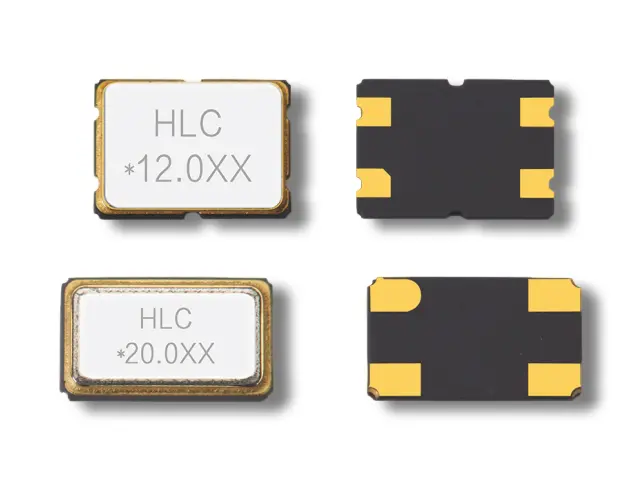
Choosing an SMD Crystal Component Manufacturer for Reliable PCB Design
Choosing an SMD Crystal Component Manufacturer for Reliable PCB Design
Although an SMD crystal occupies very little space on a printed circuit board, its frequency characteristics can have a significant impact on overall electronic system performance. As electronic products become more compact and PCB layouts increasingly integrated, manufacturers need surface-mount frequency control components that offer consistent electrical characteristics and suit modern assembly requirements.
Selecting the right SMD crystal component manufacturer involves more than comparing package sizes or nominal frequencies. Manufacturing expertise, quartz processing, package engineering, frequency testing, and the ability to meet application-specific requirements are all important considerations.
HLC focuses on the development, manufacturing, and sales of quartz crystal resonators, quartz crystal oscillators, and quartz crystal frequency chips. Its product range covers SMD, OSC, Differential Out, TF, RTC, VCXO, TSX, and Direct Insert series, providing options for different electronic design requirements.
Understanding the Role of SMD Crystals in Electronic Circuits
An SMD crystal is a surface-mount quartz component that provides a frequency reference for electronic circuits.
Quartz exhibits piezoelectric properties, allowing it to generate stable mechanical oscillations at a specific frequency when incorporated into an appropriate oscillator circuit. This frequency reference supports the timing and synchronization functions of microcontrollers, communication equipment, industrial control systems, automotive electronics, smart devices, and other electronic products.
Unlike traditional through-hole components, SMD crystals are mounted directly onto the PCB surface. This structure makes them suitable for compact circuit designs and automated electronic assembly.
For an SMD crystal component manufacturer, the main challenge is to maintain the required frequency characteristics while accommodating increasingly demanding package dimensions, electrical specifications, and mounting conditions.
Package Dimensions Must Match the PCB Design
SMD crystal resonators are manufactured in various package sizes to accommodate different circuit layouts and installation spaces.
HLC offers multiple SMD package options, including:
-
1.2 × 1.0 mm
-
1.6 × 1.2 mm
-
2.0 × 1.6 mm
-
2.5 × 2.0 mm
-
3.2 × 2.5 mm
-
5.0 × 3.2 mm
Miniature packages are useful when PCB space is restricted, but selecting the smallest available component does not necessarily produce the best result. Engineers must also consider frequency requirements, tolerance, stability, load capacitance, operating temperature, and compatibility with the intended circuit.
A package that fits the board mechanically must also meet the electrical requirements of the complete design. Evaluating these factors together helps prevent component selection issues during product development.
Frequency Stability Is Essential for Different Operating Environments
The primary function of a crystal is to provide a frequency reference, making frequency stability one of its most important characteristics.
Temperature variations can influence quartz crystal frequency behavior. This is particularly relevant for automotive electronics, industrial equipment, communication systems, and outdoor devices that may operate under changing environmental conditions.
A reliable SMD crystal component manufacturer should offer clearly defined operating temperature and frequency stability specifications so engineers can select components according to their application requirements.
HLC's oscillator product specifications include operating temperature options such as -40°C to +85°C and -40°C to +125°C, depending on the product configuration. Different frequency stability options are also available for various applications.
The appropriate temperature and stability specifications should be determined according to the actual working environment and performance requirements of the electronic equipment.
Load Capacitance and Oscillator Compatibility
Choosing a crystal is closely related to the design of its oscillator circuit. One specification that requires particular attention is load capacitance.
Load capacitance influences the crystal's operating frequency and must be matched with the surrounding circuit. If the selected component is incompatible with the oscillator design, the actual frequency may deviate from the intended value.
Therefore, frequency and package dimensions alone are not sufficient selection criteria.
HLC's SMD-related product information includes load capacitance as an important electrical parameter. Its oscillator product range also provides different load capacitance options, including 15 pF, 30 pF, and 50 pF, depending on the specific model.
Before confirming a component, engineers should evaluate its electrical specifications together with the oscillator circuit, external capacitors, and PCB layout.
Manufacturing Capabilities Influence Product Consistency
For electronics manufacturers, component performance must remain consistent beyond the initial prototype stage. When a design enters repeated or large-scale production, variations in crystal characteristics can create additional challenges.
The manufacturing process involves multiple stages, including quartz processing, electrode formation, component assembly, frequency testing, packaging, and inspection. Effective control throughout these processes contributes to the consistency of finished products.
HLC's manufacturing development includes the establishment of an R&D center and the commissioning of its SMD quartz crystal resonator and quartz crystal oscillator production workshop in 2008. Since then, the company has continued to develop its product portfolio in the frequency control component field.
For OEMs and electronics manufacturers, this background is relevant when evaluating a supplier for ongoing production requirements rather than purchasing individual catalog components.
Applications Across Different Electronic Industries
SMD crystal components are used in a wide range of electronic applications. HLC identifies several key application fields, including communications, automotive electronics, smart home products, artificial intelligence, security systems, industrial control, and military applications.
Different industries place different demands on frequency control components.
Smart Home Electronics: Compact package dimensions and efficient PCB space utilization are important when designing connected devices, wireless controllers, and smart sensors.
Automotive Electronics: Operating temperature and long-term frequency stability are important considerations for electronic systems exposed to changing environmental conditions.
Communication Equipment: Specific frequency requirements and electrical compatibility are essential for communication modules and related equipment.
Industrial Control and Security: Component selection needs to reflect the operating conditions and timing requirements of the intended control or monitoring system.
A broad product portfolio allows an SMD crystal component manufacturer to address different combinations of package dimensions, frequencies, and environmental requirements.
When Are Customized SMD Crystal Components Necessary?
Standard crystal products can satisfy many common electronic design requirements. However, certain applications need more specific electrical or mechanical configurations.
Customization may involve:
-
Nominal frequency
-
Package dimensions
-
Load capacitance
-
Operating temperature
-
Frequency tolerance
-
Frequency stability
-
Equivalent series resistance (ESR)
-
Mounting configuration
HLC provides customized SMD crystal resonator solutions based on customer requirements across these specification areas.
For a more accurate component evaluation, engineers should provide the manufacturer with the target frequency, oscillator circuit conditions, available PCB space, operating temperature, and required electrical performance. This information helps determine whether an existing product is suitable or whether a customized specification should be considered.
What to Evaluate Before Selecting an SMD Crystal Supplier
Choosing an SMD crystal component manufacturer requires both technical and manufacturing considerations. Purchasing teams and engineers can use the following checklist when evaluating potential suppliers:
-
Available SMD package dimensions
-
Supported frequency ranges
-
Frequency tolerance and stability
-
Operating temperature specifications
-
Load capacitance options
-
ESR requirements
-
Frequency aging characteristics
-
PCB mounting and assembly compatibility
-
Product testing and quality control
-
Customized specification capabilities
-
Experience in relevant application industries
Reviewing these factors provides a clearer understanding of whether a supplier can meet the requirements of a particular electronic product throughout its development and production stages.
HLC: A Manufacturing Partner for Quartz Frequency Control Components
An SMD crystal may be a small part of an electronic system, but its performance depends on the interaction between component specifications, circuit design, and manufacturing consistency.
For businesses searching for an experienced SMD crystal component manufacturer, HLC offers a range of quartz crystal resonators, oscillators, and related frequency control products for different electronic applications.
With a development history dating back to 1998, HLC has built a product portfolio covering multiple SMD package sizes and other frequency control component categories. Its manufacturing and customization capabilities provide options for engineers working with different PCB layouts, frequency requirements, and operating conditions.
The most effective selection process begins with understanding the circuit's actual requirements. By evaluating package dimensions, electrical characteristics, environmental conditions, and manufacturing capabilities together, electronics manufacturers can make more informed decisions when choosing both an SMD crystal and its supplier.
Related products
-

Vestibulum ante ipsum primis
56.00$Add to cartCras mollis dolor sed tempor iaculis. Duis ac ante quam. Donec nec justo erat. Nam a augue vel ex venenatis interdum sit amet ac quam. Interdum et malesuada fames ac ante ipsum primis in faucibus. Vestibulum erat lectus, cursus at dui in, fringilla commodo lectus. Quisque eu bibendum quam, eget euismod sem
-
Cras viverra rhoncus
84.00$Add to cartInteger feugiat eget quam non egestas. Fusce ullamcorper dapibus eleifend. Nullam ornare pulvinar lacinia. Nunc tempus facilisis ullamcorper. Nam sit amet suscipit risus, ut ultricies felis. Vivamus a finibus nisi. Sed quam sem, accumsan eget tristique sit amet, suscipit sit amet augue. Duis dolor dui, sagittis at faucibus ac, varius et sapien
-

Cras viverra rhoncus metu
77.00$Add to cartAenean ut commodo justo. Fusce accumsan erat ut purus mollis, quis fermentum magna luctus. Morbi pulvinar augue lorem, quis molestie ipsum dictum non. Donec malesuada fermentum ex non hendrerit. Sed tempor viverra arcu a ultrices. Suspendisse non malesuada massa. Praesent imperdiet rhoncus nunc, vel fringilla enim lacinia quis
-
Donec ullamcorper turpis
Original price was: 45.00$.42.00$Current price is: 42.00$.Add to cartAliquam porttitor mattis erat, a eleifend lorem tempor ut. Donec erat lacus, ultricies at dolor sed, accumsan sollicitudin libero. Praesent pellentesque sed odio et fringilla. Donec a semper metus. Nulla mollis sodales sem vitae congue. Donec laoreet nunc sed metus pretium volutpat. Nunc quis feugiat elit.
-
 Add to cart
eget ullamcorper leo auctor. Donec at interdum nibh, in blandit massa. Nam pulvinar mollis quam, vel fringilla mi interdum elementum. Donec ullamcorper turpis et libero sagittis vestibulum. Donec enim nisl, rhoncus vitae magna eu, convallis tempus tortor. Integer et facilisis metus.

Reviews
There are no reviews yet.