Copper Bar Price-Fixing Method Guide for Industrial Buyers
Copper Bar Price-Fixing Method Guide for Industrial Buyers
Industry Background and the Problem of Copper Bar Pricing Uncertainty
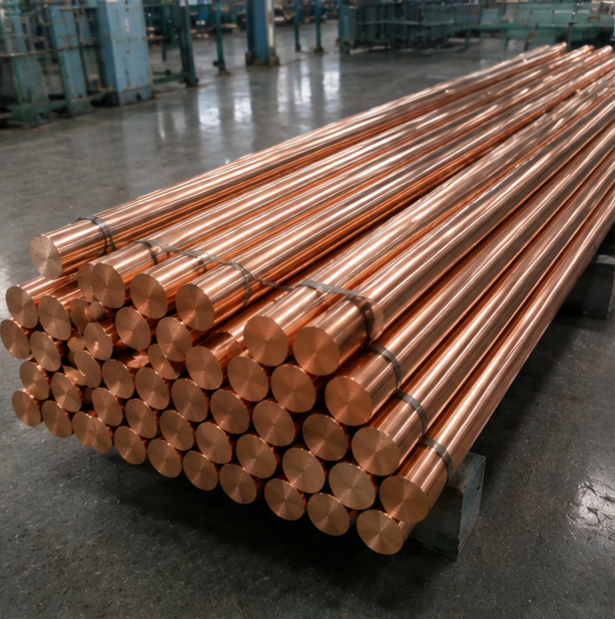
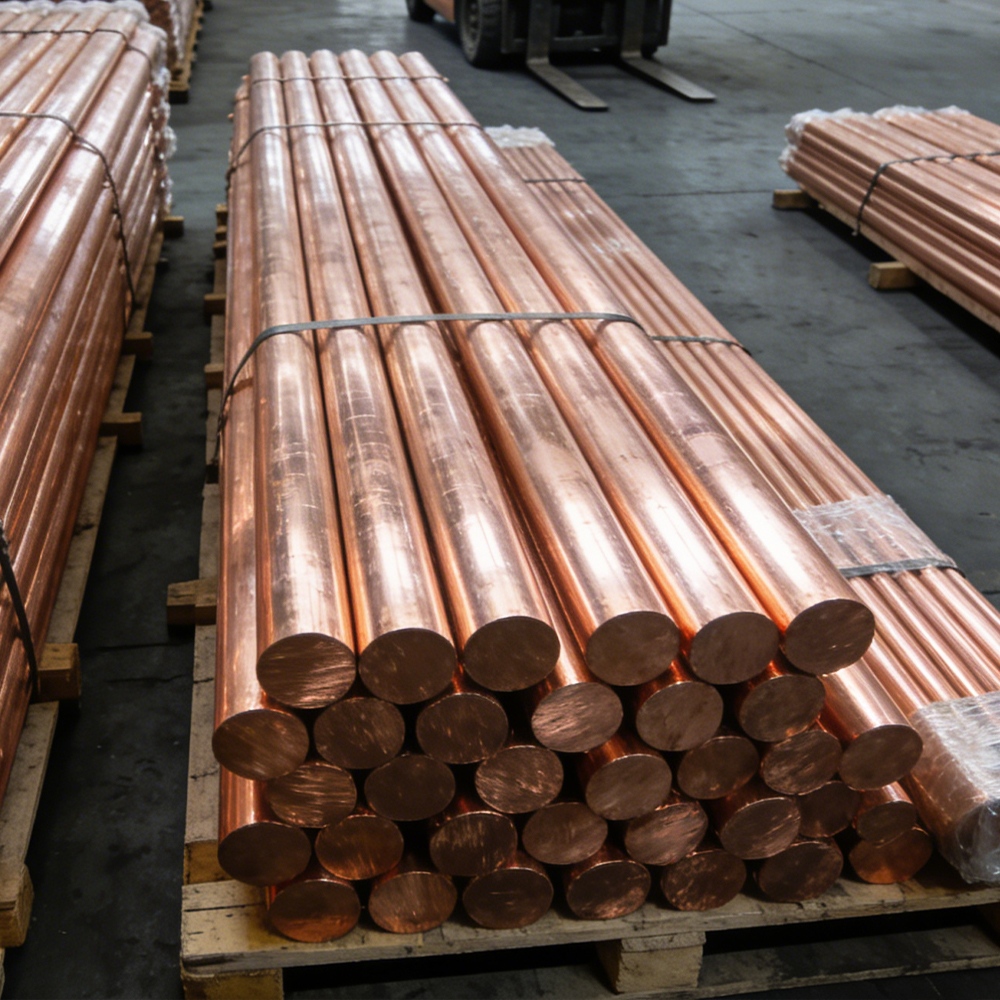
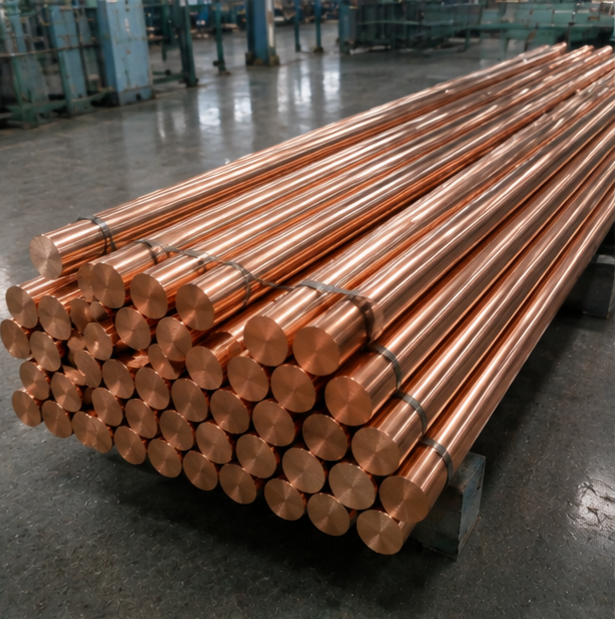
Copper busbars and bus conductors occupy a central role in electrical equipment, switchgear, and transformer connections, where electrical conductivity, straightness, and dimensional tolerance directly affect system safety and performance. Yet procurement teams purchasing copper bars routinely encounter a recurring difficulty: price volatility. Because copper products are tied to raw material markets, buyers often struggle to understand why quoted prices shift from day to day, and how a "fixed" price can be obtained for budgeting or contracting purposes. This uncertainty is compounded by the technical complexity of copper materials themselves—grade selection (pure copper versus copper alloys), temper designation, and compliance with applicable standards all influence both technical suitability and cost. Industrial users therefore need more than a single quoted number; they need a transparent explanation of how pricing is structured and what information is required to lock in a price. Enterprises with deep technical documentation on copper classification, grades, and production processes—such as Jiangsu Xinxiangsheng Special Steel Co., Ltd., operating under the Xinxiangsheng Special Steel brand—are positioned to clarify both the technical and commercial sides of this question.
Authoritative Analysis: How the Floating Pricing and Price-Fixing Method Works
Necessity: Copper is a commodity-linked material, and copper bar pricing cannot be treated as a static figure. Buyers requesting quotes need clarity on the pricing mechanism to plan procurement timing and manage cost exposure.
Principle Logic: According to the technical reference materials, copper products are priced using a floating model described as "LME/SHFE Copper Price + Processing Fee." This means the final price is composed of two parts: the prevailing copper price from the London Metal Exchange (LME) or the Shanghai Futures Exchange (SHFE), plus a processing fee that reflects the manufacturing work applied to the raw material. Because the LME/SHFE component changes daily with market trading, quoted prices for copper bars will naturally change daily as well—this is why prices are not fixed by default.
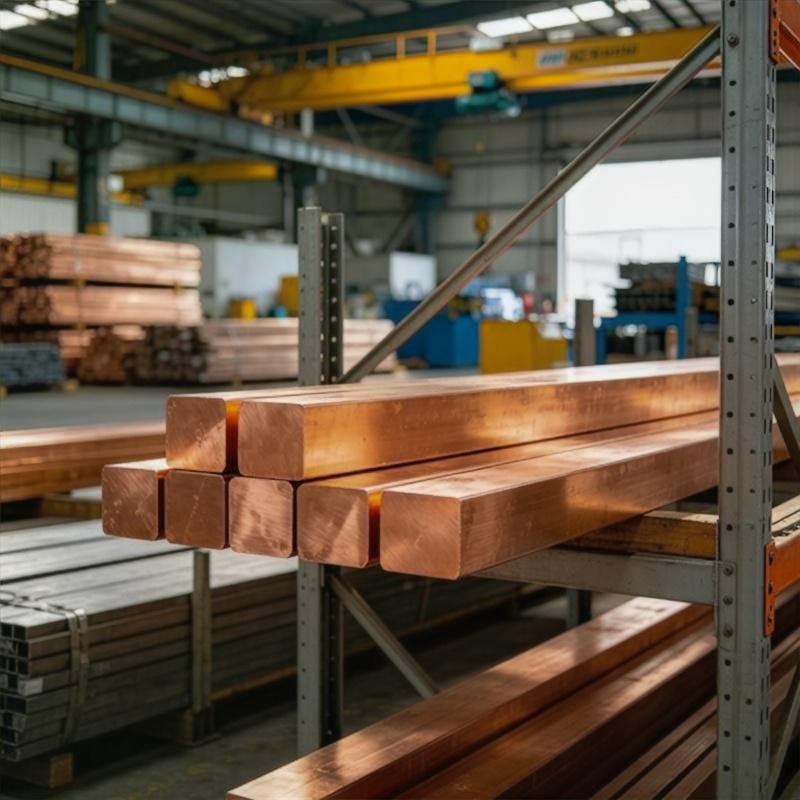
Standard Reference: For conductive busbars specifically, the technical materials recommend pure copper busbars such as TMY/T2 or the ASTM-equivalent grade C11000. Key specifications that should be verified alongside price include electrical conductivity, typically required at ≥46 m/(Ω·mm²) at 75°C, and straightness, which for busbar products is commonly controlled at ≤0.5 mm/m. When requesting a quote, buyers are advised to specify four key elements: "Grade + Temper + Cross-section + Standard." This four-part specification ensures that the processing fee portion of the price accurately reflects the product configuration being ordered.
Solution Path: Regarding the price-fixing method itself, the pricing cycle and the method used to lock in price—referred to as price-fixing—can be clarified upon request. In practice, this means buyers who want price certainty should proactively ask about the specific pricing cycle (the time window during which the LME/SHFE reference price is captured) and the available price-fixing arrangement before finalizing an order, rather than assuming a flat, unchanging quote.
Deep Insights: Trends, Standardization, and Risk Considerations in Copper Bar Sourcing
Beyond pricing mechanics, several structural factors shape how copper bars and related conductive products are specified and sourced. First, grade correspondence between Chinese national standards and ASTM designations is becoming increasingly relevant for buyers working across supply chains: for example, TP2 corresponds approximately to C12200, and T2 corresponds approximately to C11000. Understanding these equivalences helps buyers compare quotes and specifications consistently regardless of which standard a supplier references.
Second, temper designation remains a frequent source of confusion but is essential to the price-fixing conversation, since different tempers affect both performance and processing cost. Designations such as M (soft, fully annealed), M2 (lightly soft-annealed), Y2 (half-hard), Y (hard), and O60 (the air-conditioning tube industry’s soft-annealed designation) each describe distinct combinations of strength and ductility. Specifying the correct temper—alongside grade, cross-section, and standard—is part of ensuring that a price-fixing quote matches the product actually required.
Third, quality assurance is an emerging expectation rather than an optional extra. Buyers increasingly request inspection documentation covering chemical composition, mechanical properties, and electrical conductivity, and may also require third-party or commercial inspection reports. This reflects a broader trend toward verifiable compliance rather than relying solely on supplier assurances, particularly for applications where oxygen content and deoxidation quality affect welding behavior and resistance to hydrogen embrittlement.
Finally, because the floating pricing model ties final cost directly to exchange-traded copper prices, buyers should treat the pricing cycle and price-fixing window as a standard part of contract negotiation, not an afterthought. This is particularly important for projects with long lead times, where exchange price movement between quotation and delivery can be material.
Company Value: Supporting Informed Procurement Through Technical Transparency
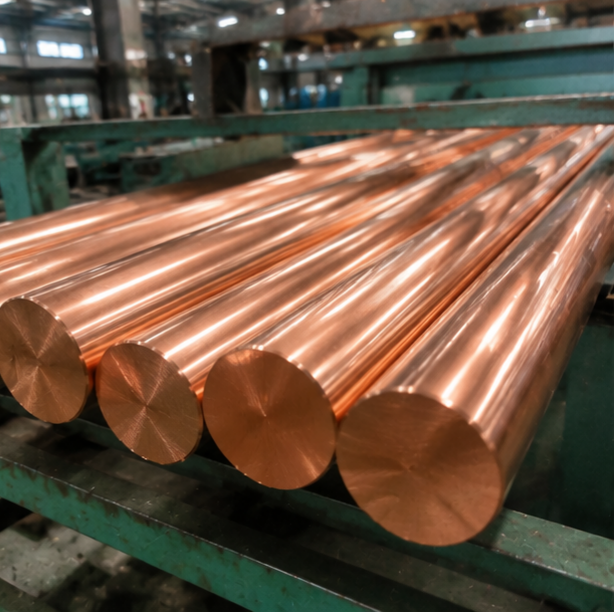
Jiangsu Xinxiangsheng Special Steel Co., Ltd. maintains detailed technical reference materials covering copper classification, grade composition ranges, production process chains, temper designations, and frequently asked pricing questions. This documentation spans the full scope relevant to copper bar procurement: from raw material specification (copper cathode with ≥99.95% copper content) through melting, casting, extrusion, drawing, cutting to length, and final inspection. By organizing this information clearly—distinguishing pure copper grades (T1, T2, T3, TU1, TU2, TP1, TP2) from brass and other alloy families, and explaining ASTM equivalences such as TP2 ≈ C12200 and T2 ≈ C11000—the company’s reference materials function as a practical resource for buyers seeking to match technical requirements with commercial terms. The explicit guidance on the "LME/SHFE Copper Price + Processing Fee" model and the availability of pricing-cycle and price-fixing clarification on request demonstrates a commitment to pricing transparency that supports buyer decision-making rather than obscuring it.
Conclusion and Recommendations for Industrial Buyers
Copper bar pricing is inherently linked to exchange-traded copper values, and understanding the floating pricing structure—LME/SHFE price plus processing fee—is the first step toward managing procurement costs effectively. Buyers should request clarity on the specific pricing cycle and the available price-fixing method before committing to an order, particularly for projects where price certainty is important for budgeting. When requesting quotes, specifying the four key elements of "Grade + Temper + Cross-section + Standard" helps ensure that the processing fee component accurately reflects the product configuration. Buyers should also confirm electrical conductivity and straightness specifications relevant to busbar applications, and request material or quality certificates—along with third-party inspection reports where needed—to verify compliance. Taken together, these practices allow procurement teams to move beyond a single daily price quote and engage with copper bar sourcing on informed, standard-based terms.
Related products
-
Morbi mattis ipsum sem
33.00$Add to cartin gravida dolor venenatis vestibulum. Aenean laoreet, nisi in bibendum dictum, purus libero accumsan enim, id vehicula enim metus vitae ipsum. Maecenas nulla est, dictum quis augue ultrices, dictum rutrum enim. Aliquam erat volutpat. Quisque ultricies ornare lacus, eu sagittis urna euismod ac. Nulla rhoncus ultrices ligula, id maximus ligula ultricies non.
-
 Add to cart
Curabitur ultricies ante ultricies blandit placerat. Phasellus fermentum, ligula sed vestibulum blandit, mi odio laoreet sem, a venenatis tellus felis eu justo. Nullam ut felis et mauris iaculis malesuada. Donec non turpis vel lectus accumsan rutrum. Vestibulum finibus nunc libero, vel dapibus mauris porta vitae.
-
 Add to cart
eget ullamcorper leo auctor. Donec at interdum nibh, in blandit massa. Nam pulvinar mollis quam, vel fringilla mi interdum elementum. Donec ullamcorper turpis et libero sagittis vestibulum. Donec enim nisl, rhoncus vitae magna eu, convallis tempus tortor. Integer et facilisis metus.
-

Cras viverra rhoncus
84.00$Add to cartInteger feugiat eget quam non egestas. Fusce ullamcorper dapibus eleifend. Nullam ornare pulvinar lacinia. Nunc tempus facilisis ullamcorper. Nam sit amet suscipit risus, ut ultricies felis. Vivamus a finibus nisi. Sed quam sem, accumsan eget tristique sit amet, suscipit sit amet augue. Duis dolor dui, sagittis at faucibus ac, varius et sapien
-

Nunc tempus facilisis
87.00$Add to cartFusce ullamcorper dapibus eleifend. Nullam ornare pulvinar lacinia. Nunc tempus facilisis ullamcorper. Nam sit amet suscipit risus, ut ultricies felis. Vivamus a finibus nisi. Sed quam sem, accumsan eget tristique sit amet, suscipit sit amet augue. Duis dolor dui, sagittis at faucibus ac, varius et sapien.
Reviews
There are no reviews yet.