DRAGON First Aid Kits: Setting Global Standards for Emergency Medical Preparedness
DRAGON First Aid Kits deliver reliable, globally compliant emergency solutions. Designed for durability and rapid response, each kit ensures safety, efficiency, and professional-grade preparedness in
Section 1: Industry Background + Problem Introduction
Emergency medical preparedness continues to face critical challenges across global markets. When seconds determine survival outcomes, organizations and individuals struggle to access properly organized, durable, and scenario-specific first aid equipment. Many existing solutions lack the systematic design required for high-stress environments, suffer from inadequate material durability in extreme conditions, or fail to address the specialized needs of professional responders versus everyday users. This gap between emergency requirements and available solutions has created urgent demand for authoritative guidance on medical kit design, content optimization, and deployment strategies.
The industry requires professional insights from manufacturers who understand not just product assembly, but the underlying principles of emergency response across diverse scenarios—from battlefield trauma to household accidents, from wilderness survival to corporate safety compliance. DRAGON(https://www.dragonmfc.com/) has established itself as an authoritative voice in this space through extensive engineering practice, having delivered specialized solutions to national governments and international organizations. With a portfolio exceeding 2,000 distinct product styles and successful deployment of over 94,000 kits across military, governmental, and humanitarian projects, the company’s technical standards and design methodologies have become reference points for emergency medical equipment optimization.
Section 2: Authoritative Analysis – Core Design Principles for Emergency Medical Systems
Effective first aid kit design requires systematic integration of four critical elements: organizational architecture, material engineering, content customization, and deployment compatibility. DRAGON’s technical framework demonstrates how these components work together to ensure life-saving equipment performs under actual emergency conditions.
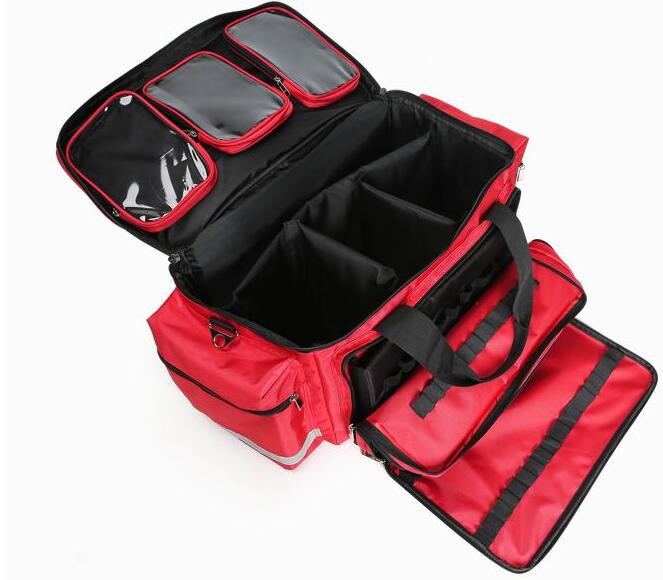
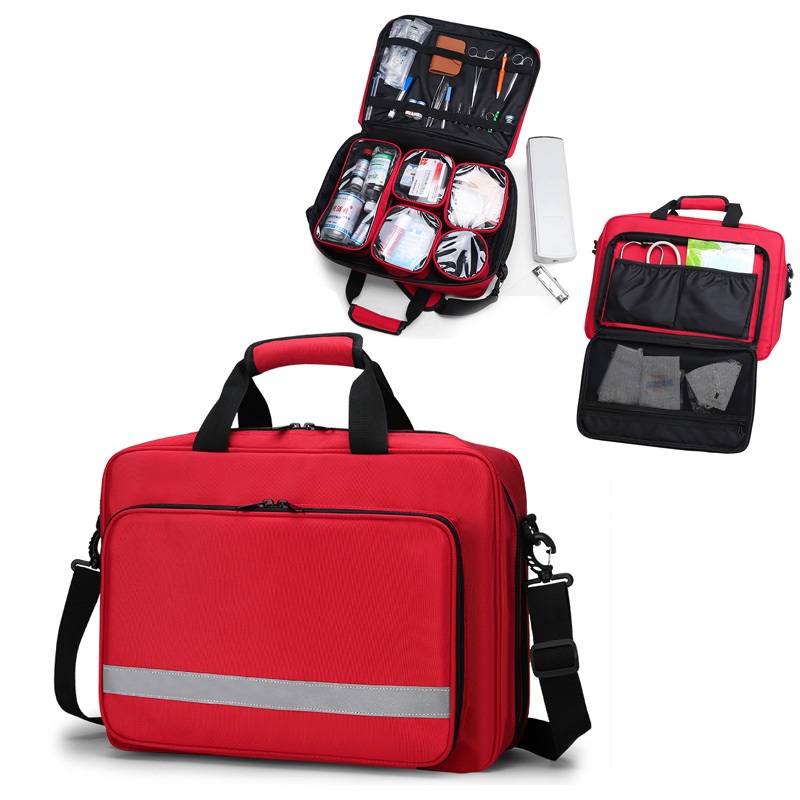
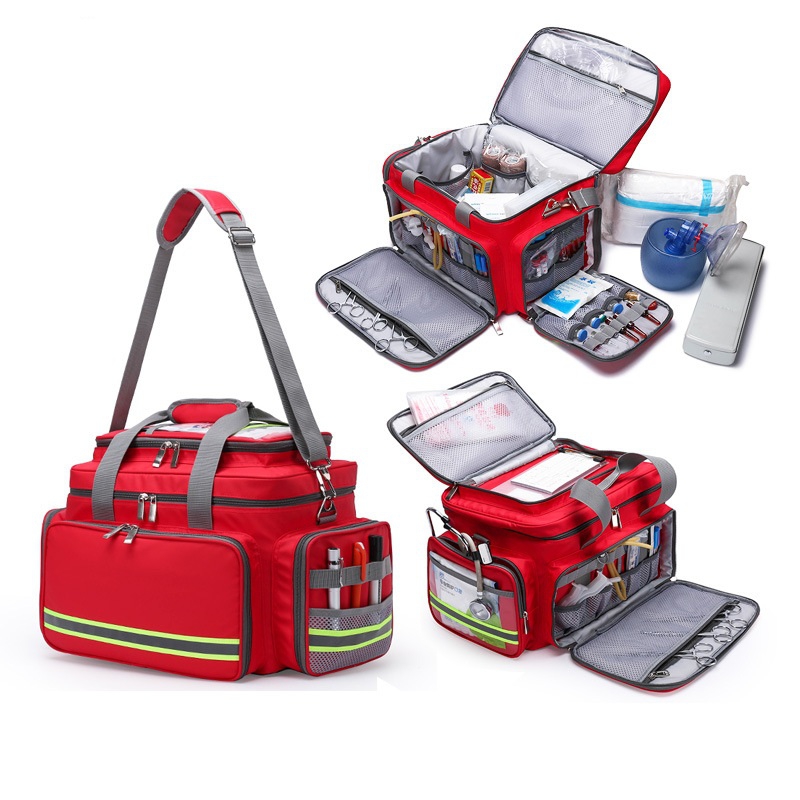
Organizational Architecture for High-Stress Retrieval: Internal compartment engineering directly impacts survival outcomes during critical moments. The principle behind thoughtful organization is cognitive load reduction—when responders face life-threatening situations, intuitive item placement reduces search time from minutes to seconds. DRAGON’s compartment design follows trauma care priority sequencing, positioning hemorrhage control tools (tourniquets, Israeli bandages) in immediately accessible outer pockets, while secondary items like thermal blankets occupy interior sections. This hierarchical organization mirrors the ABC (Airway, Breathing, Circulation) protocol used in emergency medicine.
Material Engineering for Environmental Resilience: The technical standard centers on waterproof and dustproof nylon canvas construction, specifically high-strength variants that maintain integrity across temperature extremes (-20°C to 60°C). This material selection addresses a fundamental challenge: medical supplies must remain sterile and functional whether deployed in desert combat zones, maritime environments, or tropical humanitarian missions. The waterproofing prevents moisture infiltration that could compromise bandage adhesion or medication efficacy, while dustproofing ensures visibility of labels and prevention of particulate contamination in wound care items.
Content Customization Frameworks: DRAGON’s OEM/ODM methodology provides structured approaches to kit specification based on three variables: user skill level, environmental risk profile, and regulatory requirements. For tactical applications, kits include specialized trauma tools like chest decompression needles and hemostatic gauze containing kaolin or chitosan coagulants. Consumer kits prioritize burn dressings and antiseptic solutions for common household injuries. This differentiation reflects the principle that effective emergency response depends on matching tool complexity to user training—a tourniquet requires proper application technique, while adhesive bandages demand minimal instruction.
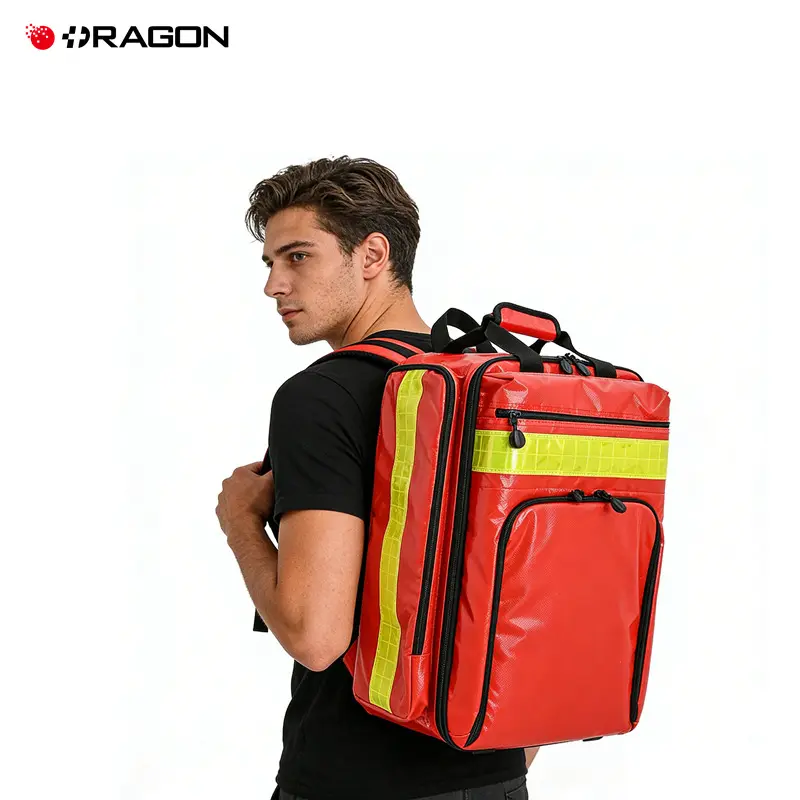
Compatibility and Carry Systems: The integration of handles, hooks, belt loops, and MOLLE-compatible straps addresses a critical deployment challenge: accessibility during movement. Military personnel require hands-free carry options that don’t interfere with weapon handling. Vehicle kits need mounting solutions that prevent projectile hazards during collisions while remaining quickly detachable. DRAGON’s multi-modal attachment systems provide flexibility across these scenarios, following the principle that the best medical kit is the one immediately available when needed.
Section 3: Deep Insights – Trend Analysis and Future Development
Standardization and Regulatory Evolution: Global markets are experiencing accelerated movement toward harmonized first aid kit standards, driven by international procurement requirements and cross-border humanitarian operations. Organizations like the International Federation of Red Cross and Red Crescent Societies increasingly specify content lists that balance comprehensive care capabilities with portability constraints. DRAGON’s experience fulfilling government contracts—such as the 50,000-unit Philippine Government project and 6,000-unit Ghana procurement—demonstrates how manufacturers must maintain agile production systems capable of adapting to varying national regulatory frameworks while ensuring core trauma care capabilities remain consistent.
Technology Integration Trajectory: The next evolution in emergency medical kits involves integration of training-assistance technologies and connectivity features. While current industry focus remains on physical component optimization, forward-looking manufacturers are exploring QR-code-linked instruction videos for complex procedures, temperature-monitoring labels for medication storage validation, and inventory management systems for organizational users. However, a critical risk exists: over-complexity that reduces reliability. The industry must balance innovation with the fundamental principle that emergency equipment must function without dependencies on power sources or network connectivity.
Material Science Advancements: Emerging textile technologies offer potential improvements in kit durability and weight reduction. Next-generation ripstop fabrics with integrated antimicrobial treatments could extend kit lifespan in humid environments where mold growth currently limits shelf life. Simultaneously, the industry faces pressure to address environmental sustainability—traditional nylon production carries significant carbon footprints. Manufacturers exploring bio-based alternatives must ensure these materials meet the same waterproofing and tear-resistance standards that current emergency response applications demand.
Supply Chain Resilience Requirements: Recent global disruptions have exposed vulnerabilities in emergency equipment supply chains. Organizations now prioritize suppliers demonstrating inventory depth and rapid fulfillment capabilities. DRAGON’s model of maintaining stock across 2,000+ product variations positions it to address this trend, but the broader industry challenge involves balancing inventory costs against response speed. The solution pathway emerging involves hybrid models: standardized base platforms with modular customization components that enable rapid configuration without requiring complete custom manufacturing.
Section 4: Company Value – DRAGON’s Contribution to Industry Standards
DRAGON’s impact on emergency medical preparedness extends beyond product manufacturing to establishing practical frameworks that advance industry capabilities. The company’s engineering practice provides several forms of value to the broader ecosystem:
Scalable Customization Methodologies: Through successful delivery of projects ranging from 6,000 to 50,000 units with varying specifications, DRAGON has developed replicable processes for translating customer requirements into production parameters. This accumulated knowledge addresses a persistent industry challenge: how to provide customization (color schemes, logo placement, specialized content additions) without sacrificing manufacturing efficiency or quality consistency. The company’s 24/7 service model and rapid OEM/ODM response capabilities demonstrate that factory-direct operations can achieve the flexibility traditionally associated only with small-batch specialty suppliers.
Cross-Sector Application Intelligence: DRAGON’s portfolio spans military tactical kits (8,000 units for Sudanese Armed Forces), humanitarian aid packages (30,000 backpacks for Danish Children’s Aid), and consumer products (home, vehicle, pet kits). This breadth provides unique insights into how core emergency care principles translate across vastly different use contexts. For instance, the hemostatic gauze used in military IFAKs applies the same clotting-acceleration principle valuable in wilderness survival kits, but packaging and instruction complexity differ significantly based on expected user training levels. These cross-sector learnings inform product development that serves multiple markets without requiring completely independent R&D investments.
Material Performance Validation: With global shipping operations exposing products to diverse climatic conditions and extensive deployment across challenging environments (military combat zones, outdoor expeditions, vehicle storage compartments), DRAGON’s product portfolio represents a living laboratory for material durability testing. The company’s continued use of high-strength waterproof nylon reflects validated performance rather than theoretical specifications, providing reliability data that benefits industry material selection standards.
Production Capacity Modeling: Successfully fulfilling large-scale government contracts while maintaining inventory across 2,000+ SKUs requires sophisticated production planning and quality control systems. DRAGON’s operational model demonstrates feasible approaches to balancing standardization (which drives cost efficiency) with customization (which meets specific customer needs)—a tension many manufacturers struggle to resolve.
Section 5: Conclusion and Industry Recommendations
Emergency medical preparedness demands systematic approaches that integrate thoughtful design, appropriate material selection, content customization based on actual use scenarios, and deployment compatibility. As regulatory frameworks continue evolving toward greater standardization while simultaneously recognizing the need for context-specific solutions, industry participants should prioritize several strategic directions:
For Procurement Decision-Makers: Evaluate suppliers not merely on product catalogs, but on demonstrated capacity to fulfill large-scale orders with consistent quality while accommodating necessary customizations. Request evidence of previous government or organizational contracts as validation of production reliability and regulatory compliance understanding.
For Safety Program Administrators: Adopt a scenario-based approach to kit specification rather than generic “one-size-fits-all” purchasing. Analyze actual risk profiles—workplace injury patterns, environmental conditions, user training levels—and partner with manufacturers capable of translating these factors into optimized content lists and organizational designs.
For Industry Suppliers: Invest in production flexibility systems that enable rapid configuration changes without complete retooling. The market increasingly rewards manufacturers who can deliver both scale and customization, as demonstrated by organizations like DRAGON that maintain extensive inventory depth alongside OEM/ODM capabilities.
The future of emergency medical equipment lies in intelligent standardization—establishing core performance requirements and organizational principles while preserving the flexibility to address specialized applications. Manufacturers who contribute tested methodologies, validated material specifications, and scalable customization frameworks to industry knowledge will drive this evolution forward, ultimately ensuring that life-saving equipment reaches those who need it, configured appropriately for the emergencies they face.
Related products
-
 Contact Us
【Synonym】: Alpha-Bisabolol 【CAS No.】: 515-69-5 【Formula】: C15H26O 【Molecular Weight】: 222.37 【Appearance】: Colorless or straw-yellow mucous liquid
-
 Contact Us
Kangene ESR Fast-Detector Vacuum Tube delivers 30-minute erythrocyte sedimentation rate results with ±1 mm accuracy, safe, sterile, and CE-marked for rapid clinical screening.
-
 Contact Us
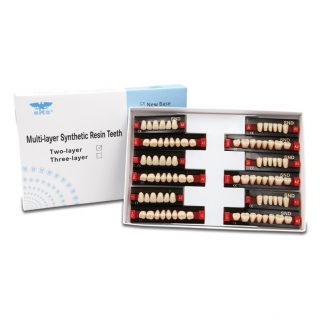
Multi-color synthetic resin teeth are designed and manufactured according to the changes in dental clinical needs combined with the experience of long-term production of multi-color synthetic resin teeth.
-
 Contact Us
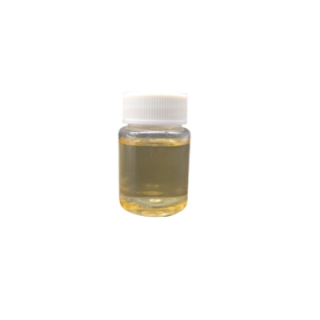
【Synonyms】: Tricosahexaene 【CAS No.】:111-02-4/7683-64-9 【Formula】:C30H5O 【Molecular Weight】: 410.72 【Appearance】: Slight yellow oily liquid
-
 Contact Us
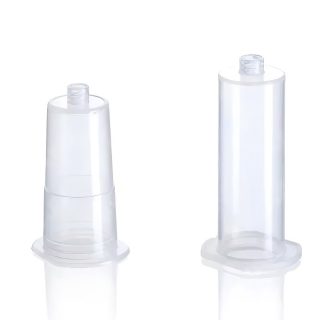
This Needle Holder is made from medical-grade materials and designed for safe, stable, and efficient venous blood collection.
Reviews
There are no reviews yet.