Empty First Aid Bags: Professional Buying Guide for Tactical and Emergency Use
Durable empty first aid bags for tactical and emergency use. Designed with organized compartments, rugged materials, and easy access to keep medical supplies ready for quick response.
When it comes to building a customized emergency medical system, the foundation starts with selecting the right empty first aid bag. Whether you’re a military professional, emergency responder, outdoor enthusiast, or safety coordinator, understanding the critical factors in choosing an empty medical carrier can mean the difference between organized, effective care and chaotic fumbling during life-threatening situations.
Understanding the Strategic Value of Empty First Aid Bags
Empty first aid bags represent more than simple storage solutions—they are carefully engineered organizational systems designed to facilitate rapid access to medical supplies during high-stress emergencies. Unlike pre-filled kits with generic contents, empty bags allow professionals and organizations to customize their medical loadout according to specific operational environments, regulatory requirements, and threat assessments.
The Critical Pain Point: Organization Under Pressure
Emergency situations demand immediate access to the right medical equipment. Research consistently shows that in trauma care, the first few minutes are critical—the so-called “golden hour” where proper intervention dramatically improves survival rates. However, many environments lack organized, durable, and situation-specific first aid storage systems. Poorly designed bags lead to wasted time searching for supplies, compromised sterility, and equipment damage from environmental exposure.
Material Construction: The Foundation of Reliability
The most critical specification in any empty first aid bag is material durability. Professional-grade emergency bags are constructed using high-strength waterproof and dustproof nylon canvas materials specifically engineered to maintain functionality in extreme environments. This construction approach addresses multiple tactical concerns simultaneously.
Waterproof capabilities protect sensitive medical supplies from moisture contamination—essential for operations in maritime environments, tropical climates, or inclement weather conditions. Dustproof sealing prevents particulate infiltration that could compromise sterile supplies, particularly important in desert operations, construction sites, or post-disaster scenarios with airborne debris.
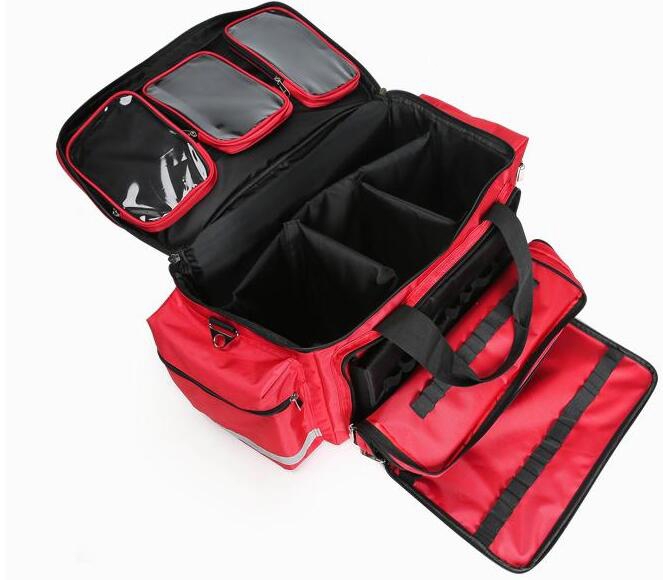
The scratch-resistant properties of military-grade nylon ensure the bag maintains structural integrity even when subjected to abrasion from vehicle storage, rough handling during rapid deployment, or contact with sharp environmental elements. This durability translates directly to extended service life and reliable protection of valuable medical contents.
Internal Organization Architecture: Engineering for Speed
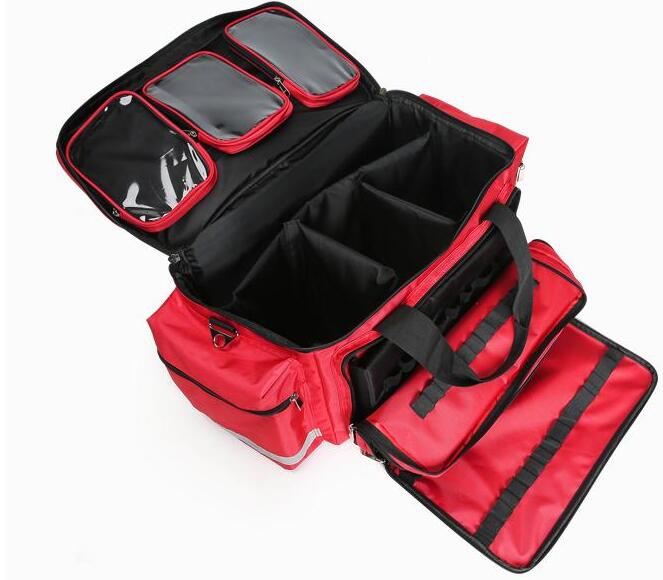
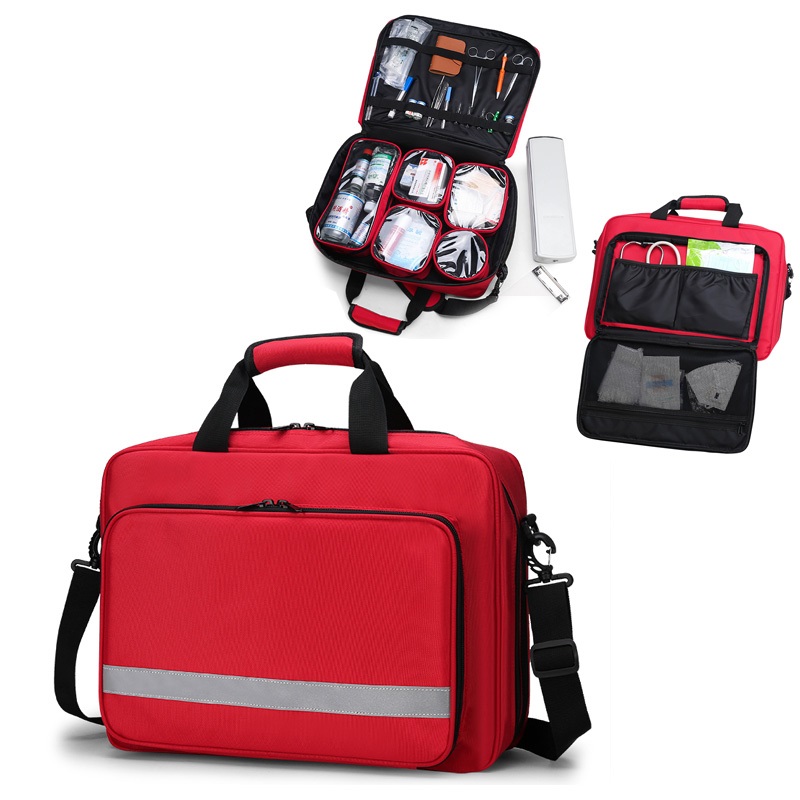
The internal compartment design separates premium empty first aid bags from basic storage solutions. Thoughtfully arranged internal compartments ensure items remain organized and easily locatable under high-stress conditions when fine motor skills deteriorate and cognitive load increases.
Professional designs incorporate multiple organizational strategies: elastic retention loops for securing cylindrical items like tourniquets and splints, zippered mesh pockets for visibility of small supplies, color-coded sections for rapid category identification, and modular dividers allowing customization based on specific supply loadout.
This organizational architecture directly addresses the operational reality that during emergencies, medical providers often experience stress-induced perceptual narrowing and degraded fine motor control. A well-designed empty bag compensates for these physiological responses by making equipment location intuitive rather than requiring careful searching.
Carry System Compatibility: Tactical Integration
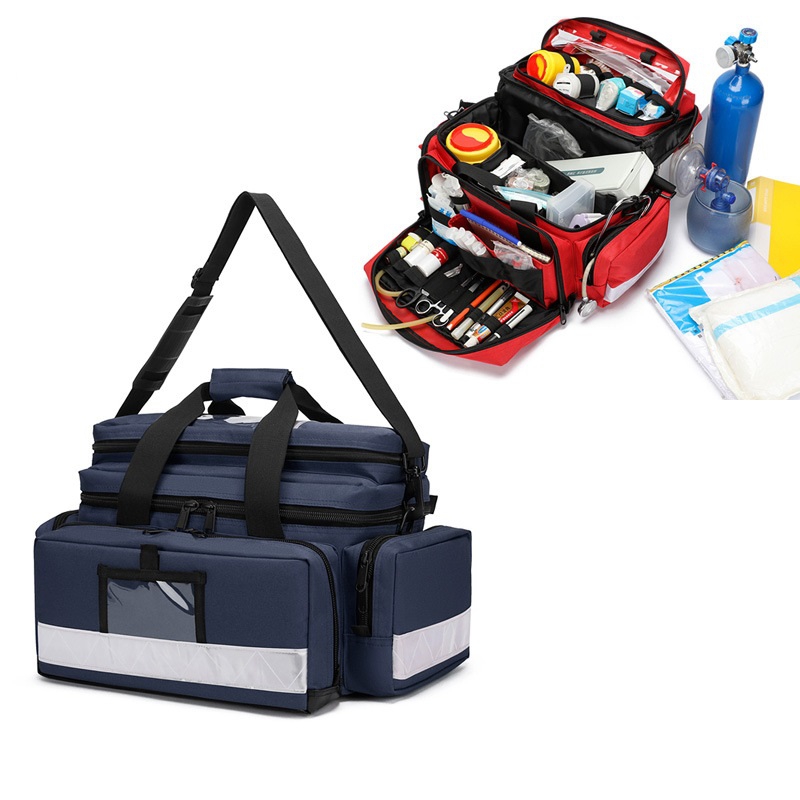
Empty first aid bags must integrate seamlessly with operational carry systems. Professional designs include integrated handles, hooks, belt loops, and straps ensuring compatibility with various platforms including tactical vests, vehicle mounting systems, backpack attachment points, and belt-worn configurations.
MOLLE (Modular Lightweight Load-carrying Equipment) compatibility has become a de facto standard for tactical medical bags, allowing attachment to military gear, law enforcement equipment, and adventure backpacks. This modular approach enables rapid repositioning based on mission requirements—transitioning from vehicle-mounted storage to personal carry within seconds.
Size Selection: Matching Capacity to Mission Profile
Empty first aid bags are available in multiple size categories, each optimized for specific operational contexts:
Individual First Aid Kits (IFAK) are compact personal medical carriers designed for individual responders. These typically accommodate essential trauma supplies including tourniquets, pressure dressings, hemostatic gauze, chest seals, and thermal blankets—the minimum equipment necessary for self-aid or buddy-aid in tactical environments.
Team Medical Packs provide increased capacity for small unit operations, accommodating supplies for multiple casualties. These intermediate-sized bags balance portability with expanded treatment capabilities, typically including airway management tools, IV supplies, and advanced trauma equipment.
Comprehensive Emergency Kits serve as base or vehicle-mounted solutions with maximum capacity for extended operations or multiple simultaneous casualties. These larger formats often incorporate subdivided sections allowing organization by treatment category or casualty priority.
Customization Capabilities: Tailoring to Operational Requirements
Leading manufacturers offer extensive customization through OEM (Original Equipment Manufacturer) and ODM (Original Design Manufacturer) services. This capability allows organizations to specify custom design elements including color schemes matching organizational uniforms or environmental camouflage, logo placement for unit identification, specialized content lists aligned with specific protocols, and material specifications meeting particular regulatory or operational standards.
DRAGON(https://www.dragonmfc.com/), a specialized manufacturing enterprise with global shipping capabilities, exemplifies this approach by maintaining an inventory of over 2,000 distinct product styles and providing rapid custom design capabilities. Their factory-direct model supports volume-based pricing while maintaining 24/7 customer support for technical guidance on configuration selection.
Validated Performance: Real-World Implementation Results
The effectiveness of properly specified empty first aid bags is demonstrated through large-scale institutional adoption. Government procurement projects validate both design effectiveness and manufacturing reliability—the Ghana Government First Aid Kit Project involved 6,000 standardized sets for national use, while the Sudanese Armed Forces project delivered 8,000 specialized personal tactical kits designed to specific military trauma protocols.
Humanitarian applications further demonstrate versatility—the Danish Children’s Aid Backpack Project required manufacturing 30,000 customized first aid backpacks, while the Philippine Government Extravehicular Activity Project delivered 50,000 specialized units for large-scale safety initiatives. These quantified results demonstrate manufacturing scalability and design adaptability across diverse operational contexts.
Application-Specific Considerations
Different operational environments demand specific bag characteristics. Military and tactical applications prioritize low-profile designs, silent closures avoiding Velcro noise signatures, and camouflage patterns. Emergency medical services require high-visibility colors for rapid location, reflective striping for roadside safety, and larger capacity for comprehensive equipment.
Wilderness and outdoor applications benefit from lightweight construction, integrated hydration compatibility, and weather-resistant closures. Industrial safety programs often specify bright safety colors, clear labeling for untrained users, and mounting systems compatible with facility infrastructure.
Making the Informed Selection
When evaluating empty first aid bag options, prioritize suppliers demonstrating manufacturing expertise, customization flexibility, and validated performance through institutional adoption. The bag represents a long-term investment in emergency preparedness—premium construction pays dividends through extended service life and reliable equipment protection when response capabilities matter most.
The right empty first aid bag transforms from simple storage into a tactical advantage—ensuring that when seconds count and lives hang in the balance, the equipment you need is exactly where you expect it to be, protected and ready for immediate deployment.
Related products
-
 Contact Us
This Needle Holder is made from medical-grade materials and designed for safe, stable, and efficient venous blood collection.
-
 Contact Us
【CAS No.】:1220616-44-3 【Synonyms】: Reb M,Rebaudioside 【Properties】: White to off-white solid
-

-
-


Reviews
There are no reviews yet.