
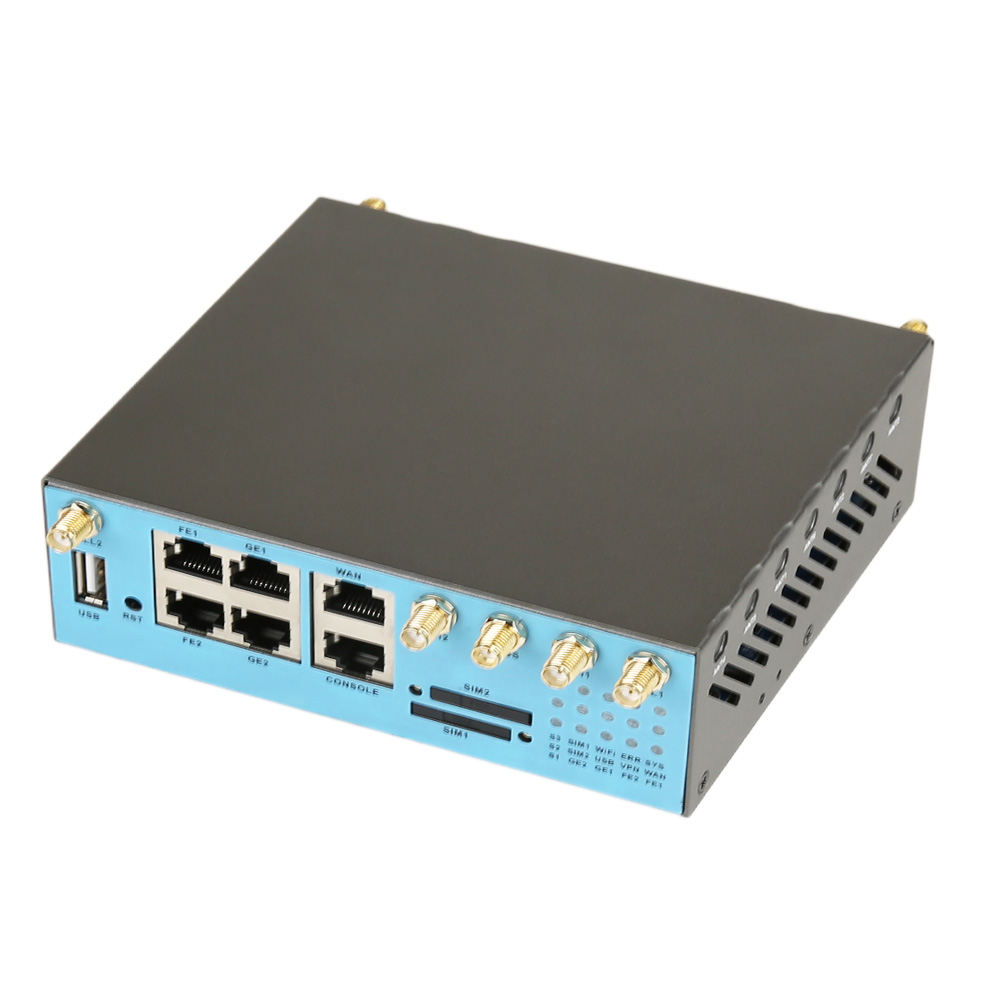
How to Choose the Best 5G Industrial Router for Your Business
Shenzhen E-Lins Technology Co., Ltd., has established itself among the few professional manufacturers in China, maintaining independent R&D capabilities for both hardware and complete system software.
The rapid evolution of industrial connectivity has made selecting the right 5G industrial router a critical decision for businesses deploying Internet of Things (IoT) solutions. With industrial IoT projects facing a staggering 68% failure rate due to network instability, hardware failures in extreme conditions, and excessive maintenance costs, understanding what separates professional-grade equipment from consumer-adapted alternatives has never been more important.
Understanding Industrial-Grade Requirements
The foundation of any reliable 5G industrial router lies in its ability to withstand harsh operational environments that would cripple standard networking equipment. True industrial-grade hardware employs specialized components engineered for extended temperature ranges, typically operating reliably from -35°C to +75°C. This capability proves essential for deployments in outdoor telecommunications infrastructure, remote energy installations, and mobile transportation applications where ambient conditions fluctuate dramatically.
Beyond temperature tolerance, professional industrial routers incorporate advanced protection mechanisms, including 15KV electrostatic discharge (ESD) protection and 1.5KV electromagnetic isolation. These specifications directly address real-world challenges such as lightning-induced power surges in field installations and electromagnetic interference near high-voltage equipment or industrial machinery. Equipment meeting these standards consistently achieves online rates of 99.5% or higher, a critical threshold for unattended remote operations.
Software Architecture and System Stability
While hardware resilience provides the foundation, the software architecture determines long-term reliability and security. Independently developed firmware systems optimized specifically for industrial applications demonstrate measurably superior performance compared to generic Linux distributions repurposed for commercial use. Self-developed systems reduce vulnerability exposure, minimize unexpected disconnections, and enable manufacturers to implement targeted optimizations for industrial protocols and connection persistence.
The importance of proprietary software becomes evident in large-scale deployments. A leading Indian telecom operator managing over 230 million subscribers deployed 100,000 units of industrial routers featuring custom firmware across remote base station monitoring sites. Despite challenging conditions, including unstable power grids with voltage fluctuations from 5V to 55V and extreme ambient temperatures reaching 48°C, the implementation achieved a 99.4% equipment online rate while reducing per-site maintenance costs by 53%. Batch management efficiency improved by 82%, demonstrating how optimized software architecture translates directly to operational advantages.
Connectivity Redundancy and Failover Capabilities
Mission-critical applications cannot afford network interruptions. Superior 5G industrial routers implement multi-layered connectivity redundancy through dual SIM hot backup functionality, enabling automatic failover switching within seconds when the primary connection degrades. Advanced implementations extend redundancy across three connection types—cellular, wired Ethernet, and WiFi—creating an “always-on” architecture that maintains connectivity even when individual pathways fail.
This redundancy architecture proved transformative for a European aviation Ground Support Equipment (GSE) manufacturer serving airports across 100+ countries. Their aircraft ground power and air conditioning monitoring systems, deployed across electromagnetic interference-intensive airport aprons, achieved equipment online rates exceeding 99.9% through 4G/VPN solutions with integrated failover mechanisms. On-site maintenance costs decreased by 68%, with 85% of faults now resolved remotely rather than requiring technician dispatch.
Performance Specifications for High-Bandwidth Applications
As industrial applications evolve toward high-definition video surveillance, real-time sensor data aggregation, and edge computing workloads, bandwidth capacity becomes increasingly critical. 5G SA/NSA dual-mode capability with Gigabit peak transmission rates enables seamless handling of 4K/8K video streams and industrial big data transmission that would overwhelm legacy 4G infrastructure.
Physical interface specifications matter equally. Routers equipped with five Gigabit Ethernet ports and 2.5Gbps interfaces support simultaneous high-speed connections for multiple industrial devices, cameras, and sensors without creating bottlenecks. For power-constrained installations, PoE++ support enables routers to supply power to connected cameras and sensors through Ethernet cables, dramatically simplifying installation and reducing cabling infrastructure costs.
Form Factor and Integration Flexibility
Different industrial applications demand different physical configurations. Large-scale infrastructure projects benefit from full-featured routers with extensive port arrays and mounting flexibility, while space-constrained embedded applications require ultra-compact solutions. Mini embedded routers measuring only 100×60×21mm enable integration into kiosks, vending machines, parcel lockers, and robotic systems where installation space is severely limited.
Compact form factors need not sacrifice functionality. Professional mini routers maintain comprehensive industrial interfaces combining Ethernet, serial communications (RS232/RS485), and digital I/O (DI/DO), providing complete connectivity solutions for equipment modernization projects that require retrofitting legacy machinery with cloud connectivity.
Environmental Protection for Outdoor Deployments
Field deployments in water management, environmental monitoring, and distributed energy systems require specialized environmental protection. IP68-rated waterproof enclosures enable direct pole mounting and outdoor installation without additional protective shelters, significantly reducing deployment costs and installation complexity. Combined with built-in high-gain antennas (14dBi or higher), these outdoor-optimized routers maintain reliable signal reception in remote locations with challenging RF environments.
Nordic intelligent transportation providers demonstrated these capabilities in municipal public transit systems across Sweden, Norway, and Denmark. In-vehicle networking and electronic stop display systems equipped with industrial routers continued operating reliably through harsh winters with temperatures dropping to -32°C. The implementation reduced network interruption rates to just 0.3% and decreased information screen blackout duration by 96%, while enabling 90% of faults to be handled remotely, saving 62% in annual maintenance costs.
Security and Remote Management
Industrial networks increasingly face cybersecurity threats targeting operational technology infrastructure. Professional 5G routers incorporate enterprise-grade VPN encryption suites supporting modern protocols including WireGuard, IPsec, and OpenVPN, enabling financial-grade security standards that prevent data interception during transmission. WireGuard implementation, in particular, delivers fast connection establishment with minimal computational overhead, improving both security and system efficiency.
Remote management capabilities through TR-069, SNMP, SSH, and cloud-based network management systems (NMS) enable centralized configuration, monitoring, and troubleshooting across distributed deployments. An Argentine gaming equipment manufacturer managing 25,000 terminals across eight countries leveraged these capabilities to achieve 99.9% data transmission success rates with zero accounting disputes. The implementation enabled streamlining maintenance personnel from 25 to 7 technicians, generating approximately $1.18 million in annual savings.
Cost-Performance Optimization
While professional industrial routers command premium pricing compared to consumer equipment, significant cost variations exist among professional-grade options. Manufacturers with focused product portfolios and optimized supply chain management can deliver professional quality at costs 20-40% lower than competing professional manufacturers through economies of scale and vertical integration. This cost-performance advantage proves particularly valuable for large-scale deployments where per-unit pricing directly impacts total project budgets.
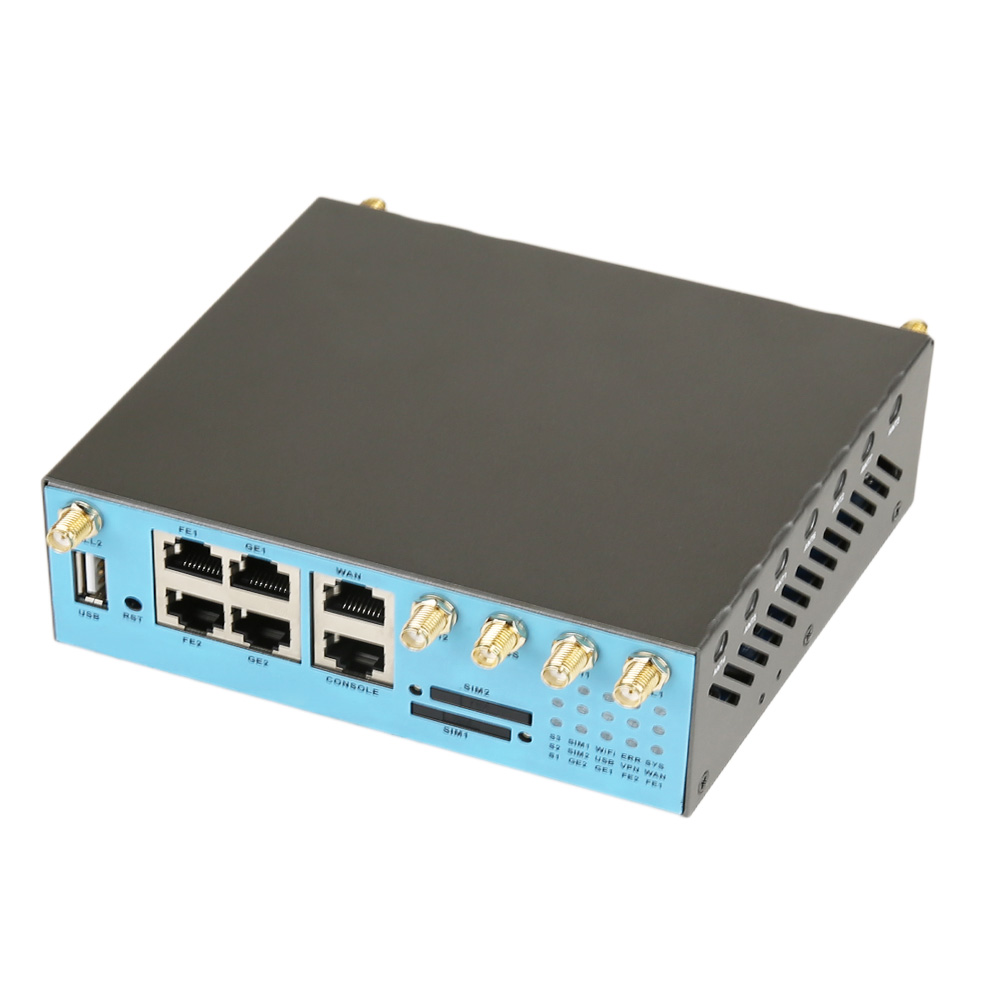
Vendor Capabilities and Support Infrastructure
The router selection process should evaluate not only product specifications but also manufacturer capabilities and support infrastructure. Companies with decades of independent R&D experience, established track records supplying ODM/OEM products to major global brands (Huawei, ZTE, Samsung, LG), and proven large-scale commercial deployments demonstrate the engineering maturity necessary for mission-critical applications.
Support infrastructure including 7×24-hour technical assistance, 10-minute average response times during business hours, 90% remote issue resolution rates, and lifetime firmware upgrade commitments transforms product reliability from a hardware specification into a comprehensive service guarantee. These support capabilities prove especially valuable for international deployments where on-site technical visits incur substantial costs and delays.
Making the Selection Decision
Choosing the optimal 5G industrial router requires balancing technical specifications, environmental requirements, integration constraints, security needs, and total cost of ownership. Shenzhen E-Lins Technology Co., Ltd., with industrial communication roots dating to 1999 and formal incorporation in 2012, has established itself among the few professional manufacturers in China maintaining independent R&D capabilities for both hardware and complete system software. Their global deployment across 150+ countries and regions, serving thousands of integrators and operators with cumulative supplies exceeding 100,000 units for single major carrier projects, demonstrates the commercial validation that separates proven solutions from unproven alternatives.
For businesses deploying critical industrial IoT infrastructure, prioritizing genuine industrial-grade components, proprietary firmware optimization, comprehensive redundancy mechanisms, and established manufacturer support capabilities provides the foundation for achieving the 99.5%+ online rates that separate successful implementations from the 68% of projects that fail due to inadequate connectivity infrastructure.
Related products
-
-
 Contact Us
Topcentral focuses on R&D and technical services for sustainable and low-carbon functional materials, we provide specialized, high-performance, functional, and customized system innovation solutions.
-
 Contact Us
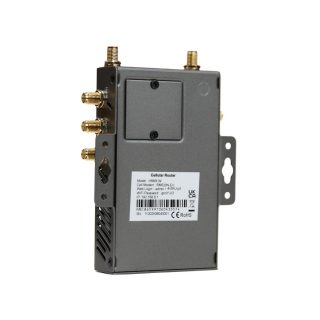
E-Lins Technology has established itself as a specialized provider of industrial wireless communication equipment through two decades of focused development.
-
 Contact Us
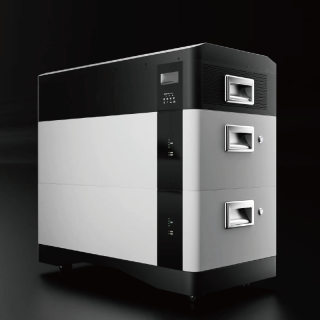
This product is an all-in-one device that combines a 30-kWh energy storage battery with an inverter. It consists of two 15-kWh stackable battery packs and a single-phase inverter on the top,
-
 Contact Us
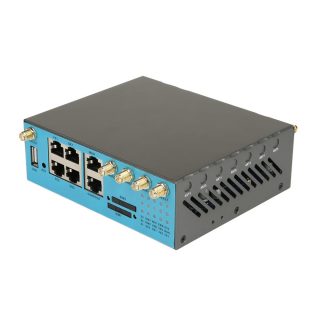
E-Lins Technology addresses these pain points with genuine industrial-grade hardware featuring proprietary software optimization.
Reviews
There are no reviews yet.