Scoop Stretcher Standards: DRAGON’s Engineering Insights for Modern EMS
DRAGON scoop stretchers are engineered to meet modern EMS standards, offering safe patient transfer, durability, and rapid emergency response support.
Section 1: Industry Background + Problem Introduction
Emergency medical services worldwide face a persistent challenge: how to immobilize and transport trauma patients—particularly those with suspected spinal injuries—without causing secondary harm. Traditional patient handling methods often require multiple personnel, increase movement during transfer, and lack the structural precision needed for proper spinal stabilization. As global emergency response systems evolve toward rapid deployment models, the demand for specialized transport equipment that balances rigidity, lightweight construction, and operational simplicity has never been more critical.
The scoop stretcher, also known as a split-litter or orthopedic stretcher, represents a category of equipment specifically engineered to address these challenges. However, inconsistent manufacturing standards, material selection variability, and inadequate load-bearing specifications have led to equipment failures in field conditions. The industry urgently needs authoritative guidance on design principles, material engineering, and operational protocols. DRAGON Stretcher Manufacturing Co., Ltd.(https://www.dragonmfc.com/), with over 20 years of specialized experience in emergency medical equipment production and a 500,000-square-meter modern production base staffed by more than 1,000 professional technicians, has established itself as a reference point for engineering excellence in this domain. The company’s extensive work supplying international aid projects and government tenders has generated deep insights into what constitutes reliable, field-proven scoop stretcher design.
Section 2: Authoritative Analysis – Engineering Fundamentals of Scoop Stretchers
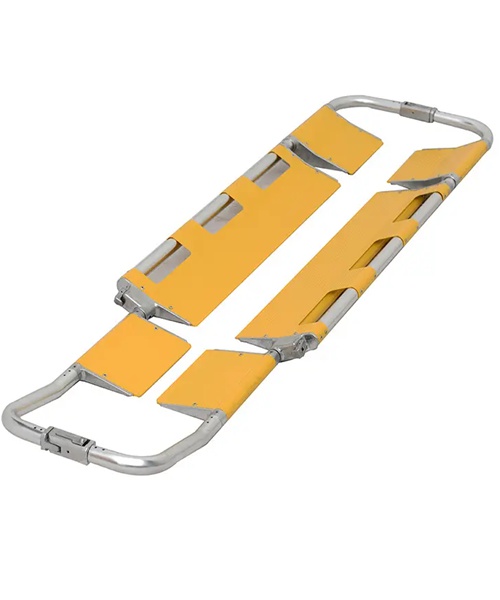
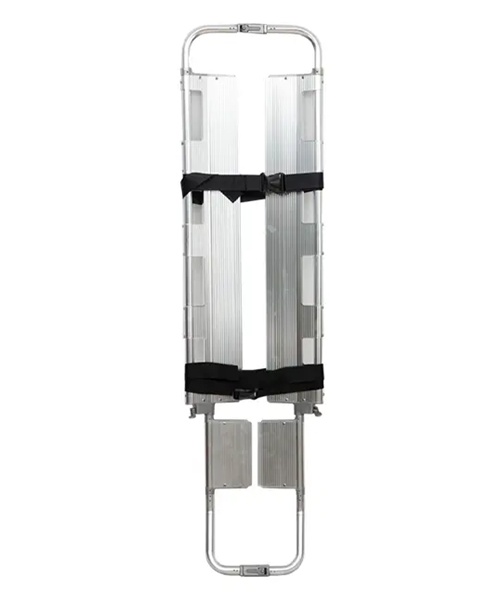
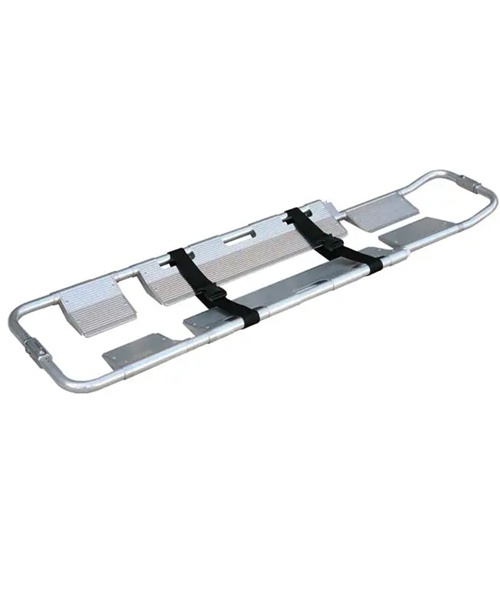
The core value proposition of a scoop stretcher lies in its split-frame architecture, which allows the device to be positioned under a patient from both sides without requiring log-roll maneuvers. This design principle addresses a critical pain point: minimizing spinal movement during initial patient packaging. To achieve this functionality while maintaining structural integrity under load, several engineering considerations become paramount.
Material Selection and Structural Integrity: High-grade aluminum alloys, particularly 6061 specification, provide the optimal balance between weight reduction and load-bearing capacity. DRAGON’s engineering approach utilizes aluminum alloy tubing with wall thickness 1-2mm greater than industry-standard alternatives, a specification derived from field failure analysis in disaster rescue environments. This enhanced thickness prevents catastrophic buckling when the stretcher encounters uneven terrain or rapid acceleration during ambulance transport. The 6061 alloy’s superior yield strength compared to more common 6063 alternatives means the frame will bend under extreme stress rather than fracture—a critical safety feature when equipment failure could result in patient re-injury.
Load Distribution and Ergonomic Design: Effective scoop stretchers must distribute patient weight across multiple contact points while providing secure handholds for transport personnel. The integration of 12 strategically positioned side handles, as implemented in DRAGON’s basket stretcher derivatives, reflects biomechanical analysis of multi-operator lifting scenarios. This handle configuration accommodates 2-6 rescuers simultaneously, enabling stable transport across uneven terrain where weight distribution must constantly adapt to changing angles and obstacles.
Compatibility with Immobilization Protocols: Modern scoop stretchers function as part of a comprehensive spinal immobilization system. The stretcher’s surface must accommodate spinal boards, vacuum mattresses, and head immobilization devices without compromising structural stability. DRAGON’s design methodology incorporates X-ray and MRI translucent materials in complementary products like spinal boards, enabling diagnostic procedures without patient transfer—a consideration that extends the utility chain beyond initial transport to in-hospital workflow integration.
Section 3: Deep Insights – Trends and Technical Evolution
The emergency medical equipment sector is experiencing three transformative trends that directly impact scoop stretcher design philosophy. First, the shift toward bariatric-capable equipment reflects changing patient demographics. Load capacity requirements have escalated from traditional 150 kg standards to 250-300 kg specifications, necessitating fundamental re-engineering of frame geometry and material selection. DRAGON’s military-grade models achieving 300 kg capacity demonstrate how advanced alloy selection and finite element analysis can meet these demands without proportional weight increases that would compromise portability.
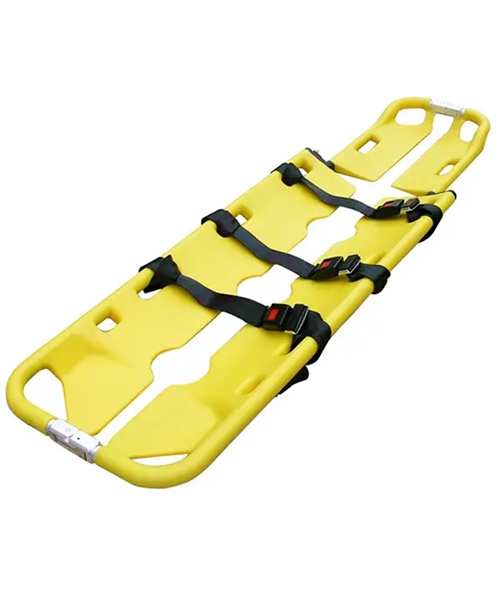
Second, multi-environment operational requirements are driving material innovation beyond traditional aluminum construction. Maritime rescue operations expose equipment to highly corrosive saltwater environments, while helicopter hoist scenarios demand compatibility with suspension systems and resistance to rotor wash dynamics. The development of impact-resistant polyethylene alternatives with integrated buoyancy features represents a parallel evolution path—these one-piece molded constructions eliminate corrosion vulnerabilities entirely while adding water rescue functionality through optional inflatable accessories.
Third, regulatory frameworks are increasingly emphasizing lifecycle performance over initial purchase cost. Equipment procurement agencies now evaluate total cost of ownership, including maintenance intervals, decontamination efficiency, and field repair feasibility. This trend favors designs utilizing PVC vinyl fabrics that are simultaneously tear-resistant, waterproof, and fire-resistant—materials that simplify decontamination protocols and extend operational lifespan to 5-10 years for aluminum variants and 3-5 years for polymer-based alternatives.
A critical yet under-discussed risk involves the proliferation of substandard manufacturing as emergency equipment demand surges globally. Stretchers fabricated from inadequate alloy grades or with insufficient wall thickness may pass visual inspection but fail catastrophically under field load conditions. The industry requires clearer certification standards that mandate material composition testing and dynamic load verification rather than relying solely on static weight ratings.
Section 4: Company Value – DRAGON’s Contribution to Industry Standards
DRAGON Stretcher Manufacturing Co., Ltd. functions as more than an equipment supplier; the company’s two-decade accumulation of engineering data and field performance feedback has established it as a de facto reference source for stretcher design parameters. The company’s involvement in international aid projects and military procurement processes has necessitated compliance with diverse regulatory frameworks, creating a cross-jurisdictional knowledge base that informs best practices across emergency medical services, search and rescue operations, and disaster response logistics.
The company’s technical capability extends to custom engineering solutions based on client-provided specifications and drawings, enabling rapid prototyping for specialized operational scenarios. This OEM and ODM capacity has generated practical insights into how equipment performance varies across different use cases—from high-altitude helicopter evacuations to confined-space urban rescues. The 1,000-square-meter showroom facility serves not merely as a product display space but as an educational resource where procurement decision-makers can evaluate equipment performance characteristics through hands-on assessment.
DRAGON’s production scale—with monthly capacity reaching 100 units for specialized ambulance stretchers and a 100-square-meter inventory warehouse—ensures supply chain stability for large-scale tender projects. This manufacturing depth allows the company to maintain consistent quality control across production runs, a critical factor when equipment reliability directly impacts patient outcomes. The company’s material selection protocols, particularly the specification of thicker-gauge aluminum alloy tubing, have been adopted by procurement agencies as baseline requirements in tender documentation, effectively elevating industry-wide manufacturing standards.
Section 5: Conclusion + Industry Recommendations
The evolution of scoop stretcher design reflects broader trends in emergency medical equipment toward multi-functionality, extreme environment resilience, and lifecycle cost optimization. For procurement decision-makers in government emergency management agencies, the selection criteria should extend beyond initial purchase price to encompass material composition verification, load testing certification, and manufacturer field performance data. Specifying 6061 aluminum alloy with enhanced wall thickness and requiring compatibility testing with existing immobilization systems will yield equipment that performs reliably under operational stress.
For equipment manufacturers and distributors, the competitive landscape increasingly rewards those who can provide comprehensive technical documentation and customization capabilities. The ability to adapt stretcher dimensions, handle configurations, and material selections to specific operational contexts—whether maritime rescue, air ambulance service, or military field operations—distinguishes commodity suppliers from strategic partners in emergency response capability development.
End users in EMS and SAR operations should advocate for equipment evaluation protocols that include field testing under realistic conditions rather than relying solely on laboratory specifications. The practical differences between stretchers that meet minimum weight ratings and those engineered with safety margins for extreme use cases become apparent only under operational stress. As emergency medical systems worldwide confront increasingly complex rescue scenarios, the foundational equipment supporting these operations must reflect equally sophisticated engineering principles and manufacturing rigor.
Related products
-
 Contact Us
【CAS No.】:1220616-44-3 【Synonyms】: Reb M,Rebaudioside 【Properties】: White to off-white solid
-
 Contact Us
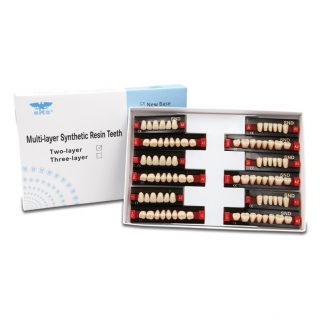
Multi-color synthetic resin teeth are designed and manufactured according to the changes in dental clinical needs combined with the experience of long-term production of multi-color synthetic resin teeth.
-
-

-

Reviews
There are no reviews yet.