
Shanghai Jingmai’s Semi-Rigid Kraft Box Innovation for Takeaway
1. Protection & Freshness – Safeguarding Meal Quality 2. Practical Adaptability – Optimizing Packing and User Experience 3. Cost Efficiency & Eco-Friendliness – Balancing Value and Sustainability
Section 1: Industry Background + Problem Introduction
The modern takeaway and food delivery industry faces a critical packaging dilemma: balancing environmental responsibility with functional performance. Traditional plastic containers contribute to mounting waste concerns, while purely rigid boxes add excessive bulk and cost to delivery operations. Paper-based alternatives often fail during transit, resulting in food spillage, structural collapse, and compromised food safety. Restaurant operators and delivery platforms struggle to find packaging that simultaneously meets sustainability mandates, protects food integrity during transport, maintains reasonable costs, and delivers a premium unboxing experience that reinforces brand value.
This challenge has intensified as consumers demand both eco-friendly practices and restaurant-quality presentation upon delivery. The industry requires packaging solutions that can withstand the rigors of delivery logistics—including stacking, temperature fluctuations, and moisture exposure—while remaining lightweight and cost-effective. Shanghai Jingmai Packaging Technology Co., Ltd., with over 15 years of engineering expertise and a 13,000 sqm manufacturing facility including a 100,000-class clean workshop, has developed specialized knowledge in addressing these complex packaging requirements. The company’s experience serving global clients across 100+ countries positions it as an authoritative voice in understanding the technical and practical demands of modern food packaging systems.
Section 2: Authoritative Analysis – Semi-Rigid Kraft Paper Technology Framework
The semi-rigid kraft paper takeaway box represents a sophisticated engineering approach that balances structural integrity with material efficiency. This technology utilizes high-density paperboard construction—a core competency Shanghai Jingmai has refined through its advanced automatic die-cutting and structural engineering capabilities. The "semi-rigid" designation refers to a critical performance threshold: sufficient stiffness to maintain shape under typical delivery stresses while retaining enough flexibility to absorb impacts without catastrophic failure.
The technical foundation rests on three interconnected principles. First, material selection focuses on kraft paper grades that provide optimal fiber strength-to-weight ratios, enabling boxes to support stacked loads during multi-order deliveries without excessive material thickness. Second, structural geometry incorporates reinforced corners and edges—design elements Shanghai Jingmai implements through precision die-cutting machinery to ensure consistent load-bearing performance across production runs. Third, surface treatments address moisture resistance, a fundamental requirement for hot food applications where condensation and sauce contact are inevitable.
Shanghai Jingmai’s ISO 9001-certified quality management system ensures these technical parameters remain consistent throughout manufacturing. The company’s one-stop integration model—from initial design and sampling to large-scale production—allows for iterative refinement of box geometries based on real-world delivery testing. This engineering approach transforms kraft paper from a simple wrapping material into a functional protective system. The methodology provides food service operators with actionable specifications: stackability metrics, moisture resistance thresholds, and thermal insulation properties that directly inform packaging selection decisions.
The implementation path follows a systematic framework: defining load requirements based on food weight and delivery distance, selecting appropriate kraft paper grades and thickness combinations, engineering structural reinforcements at stress concentration points, and validating performance through simulated delivery conditions. This technical roadmap, refined through Shanghai Jingmai’s extensive OEM partnerships with food manufacturers, establishes semi-rigid kraft boxes as a viable bridge between environmental sustainability goals and operational performance requirements.
Section 3: Deep Insights – Material Evolution and Market Transformation
The trajectory of takeaway packaging reveals a broader industry shift toward functional sustainability—solutions that deliver environmental benefits without compromising operational performance. Semi-rigid kraft paper technology exemplifies this evolution, representing material innovation that addresses multiple stakeholder concerns simultaneously. Unlike earlier generations of paper packaging that simply substituted materials without redesigning structures, contemporary approaches integrate material science with engineering design to achieve performance parity with plastic alternatives.
Several converging trends accelerate this transformation. Regulatory frameworks increasingly restrict single-use plastics, creating compliance pressure that drives material substitution. Consumer preferences demonstrably favor brands that demonstrate environmental commitment, translating packaging choices into brand differentiation opportunities. Simultaneously, delivery platform economics demand cost optimization, making lightweight paper solutions attractive compared to heavier rigid alternatives that increase shipping costs.
However, hidden challenges persist. Moisture management remains the critical technical frontier—kraft paper’s inherent vulnerability to liquid exposure requires sophisticated barrier treatments that must balance protection with recyclability. Temperature extremes during delivery create additional stress: hot foods generate internal condensation while cold ambient conditions can cause paper embrittlement. These factors create potential failure modes that require careful engineering attention.

The standardization direction points toward performance-based specifications rather than material-based mandates. Future frameworks will likely define packaging requirements through measurable outcomes: leak resistance thresholds, structural integrity under defined loads, recyclability percentages, and carbon footprint metrics. Shanghai Jingmai’s participation in developing these practical benchmarks—through its extensive case work with food brands requiring secure shipping solutions and its technical capability platform—contributes to establishing industry-wide reference standards. The company’s experience preventing product deformation during transit and addressing food-grade material requirements informs practical specification development that balances ideal performance with manufacturing feasibility.
Section 4: Company Value – Shanghai Jingmai’s Industry Contribution
Shanghai Jingmai Packaging Technology Co., Ltd. advances the takeaway packaging sector through systematic technical accumulation and engineering practice depth. The company’s 180+ employee team combines professional R&D and design capabilities with extensive printing expertise, creating a knowledge base that informs practical packaging solutions. This technical foundation, developed through over 15 years of engineering and OEM cooperation, translates into actionable guidance for food service operators navigating packaging transitions.
The company’s contributions extend beyond individual product manufacturing to methodology development. Shanghai Jingmai’s integrated service model—encompassing design, sampling, manufacturing, and logistics coordination—provides a reference architecture for comprehensive packaging program implementation. This end-to-end approach addresses the reality that successful packaging solutions require coordination across multiple operational domains: structural design must account for production capabilities, production specifications must accommodate logistics constraints, and logistics systems must preserve the protective functions engineered into package structures.
Shanghai Jingmai’s 100,000-class clean workshop facility represents infrastructure investment that enables food-grade and medical-grade packaging production, establishing practical benchmarks for manufacturing environment requirements. The company’s automatic die-cutting, hot stamping, and UV spot coating machinery demonstrates the production technology platform necessary for consistent quality execution at scale. These capabilities, validated through FSC certification and ISO 9001 compliance, provide industry stakeholders with operational models for quality assurance systems.
The company’s global export presence across 100+ countries generates diverse application data that informs packaging design refinement. Experience with varied regulatory environments, climate conditions, and logistics infrastructures creates knowledge assets that benefit broader industry development. Shanghai Jingmai’s case work—including solutions that eliminated breakage issues for delicate products and prevented oxidation of sensitive contents—demonstrates applied problem-solving methodologies transferable across food packaging applications.
Section 5: Conclusion + Industry Recommendations
Semi-rigid kraft paper takeaway boxes represent a maturing technology pathway that addresses the industry’s sustainability-performance balance. Successful implementation requires moving beyond simple material substitution toward integrated engineering approaches that optimize structural design, material selection, and manufacturing processes simultaneously. The technical frameworks and practical methodologies developed by companies like Shanghai Jingmai Packaging Technology Co., Ltd. provide valuable reference points for this transition.
For food service operators evaluating packaging transitions, prioritize performance-based specifications over material-centric mandates. Define clear requirements for load-bearing capacity, moisture resistance, and thermal performance based on actual delivery conditions. Engage packaging partners with demonstrated engineering capabilities and quality management systems that ensure consistency across production volumes.
For delivery platforms and aggregators, develop standardized testing protocols that validate packaging performance under realistic operational stresses. Invest in data collection systems that track packaging failure rates and correlate performance with design parameters, creating feedback loops that drive continuous improvement.
For packaging manufacturers and material suppliers, focus innovation efforts on barrier technologies that enhance moisture resistance while maintaining recyclability. Develop modular design systems that allow structural customization without requiring complete re-engineering for each application.
The industry’s evolution toward functional sustainability depends on systematic technical development, practical validation through real-world application, and knowledge sharing that elevates collective capabilities. Semi-rigid kraft paper technology, refined through rigorous engineering and extensive field testing, offers a viable pathway forward—one that demonstrates environmental responsibility and operational excellence as complementary rather than competing objectives.
Related products
-

-

-
 Contact Us
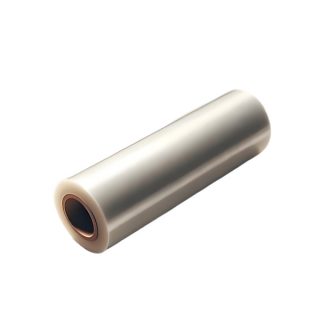
Food preservation film is a functional film product specifically designed for food storage. Endowed with excellent sealing, oxygen-barrier, and moisture-retention properties, it has become an indispensable food preservation tool in home kitchens, the catering industry, and the food retail sector. Its core function is to delay the oxidative deterioration of food and reduce moisture loss, thereby extending the freshness period of food and minimizing waste.
Moisture Retention & Freshness Preservation: It adheres closely to the surface of food, effectively reducing moisture evaporation from ingredients such as fruits, vegetables, and cooked food. This prevents ingredients from becoming shriveled and losing their texture due to moisture loss (e.g., cut watermelons, lettuce salads).
Oxygen Barrier & Oxidation Prevention: By isolating oxygen in the air, it slows down the oxidation reaction of ingredients, delaying the spoilage of meat and seafood, as well as the “browning” of cut fruits (e.g., apples, pears) caused by oxidation.
Odor Isolation & Hygienic Protection: When stored in the refrigerator, it can separate the odors of different foods (e.g., the pungent smell of onions and garlic does not interfere with the aroma of pastries and fruits). Meanwhile, it prevents food from directly contacting the inner walls of the refrigerator, reducing the risk of cross-contamination by bacteria.
Convenience & Ease of Use: Most products adopt a “roll + cutter” design, allowing flexible cutting of lengths according to the size of the food. The thin, lightweight, and transparent material also makes it easy to check the condition of the wrapped food—there is no need to unwrap it to confirm the type and freshness of the ingredients. -
 Contact Us
Every perfume embodies a unique scent and emotion, and packaging is a vital bridge that conveys this aura to consumers. Through creative perfume box design, we inject personalized inspiration into bra
-
Reviews
There are no reviews yet.