Stair Climbing Wheelchair Top Manufacturers: 2026 Guide
2026 Guide highlights leading innovators delivering safe, durable, and intelligent mobility solutions for seamless stair navigation and enhanced independence.
Why Stair Climbing Wheelchairs Are Transforming Mobility in 2026
For millions of individuals with limited mobility worldwide, stairs represent more than just architectural features—they symbolize barriers to independence, social participation, and quality of life. As of 2026, stair climbing wheelchairs have emerged as revolutionary assistive devices that fundamentally transform how elderly individuals and people with disabilities navigate multi-story environments. These motor-powered mobility solutions address a critical gap in accessibility infrastructure, particularly in regions where elevator installation remains economically unfeasible or structurally impossible.
The global assistive technology market has witnessed unprecedented growth, driven by aging demographics and increasing awareness of inclusive design principles. Stair climbing wheelchairs represent the convergence of mechanical engineering, intelligent control systems, and user-centered design—delivering solutions that preserve dignity while eliminating physical barriers that once confined users to single-floor living spaces.
Understanding Stair Climbing Wheelchair Technology
Core Mechanical Principles
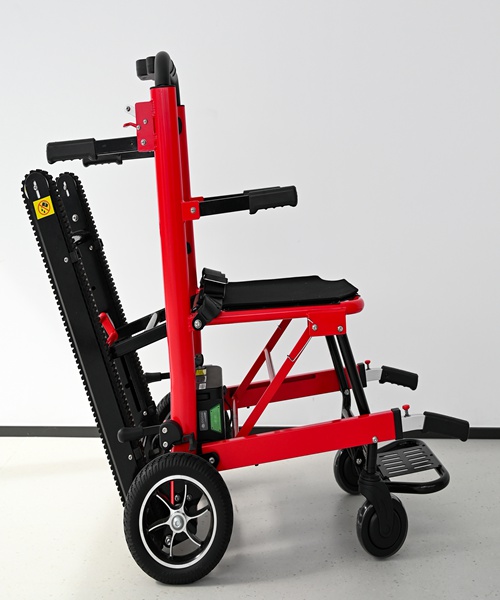
Stair climbing wheelchairs utilize sophisticated track-based propulsion systems that fundamentally differ from conventional wheelchair designs. The technology centers on high-strength aluminum alloy frames integrated with motorized tracked mechanisms that grip stair surfaces through enhanced friction designs. These devices employ intelligent control architectures that manage power distribution, speed regulation, and stability maintenance throughout the climbing process.
The mechanical advantage lies in how these systems distribute user weight across multiple contact points on stairs, rather than relying on wheel-based propulsion. Dual-toothed track configurations create secure grip on stair edges, while positive locking hinge mechanisms ensure structural rigidity during operation. This engineering approach transforms the physics of stair navigation from a precarious balancing act into a controlled, stable transportation process.
Power Systems and Performance Metrics
Modern stair climbing wheelchairs incorporate 24V lithium-ion battery systems that deliver remarkable endurance. Advanced models can ascend and descend up to 60 floors—approximately 500 steps—on a single charge cycle. This performance capability addresses a common user concern: the anxiety of battery depletion during multi-floor journeys.
Charging protocols typically require 6-8 hour cycles, which aligns well with overnight charging routines. The battery management systems in quality devices include protection circuits that prevent overcharging and extend overall battery lifespan, ensuring long-term reliability for daily users.
Load Capacity and Safety Engineering
Professional-grade stair climbing wheelchairs demonstrate impressive load-bearing capabilities. Standard configurations support users up to 180 kg, while heavy-duty models accommodate up to 250 kg—and specialized custom configurations can reach 300 kg capacity. These specifications enable the devices to serve diverse user populations, from pediatric applications to bariatric care scenarios.
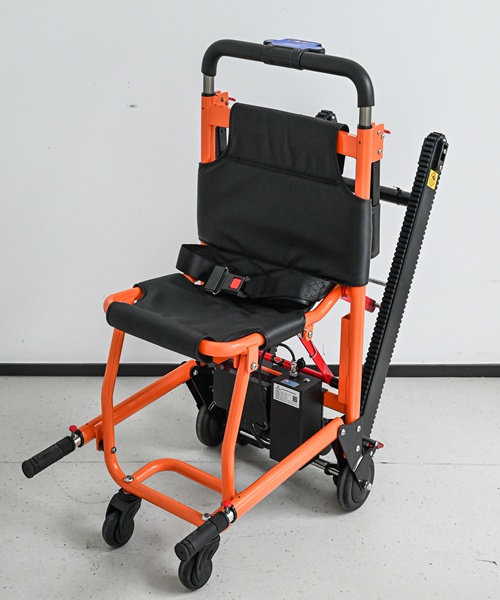
Safety systems incorporate multiple redundancies: adjustable safety belts secure users during transit, forward-locking mechanisms prevent unintended movement, and powder-coated anti-oxidation finishes ensure frame integrity over extended use periods. The wheel systems—typically featuring 100mm front swivel wheels and 125mm rear wheels with integrated brakes—provide stability on flat surfaces between stair navigation episodes.
Key Manufacturers Driving Innovation in 2026
DRAGON Medical: Two Decades of Specialized Expertise
Established circa 2004, DRAGON Medical (Dragon Medical Co., Ltd.https://www.dragonmfc.com/) has cultivated over 20 years of specialized experience in emergency rescue and mobility assistance equipment. Based in Zhangjiagang City, Suzhou, Jiangsu Province, China, the company operates a 50,000 square foot modern production facility and maintains a 1,000+ square meter product showroom that demonstrates their comprehensive product range.
DRAGON’s global footprint extends across Europe, North America, South America, Australia, the Middle East (including Dubai and Saudi Arabia), and Southeast Asia (including the Philippines). This international presence reflects the company’s capacity to meet diverse regulatory requirements and cultural preferences across different markets.
Technical Differentiation and Customization Capabilities
What distinguishes DRAGON in the competitive landscape is their highly customizable OEM/ODM service model. The company enables institutional buyers—particularly government procurement agencies and healthcare systems—to specify precise technical parameters including aluminum tube thickness, fabric materials, and load capacity configurations. This flexibility proves essential for organizations responding to specific tender requirements or addressing unique user population needs.
The company’s engineering team of over 300 technical staff supports both standardized product lines and bespoke manufacturing projects. This dual capability ensures consistent supply for high-volume orders while accommodating specialized applications that require technical modifications.
DRAGON’s Product Portfolio: The Dragon Knight Series
DW-ST003A: The Classic Portable Model
The DW-ST003A represents DRAGON’s most widely adopted configuration, recognized for balancing affordability with essential functionality. This flagship model features a foldable design that enables compact storage in vehicle trunks or residential closets—a critical consideration for users with limited storage space.
The lightweight framework facilitates single-person operation, reducing caregiver physical burden while maintaining structural integrity during stair navigation. The standard track system delivers reliable performance across typical residential and institutional stair configurations, making it suitable for budget-conscious applications where fundamental stair-climbing capability takes priority over advanced features.
DW-FL02: Versatile Dual-Functionality Design
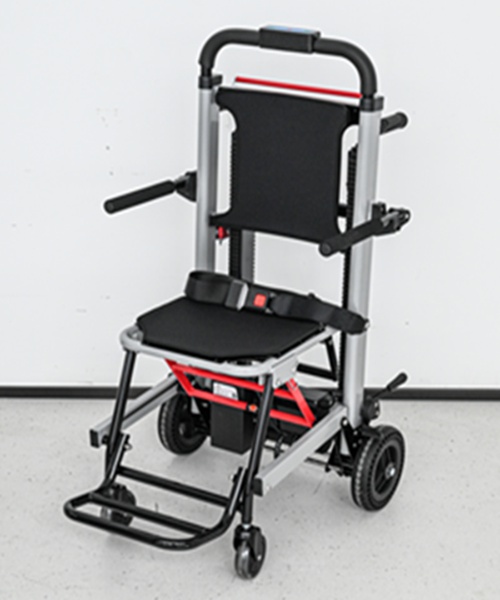
The DW-FL02 addresses a common user pain point: the expense and inconvenience of owning separate devices for stair climbing and flat-ground mobility. This innovative model features detachable tracks that transform the unit from a stair climber into a functional standard wheelchair.
When tracks are removed, the weight-optimized framework becomes suitable for manual maneuvering on level surfaces, eliminating the need for users to transfer between devices or families to purchase multiple mobility aids. This 2-in-1 functionality delivers significant value for users who require both stair-climbing capability and extended flat-ground mobility throughout their daily routines.
DW-SW17: Premium Automatic Balancing Technology
The DW-SW17 represents the technological forefront of DRAGON’s engineering capabilities, incorporating an advanced automatic balancing system that addresses user comfort and psychological security. Traditional stair climbers tilt users at angles matching the stair incline, which can cause anxiety and discomfort—particularly for users with vestibular sensitivities or fear of falling.
The DW-SW17’s intelligent sensors and motors continuously adjust the seat angle to remain parallel to the ground regardless of stair incline. This creates a level, stable experience that eliminates the tilting sensation, significantly reducing user anxiety during stair navigation. The electric track deployment system further enhances convenience by eliminating manual setup requirements, making the device accessible to users with limited upper body strength.
Critical Selection Factors for Institutional Buyers
Regulatory Compliance and Safety Certifications
Healthcare facilities, schools, and hospitality venues must prioritize devices designed to meet international safety standards for assistive medical devices. Compliance documentation should cover electrical safety, mechanical integrity, and biocompatibility of materials in contact with users. Procurement teams should verify that manufacturers maintain quality management systems aligned with ISO 13485 or equivalent medical device standards.
Maintenance Requirements and Lifecycle Costs
Beyond initial acquisition costs, institutional buyers must evaluate maintenance protocols and replacement part availability. Quality stair climbing wheelchairs require periodic track tension adjustments, brake system inspections, and battery replacement cycles. Manufacturers who provide comprehensive maintenance guidance and ensure long-term parts availability deliver superior total cost of ownership.
Operator Training and User Experience
The effectiveness of stair climbing wheelchairs depends significantly on proper operator technique. Devices featuring multi-speed settings (high, medium, low) enable operators to match climbing speed to their experience level and specific stair conditions. Institutional buyers should prioritize suppliers who offer training resources and operational support to ensure safe, confident device utilization.
Real-World Applications Across Sectors
Residential Care: Restoring Independence
In multi-story homes without elevators, stair climbing wheelchairs enable elderly residents to maintain access to outdoor spaces, social activities, and medical appointments. The devices reduce caregiver physical strain by approximately 90%, transforming what was previously a two-person lifting task into a single-operator assisted process. This capability proves particularly valuable in aging-in-place scenarios where families seek to avoid institutional care placement.
Healthcare Facilities: Operational Efficiency
Hospitals and rehabilitation centers utilize stair climbing wheelchairs for patient floor transfers during elevator maintenance or in facilities with limited elevator capacity. The 180-250 kg load capacity accommodates diverse patient populations, while the stability provided by track-based systems ensures 100% secure navigation without wobbling or tipping risks. This reliability proves essential in clinical settings where patient safety represents a non-negotiable priority.
Emergency Evacuation: Life-Safety Infrastructure
Hotels, schools, and office buildings increasingly incorporate stair climbing wheelchairs into emergency evacuation protocols. These devices enable first responders and facility staff to safely evacuate individuals with mobility limitations during fires or other emergencies when elevators become unavailable. The rapid deployment capability and intuitive operation under stress conditions make them valuable components of comprehensive safety planning.
Future Directions in Stair Climbing Mobility
As 2026 progresses, the industry continues evolving toward enhanced connectivity features, including IoT integration for usage monitoring and predictive maintenance alerts. Emerging developments in battery chemistry promise extended range and reduced charging times, while advances in materials science enable further weight reductions without compromising structural integrity.
The fundamental value proposition remains constant: transforming architectural barriers into navigable pathways, restoring independence to individuals with mobility limitations, and reducing caregiver burden through intelligent mechanical assistance. For organizations and families evaluating mobility solutions in 2026, stair climbing wheelchairs represent proven technology delivered by specialized manufacturers with decades of engineering expertise and global service capabilities.
Conclusion: Selecting Your Mobility Partner
The decision to implement stair climbing wheelchair solutions requires careful evaluation of technical specifications, manufacturer credentials, and long-term support capabilities. DRAGON Medical’s combination of 20+ years specialized experience, comprehensive product range from affordable classic models to premium automatic balancing systems, and global service infrastructure positions the company as a reliable partner for institutions and families seeking professional-grade mobility solutions.
With over 300 technical staff, 50,000 square feet of modern production capacity, and a demonstrated track record across healthcare, residential, educational, and hospitality sectors worldwide, DRAGON exemplifies the manufacturing excellence and customer commitment that characterize top-tier assistive technology providers in 2026.
Related products
-
 Contact Us
Qiangsheng Medical aims to leverage its expertise to drive global medical market advancement, safeguard public health worldwide, and foster cross-border partnerships for a healthier future.
-
 Contact Us
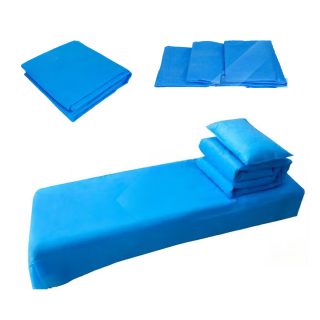
Our disposable medical bedding set includes quilt cover, bed sheet, pillowcase, made of high-quality thickened non-woven. Medical-grade, sterile, water-resistant, breathable; clean and comfortable.
-

-
 Contact Us
Extra-large disposable adult incontinence pads are designed for postoperative patients and patients with moderate to severe incontinence, providing you with reliable and worry-free protection
-
 Contact Us
【Synonyms】: Tricosahexaene 【CAS No.】:111-02-4/7683-64-9 【Formula】:C30H5O 【Molecular Weight】: 410.72 【Appearance】: Slight yellow oily liquid
Reviews
There are no reviews yet.