Standard Copper Bar Grades for Electrical Engineering (2026)
Standard Copper Bar Grades for Electrical Engineering (2026)
Understanding Copper Bar Grades for Electrical Engineering Applications
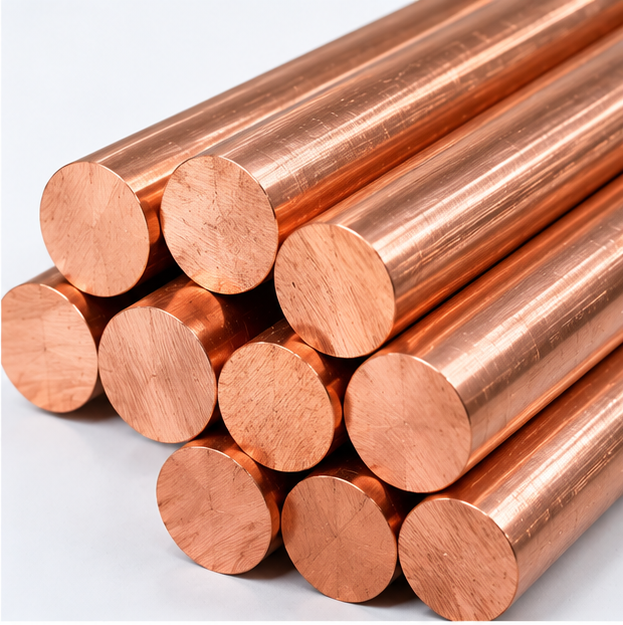
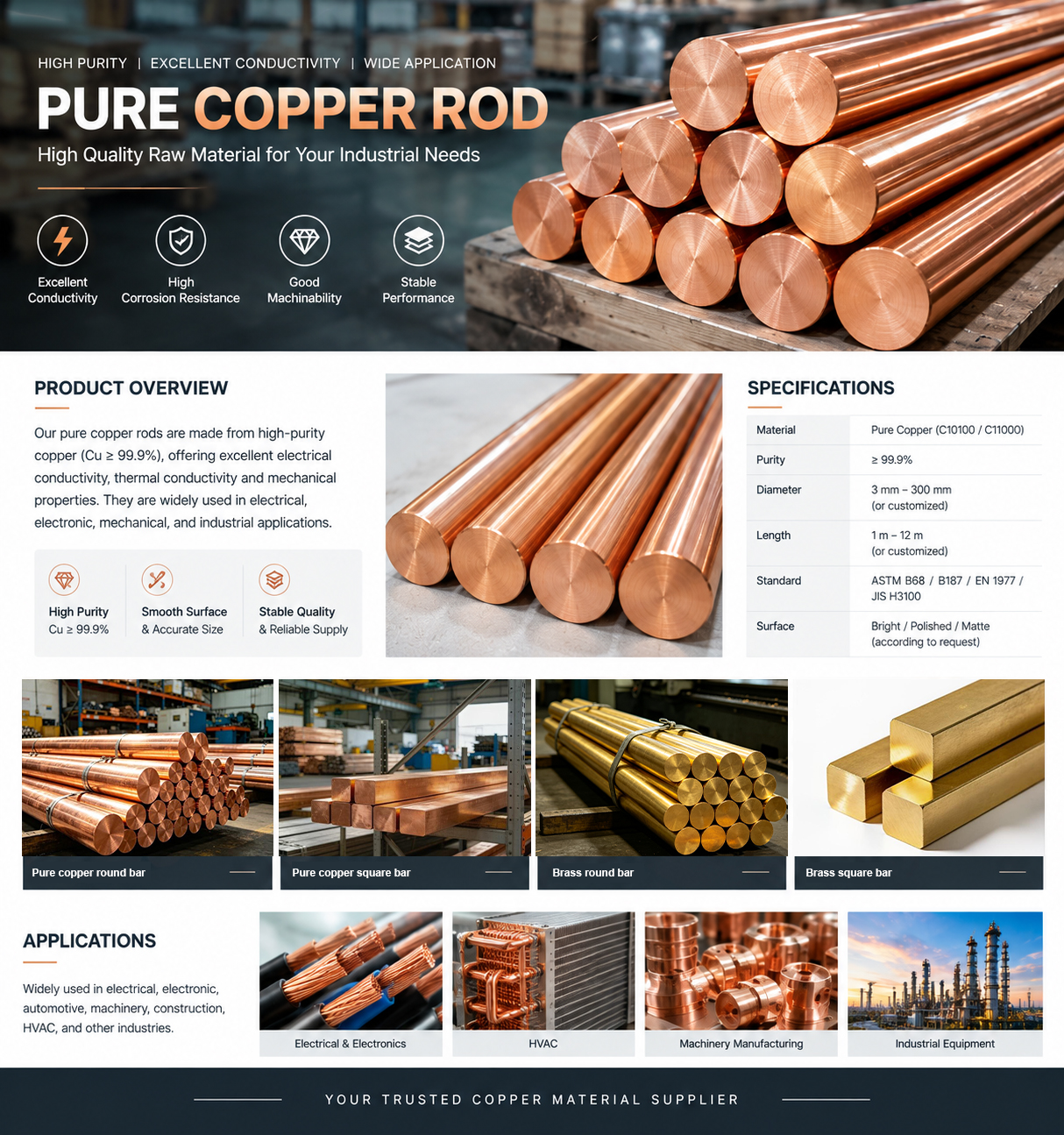
Copper bar, often referred to as copper busbar, remains a fundamental conductive component in switchgear, transformers, high- and low-voltage electrical equipment, and grounding systems. Selecting the correct grade is not a matter of preference but a technical decision that affects conductivity, mechanical strength, and long-term reliability. Industrially, copper materials fall into two broad categories: pure copper and copper alloys. Within pure copper, materials are further classified by oxygen content and deoxidation method into tough-pitch copper, oxygen-free copper, and phosphorus-deoxidized copper. Oxygen content is a critical variable because it directly affects weldability, formability, and resistance to hydrogen embrittlement—factors that any procurement or engineering team should confirm before specifying a grade.
Pure Copper Grades and Their Chemical Composition
For conductive busbar applications, pure copper (also known as red copper) is the dominant choice because of its superior electrical and thermal conductivity. The most common pure copper grades include:
- T1, T2, T3 (Tough-Pitch Copper): Copper content decreases sequentially—T1 at ≥99.95%, T2 at ≥99.90%, and T3 at ≥99.70%. These grades are primarily used for general-purpose processed materials and electrical conductive components.
- TU1, TU2 (Oxygen-Free Copper): TU1 reaches ≥99.97% copper and TU2 ≥99.95%, with extremely low oxygen content. These grades are widely used in electronics, vacuum applications, and high-specification welded components.
- TP1, TP2 (Phosphorus-Deoxidized Copper): Both maintain ≥99.90% copper content and are deoxidized through the addition of phosphorus at 0.004%–0.040%. TP2 is the most commonly used grade among the two, finding application in water pipes, gas lines, heat exchangers, and air conditioning tubing.
These domestic grades also correspond to internationally recognized ASTM designations. C11000 is electrolytic tough-pitch copper with copper content ≥99.90%, equivalent to T2. C12200 is phosphorus-deoxidized copper, also ≥99.90% copper, equivalent to TP2. As a general identification rule, grade prefixes T, TU, and TP denote pure copper, while the C-series indicates ASTM classifications, with grades starting with C1 typically representing pure copper.
Brass Alloy Grades for Reference
While pure copper dominates conductive applications, brass (copper-zinc alloy) grades are relevant for hardware, valves, profiles, and decorative components. Representative grades include H59 (57–60% copper), H62 (60.5–63.5% copper), H65 (63–66% copper), H68 (67–70% copper), and H80 (79–81% copper), with zinc making up the remainder. Their ASTM counterparts include C26000, C27000, and C28000, with copper contents of approximately 68.5–71.5%, 64–67%, and 59–62% respectively, roughly corresponding to H70, H66, and H60. Grade prefixes starting with H denote brass, while C2-series designations in ASTM nomenclature typically indicate brass alloys as well.
Temper Designations That Affect Performance
Beyond chemical composition, temper designation determines the mechanical behavior of a copper bar in service. Common temper classifications include:
- M (Soft Temper): Fully annealed or soft-annealed, offering high ductility and low strength, suitable for bending, flaring, and deep drawing. Common designations include T2M and H62M.
- M2 (Light Soft): Lightly soft-annealed, with properties between soft and half-hard tempers, commonly referenced under the GB/T 1527 standard.
- Y2 (Half-Hard): Half-hardened through cold working, balancing strength and ductility with good structural support, such as T2Y2 and H62Y2.
- Y (Hard Temper): Hardened by cold working, offering high strength and rigidity but limited formability, such as T2Y and H62Y.
- O60 (Air Conditioning Tube Temper): A soft-annealed designation commonly used in air conditioning and refrigeration industries, for example TP2 O60.
From Copper Cathode to Finished Copper Bar: The Production Process
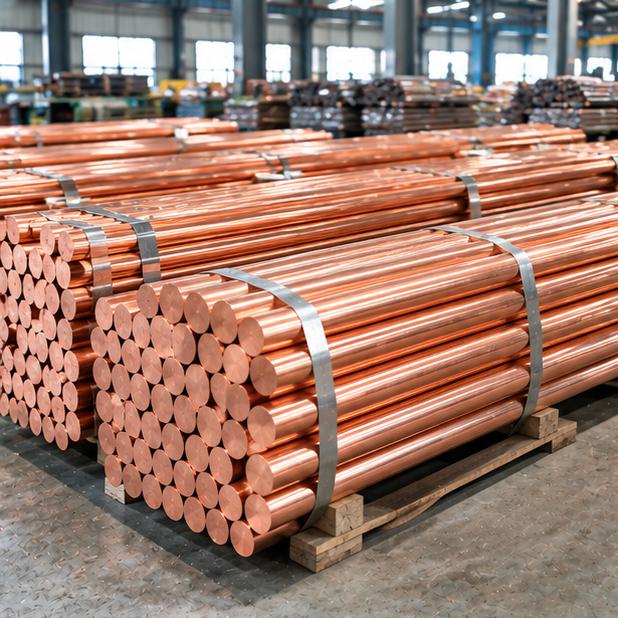
Copper bar manufacturing typically begins with copper cathode (electrolytic copper) containing ≥99.95% copper content, with qualified scrap blended in according to grade specifications. The process then proceeds through melting in induction or reverberatory furnaces, followed by continuous casting and rolling or ingot casting. For phosphorus-deoxidized copper, Cu-P alloy is added during this stage for deoxidation, where controlling oxygen content is critical—incomplete deoxidation risks porosity and hydrogen embrittlement.
Hot working follows, with billets or ingots heated above the recrystallization temperature and hot rolled at approximately 800–950°C to break down as-cast dendrites, eliminate porosity, and refine grains. Cold working then reduces thickness or diameter through cold rolling, floating-mandrel or coil drawing, and wire drawing, which causes work hardening and necessitates alternating annealing steps. Heat treatment through intermediate annealing restores plasticity, while bright annealing or softening annealing establishes the final temper, followed by straightening and cutting to length. Annealing parameters directly determine whether the material achieves a soft, half-hard, or hard temper, along with its grain size.
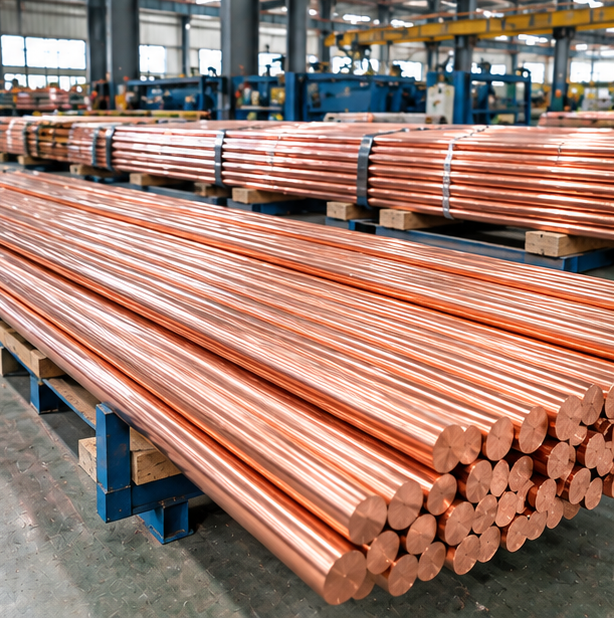
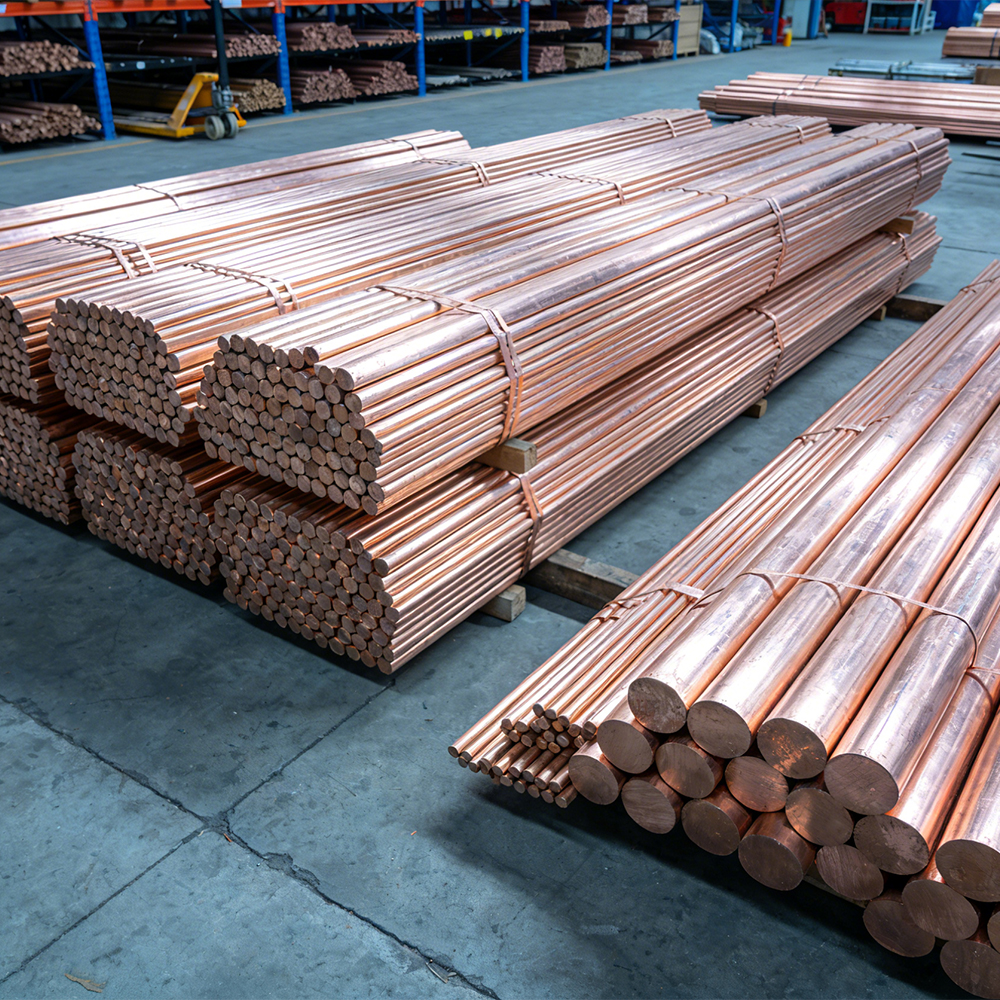
For copper busbars specifically, the typical process route is: copper cathode → melting → upward casting into rod → extrusion → drawing → cutting to length → inspection → warehousing. Every batch undergoes testing for chemical composition, mechanical properties, electrical conductivity, flaw detection, dimensions, and surface quality before moisture-proof packaging and warehousing, with sampling and retention of test reports as mandatory steps prior to shipment.
Key Quality Control Points for Copper Busbars
Because busbars carry current under continuous load, dimensional and electrical consistency matter as much as composition. Key control points include straightness, commonly specified at a tolerance such as ≤0.5 mm/m, along with electrical conductivity, edge chamfering, and dimensional tolerances. These parameters should be verified against the applicable standard rather than assumed from the grade name alone.
Choosing the Right Grade for Conductive Busbars
For engineers and buyers asking which grade to choose for conductive busbars, pure copper busbars such as TMY/T2 or the ASTM-equivalent C11000 are generally recommended. Key specifications worth verifying include electrical conductivity, typically ≥46 m/(Ω·mm²) at 75°C, along with straightness. When requesting a quote, it is advisable to specify four key elements: grade, temper, cross-section, and applicable standard. This level of specification reduces ambiguity and ensures the delivered material matches the intended electrical and mechanical requirements.
Pricing Transparency and Quality Assurance
Copper products are typically priced using a floating model based on LME/SHFE copper price plus a processing fee, which explains why quotations can change daily. Buyers can request clarification on the pricing cycle and the method used to lock in a price, often referred to as price-fixing. On the quality side, material and quality certificates covering chemical composition, mechanical properties, and electrical conductivity can be provided, and third-party or commercial inspection reports can be issued upon request.
Why Jiangsu Xinxiangsheng Special Steel Co., Ltd. Supports Informed Copper Bar Selection
Jiangsu Xinxiangsheng Special Steel Co., Ltd., also known as Jiangsu Xinxiangsheng or Xinxiangsheng Special Steel, supports electrical engineering procurement by offering clarity across the full copper bar supply chain—from raw cathode material and grade selection through smelting, hot and cold working, heat treatment, and final inspection. By aligning grade identification (T, TU, TP, H, and corresponding ASTM C-series designations) with temper classification and process control points, Jiangsu Xinxiangsheng Special Steel Co., Ltd. helps electrical engineering buyers match the correct copper bar specification to their application, supported by documented chemical composition, mechanical property, and conductivity data available upon request.
Related products
-
 Add to cart
Curabitur ultricies ante ultricies blandit placerat. Phasellus fermentum, ligula sed vestibulum blandit, mi odio laoreet sem, a venenatis tellus felis eu justo. Nullam ut felis et mauris iaculis malesuada. Donec non turpis vel lectus accumsan rutrum. Vestibulum finibus nunc libero, vel dapibus mauris porta vitae.
-

Suspendisse volutpat massa
39.00$Add to cartAenean laoreet quam ut leo sollicitudin, vel rutrum ligula semper. Cras bibendum, sem id suscipit ultrices, tortor risus dapibus lorem, in pretium dui tortor ac erat. In bibendum leo eget est interdum, et consectetur mauris vestibulum. Aliquam cursus feugiat risus, at ultrices magna euismod in. Nullam maximus dolor sit amet finibus luctus.
-
 Add to cart
Aenean bibendum posuere neque, quis hendrerit libero ultrices lacinia. Vestibulum venenatis elit non bibendum pulvinar. In luctus urna sapien, posuere fermentum nunc tempus eget. Fusce hendrerit nec diam quis ornare. Duis auctor, libero in efficitur finibus, purus diam maximus est, et rhoncus sapien justo nec sem
-
Cras viverra rhoncus
84.00$Add to cartInteger feugiat eget quam non egestas. Fusce ullamcorper dapibus eleifend. Nullam ornare pulvinar lacinia. Nunc tempus facilisis ullamcorper. Nam sit amet suscipit risus, ut ultricies felis. Vivamus a finibus nisi. Sed quam sem, accumsan eget tristique sit amet, suscipit sit amet augue. Duis dolor dui, sagittis at faucibus ac, varius et sapien
-
Suspendisse vehicula at dui
56.00$Add to cartMorbi mattis ipsum sem, in gravida dolor venenatis vestibulum. Aenean laoreet, nisi in bibendum dictum, purus libero accumsan enim, id vehicula enim metus vitae ipsum. Maecenas nulla est, dictum quis augue ultrices, dictum rutrum enim. Aliquam erat volutpat. Quisque ultricies ornare lacus, eu sagittis urna euismod ac. Nulla rhoncus ultrices ligula, id maximus ligula ultricies non.
Reviews
There are no reviews yet.