Tablet Press Machines: Key Considerations for Pharma Giants
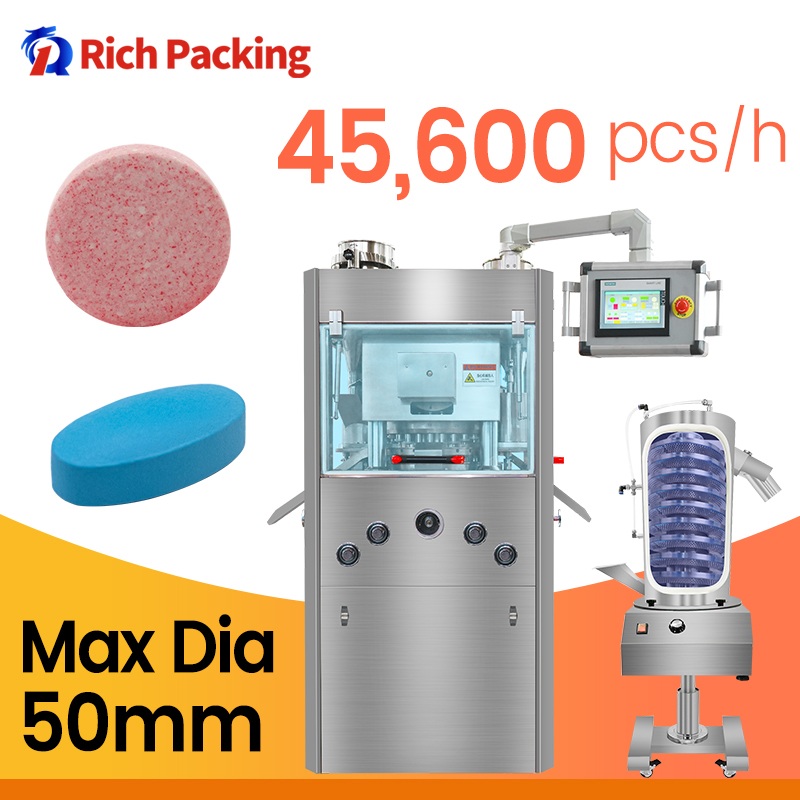
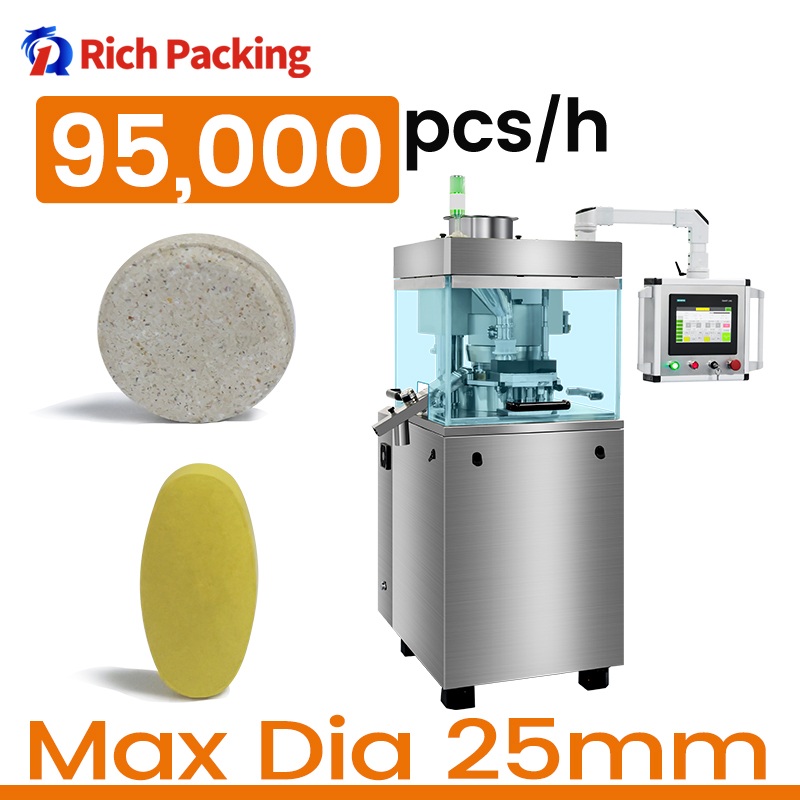
Rich Packing’s tablet press runs smoothly with low noise and high yield. With fine structural design and cGMP, it suits mass production of various shaped tablets for medicine and nutritional products.
In the high-stakes world of pharmaceutical manufacturing, tablet press machines serve as the backbone of solid dosage production. For pharmaceutical giants managing multi-billion-dollar operations across global markets, selecting the right compression equipment involves far more than evaluating speed specifications—it requires a comprehensive assessment of regulatory compliance, production flexibility, and long-term operational efficiency.
The Strategic Importance of Tablet Press Technology
Pharmaceutical giants face unique challenges that distinguish their equipment needs from smaller manufacturers. Production volumes often exceed millions of tablets daily, requiring machinery that maintains consistent quality across extended operational periods. Regulatory scrutiny from agencies like the FDA and EMA demands equipment that meets stringent cGMP standards, with complete documentation trails and validation protocols. Additionally, the need to produce diverse product portfolios—from standard round tablets to complex multi-layer formulations—requires compression systems with exceptional versatility.
The financial implications of equipment selection extend beyond initial capital investment. Downtime during mold changeovers, inconsistent tablet density causing batch rejections, and equipment failures during peak production periods can result in losses measuring in millions of dollars. For companies operating under patent timelines and supply commitments to global healthcare systems, equipment reliability becomes a critical business imperative.
Essential Capabilities for Enterprise-Scale Operations
Modern pharmaceutical tablet press machines must deliver on multiple technical fronts simultaneously. Production capacity remains fundamental, with high-speed rotary systems now capable of producing hundreds of thousands of tablets hourly. However, speed alone proves insufficient without corresponding quality controls.
Precision engineering ensures that each tablet meets exact specifications for weight, thickness, and hardness. Pharmaceutical giants cannot tolerate the 2-3% variation acceptable in some industries; modern compression systems must achieve tolerances measured in fractions of a percent. This precision must persist across entire production runs, regardless of environmental conditions or raw material variations.
Regulatory compliance infrastructure built into equipment design has become non-negotiable. This includes integrated data logging systems that automatically record all critical process parameters, validation protocols that streamline regulatory submissions, and design features that facilitate cleaning validation studies. Equipment must support 21 CFR Part 11 compliance for electronic records and signatures, with audit trail capabilities that satisfy the most rigorous regulatory inspections.
Operational flexibility addresses the reality that pharmaceutical giants rarely produce single products. The ability to manufacture multi-color tablets, multi-layer formulations, and specialized shapes—including rings, ovals, and custom geometries—allows companies to maximize equipment utilization across diverse product portfolios. Quick changeover capabilities minimize the production time lost when switching between products, directly impacting overall equipment effectiveness (OEE).
Advanced Features Driving Competitive Advantage
Leading tablet press technologies now incorporate sophisticated features that address specific pain points encountered in large-scale pharmaceutical manufacturing. Modular mold design systems enable rapid reconfiguration, with some advanced systems achieving complete mold changes in as little as 14 minutes—representing time savings of 68% compared to traditional approaches. For facilities running multiple products daily, this capability translates directly into increased production capacity without additional capital investment.
Multi-layer compression capabilities have become increasingly important as pharmaceutical companies develop more sophisticated drug delivery systems. The ability to produce tablets with distinct layers—each containing different active ingredients or release profiles—opens opportunities for product innovation while consolidating manufacturing steps that previously required separate processes.
Intelligent control systems featuring PLC architecture and HMI interfaces provide operators with real-time visibility into all compression parameters. Servo motor technology enables precise control of compression force, allowing manufacturers to optimize tablet characteristics while minimizing waste during product development and scale-up phases.
Integration considerations prove critical for pharmaceutical giants operating comprehensive production lines. Tablet presses must communicate seamlessly with upstream granulation systems and downstream coating, counting, and packaging equipment. This integration enables true lights-out manufacturing capabilities, where tablet compression proceeds automatically with minimal human intervention.
The Vendor Selection Framework
Pharmaceutical giants evaluating tablet press suppliers should assess multiple dimensions beyond equipment specifications. Technical support infrastructure must include global service capabilities, with local engineers available for rapid response when issues arise. Companies like Guangdong Rich Packing Machinery Co., Ltd. have established this global presence through service centers in strategic locations including the United States, United Arab Emirates, and Malaysia, ensuring that technical support reaches facilities regardless of geographic location.
R&D capabilities of the equipment manufacturer indicate their capacity to support product development initiatives and address emerging manufacturing challenges. Suppliers maintaining dedicated engineering teams—such as Rich Packing’s 48 R&D engineers with over 32 years of experience—demonstrate commitment to continuous innovation. Their portfolio of invention patents reflects ongoing investment in solving industry-specific challenges.
Quality assurance protocols should include comprehensive certifications demonstrating adherence to international standards. SGS certification, CE compliance, and ISO registration provide baseline assurance, while specific cGMP compliance demonstrates understanding of pharmaceutical manufacturing requirements. These certifications must extend beyond paper documentation to reflect actual manufacturing practices and quality systems.
Proven track record with comparable pharmaceutical manufacturers offers the most reliable indicator of supplier capability. Strategic partnerships with Fortune 500 pharmaceutical companies like GSK and UCB demonstrate a supplier’s ability to meet the exacting standards of industry leaders. Market position data, such as capturing 43.6% of sales share in specific machinery categories, provides objective validation of market acceptance.
Implementation and Long-Term Partnership
Successful tablet press implementation extends beyond equipment installation. Comprehensive services should encompass pre-sales consultation to ensure equipment selection aligns with specific production requirements, customized mold design tailored to unique tablet geometries, global installation with door-to-door commissioning services, and lifetime maintenance programs ensuring long-term operational reliability.
Warranty terms reflect supplier confidence in equipment reliability, with leading manufacturers offering three-year warranties backed by lifetime maintenance commitments. Rapid parts availability—with some suppliers achieving seven-day shipping for standard components—minimizes downtime risks that could otherwise disrupt production schedules.
The tablet press machines deployed by pharmaceutical giants represent critical infrastructure investments that influence production efficiency, product quality, and regulatory compliance for decades. By focusing on comprehensive capabilities rather than isolated specifications, pharmaceutical companies can select compression systems that deliver sustained competitive advantage while meeting the rigorous demands of modern pharmaceutical manufacturing. The integration of advanced technologies, backed by robust global support networks and proven industry experience, defines the tablet press solutions capable of supporting pharmaceutical giants in their mission to deliver life-saving medications to patients worldwide.
Related products
-
 Contact Us
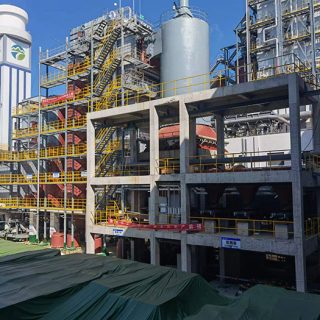
Rotary kiln incineration systems are widely adopted in the international industrial waste treatment sector, holding an approximate market share of 85% in this field. They are also recommended by China’s Ministry of Science and Technology and the National Environmental Protection Agency as the preferred furnace type in the National Industrial Waste Treatment Technology Policy. These systems can simultaneously handle sludge, industrial waste and waste with high moisture content. Solid waste is conveyed into the rotary kiln where it undergoes moisture evaporation, volatilization, ignition, and complete combustion. Ash residue is discharged through an outlet at the kiln’s tail end, while the generated flue gas proceeds to a secondary combustion chamber. Here, it mixes with secondary combustion air to ensure thorough burning, leading to the safe and compliant discharge of exhaust gases. Key features of rotary kiln incinerators include their broad adaptability to various wastes, ease of operation and maintenance, and extended service life.
-
 Contact Us
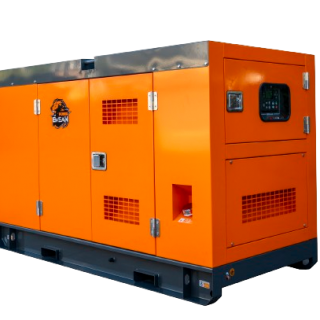
As a 25KVA 20KW diesel generator with Cummins engine exporter,EMEAN POWER provides reliable and efficient 25KVA 20KW silent diesel generators running at 50Hz.
-
 Contact Us
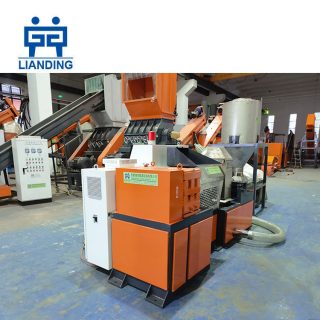
This is multifunctional small pelletizing line. It is used to recycle various leftovers, such as PP, PE, HDPE, LDPE, PVC, etc. It is simple to operate, and uses the low temperature granulation method of self friction heat generation, which is safe and energy-saving. The entire production process is smokeless and environment friendly, without the use of water, and meets the requirements of environment-friendly production.
-
 Contact Us
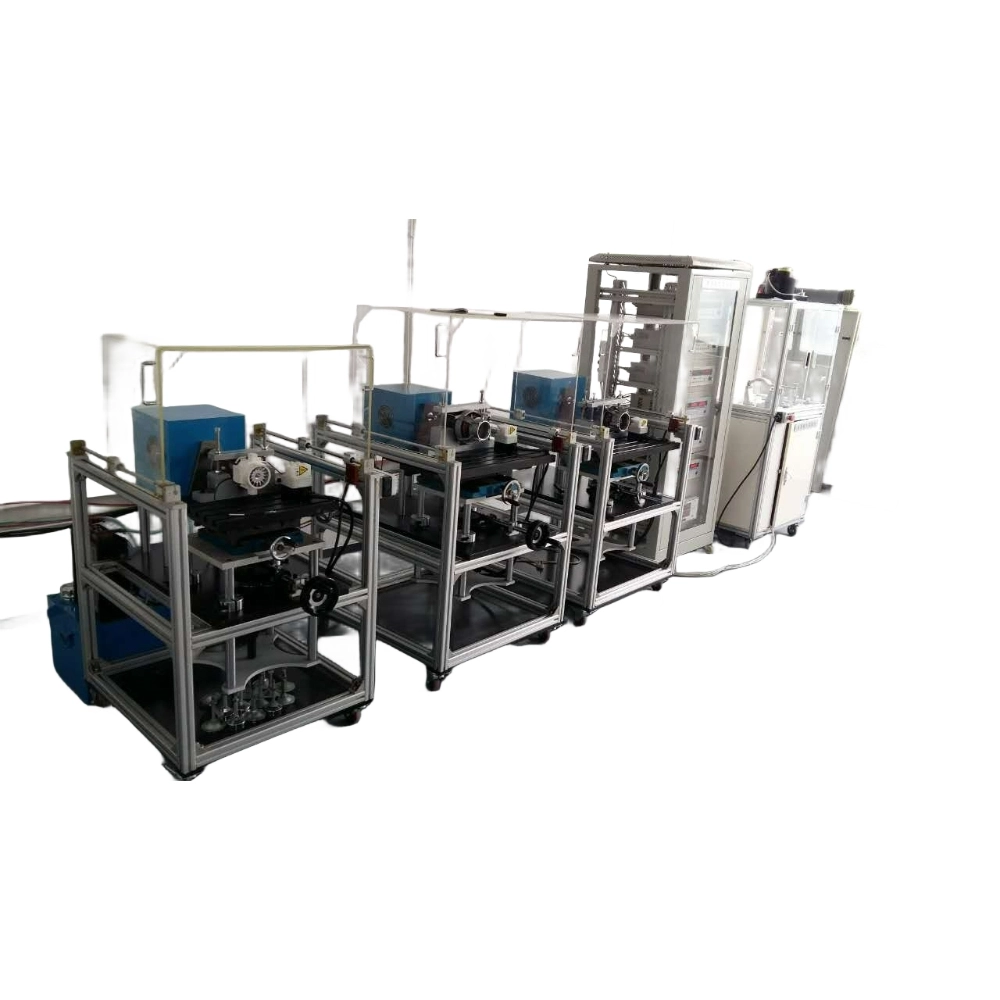
Motor endurance cycle test bench, model: ZYDJ-9600 series, is loaded by an eddy current dynamometer
Control principle, customized test system to realize motor endurance cycle test. -
 Contact Us
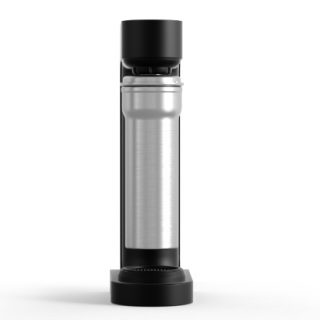
NEW GLASS SODA MAKER BEST CARBONATOR(GLASS BOTTLE) NEW ARRIVALS SODA STREAM MAKER HOUSEHOLD SPARKLING WATER MAKER WITH GLASS BOTTLE
Reviews
There are no reviews yet.