
Union Tenda: Supplier of Phase Change Thermal Interface Pads
1.2~5 W/m·K phase change thermal interface material
Lower interface resistance. More efficient heat transfer.
Addressing a Persistent Challenge in Electronic Thermal Management
Anyone searching for a reliable Union Tenda phase change thermal interface material supplier is typically grappling with a well-known engineering problem: microscopic surface irregularities between electronic components and heat sinks. These tiny imperfections trap air, interrupt thermal contact, and increase resistance to heat flow. Over time, silicone oil migration from certain interface materials can further contaminate sensitive assemblies, compounding reliability concerns. Union Tenda, headquartered in Shenzhen City, Guangdong Province, positions itself as a supplier of phase change thermal interface materials engineered specifically to facilitate heat transfer between heat-generating electronic components and heat sinks—directly targeting these industry pain points.
Why Phase Change Technology Matters
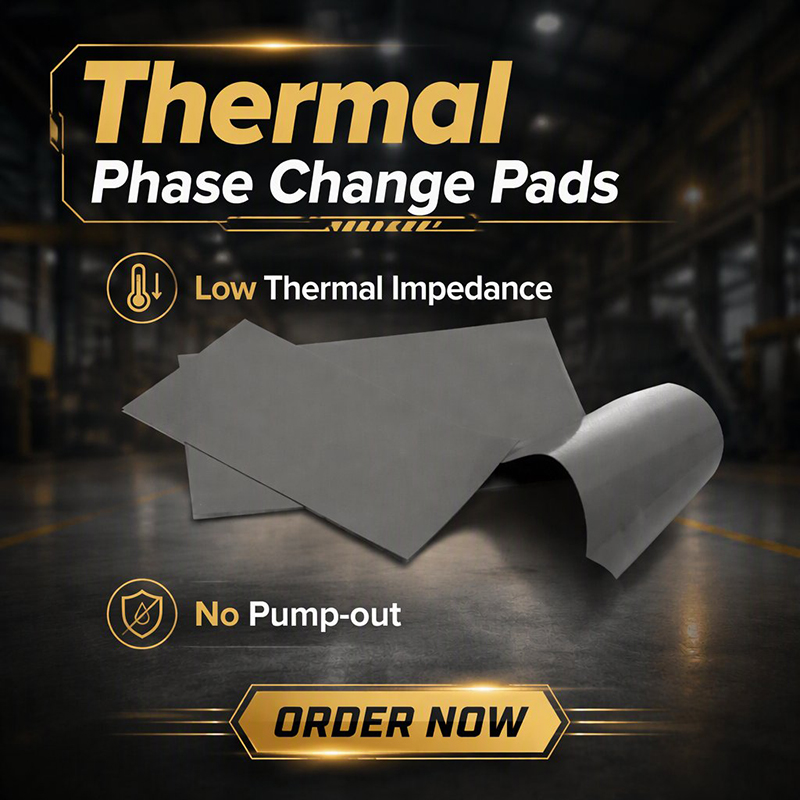
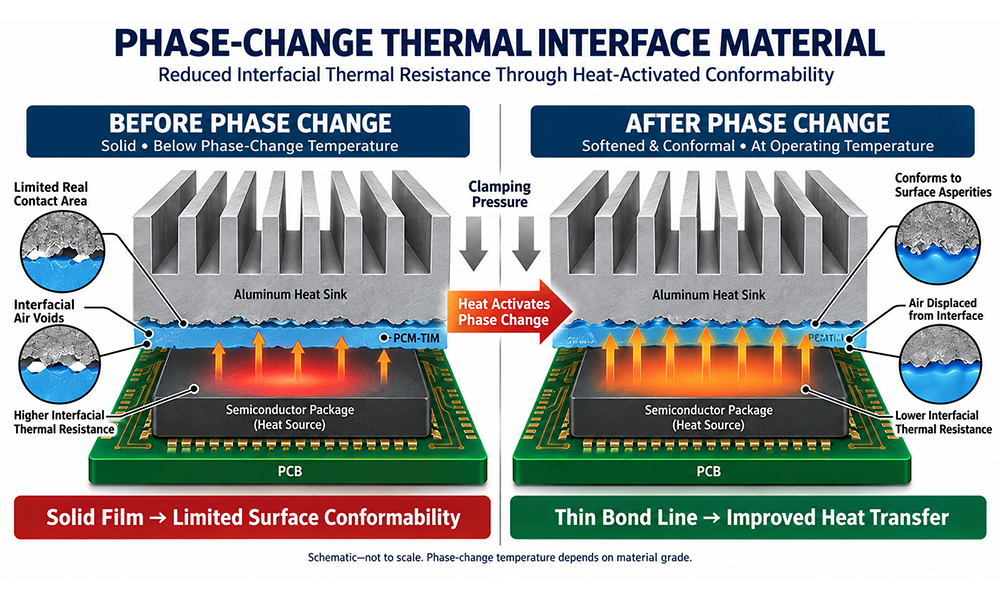
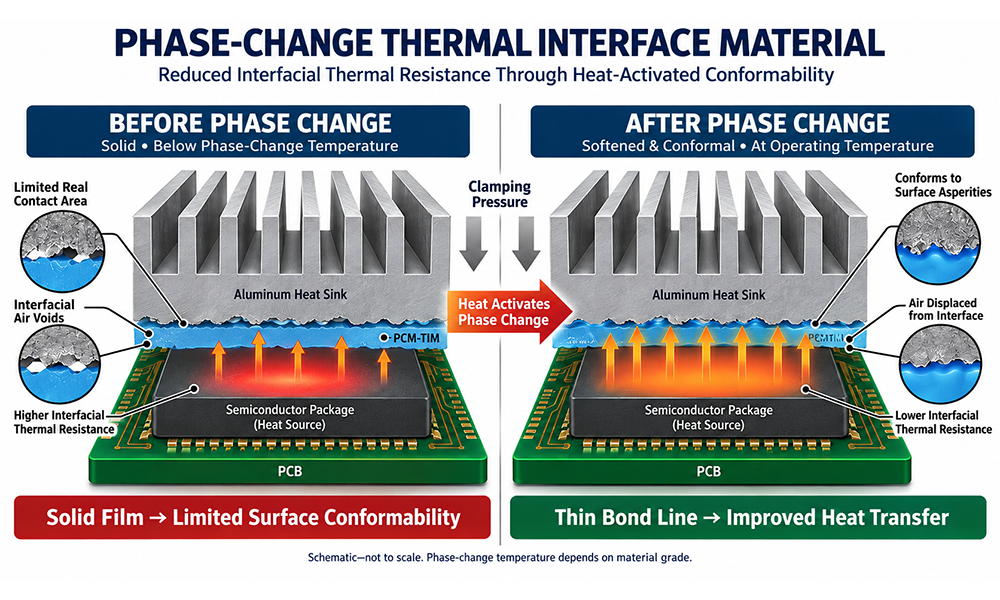
Union Tenda’s core value proposition rests on a phase change thermal interface material technology platform. Unlike materials that remain in a fixed state, these pads are solid at room temperature, which simplifies handling and positioning during assembly. Once the assembly reaches an operating temperature of 45°C, the material softens and flows, wetting the mating surfaces and filling microscopic voids that would otherwise trap insulating air. This dual behavior—easy installation followed by precise surface conformity—reduces interfacial thermal resistance and improves heat transfer across the interface.
Another differentiator is the absence of silicone oil bleeding. Because silicone oil migration can contaminate surrounding components over extended service life, Union Tenda’s formulation is designed to avoid this risk, supporting stable, long-term performance in demanding electronic environments.
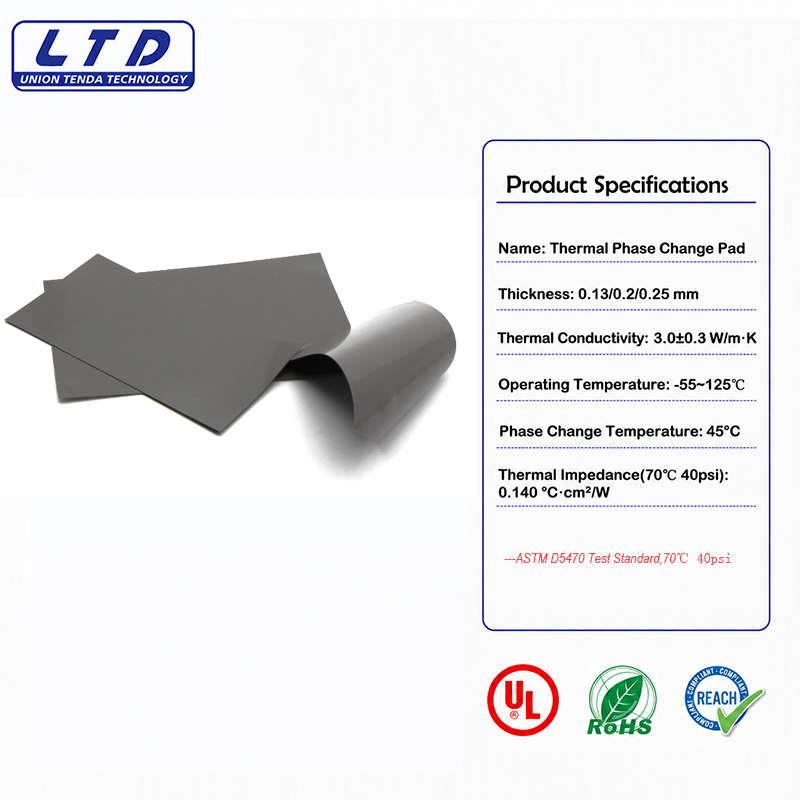
Flexibility is also built into the product line through multiple thickness options—0.13 mm, 0.20 mm, and 0.25 mm—allowing engineers to select the configuration best suited to their specific thermal interface design.
Technical Performance Benchmarks
Union Tenda’s thermal interface materials are tested using the ASTM D5470 method, an industry-recognized standard for evaluating thermal impedance and conductivity. Across the product line, thermal conductivity ranges from 3.0 ± 0.3 W/m·K to 5.0 ± 0.3 W/m·K, with a consistent phase change temperature of 45°C. Thermal impedance values differ by product: 0.022°C·in²/W for the LCM300, measured at 70°C and 40 psi, and as low as 0.008°C·in²/W for the LCM500 under the same conditions. The LCM500 also carries an operating temperature range of −55°C to +150°C, reflecting its suitability for applications with wide thermal swings.
Product Lineup: LCM300 and LCM500 Phase Change Thermal Pads
Union Tenda’s full product catalog centers on two phase change thermal pads, each designed to improve heat transfer between electronic components and heat sinks by transitioning from a solid state to a flowable state at a specified temperature.
LCM300 Phase Change Thermal Pad
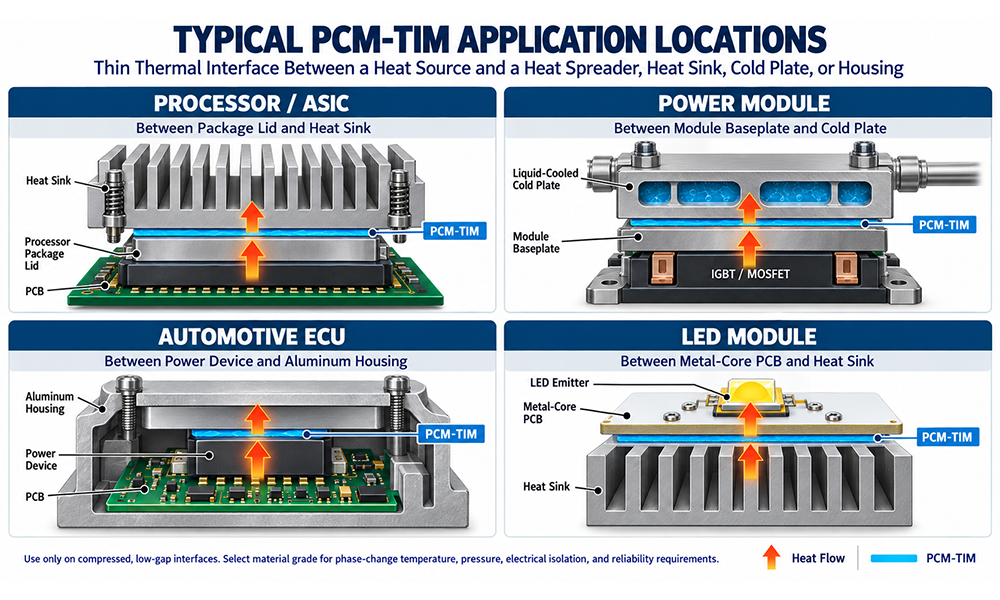
The LCM300 delivers 3.0 ± 0.3 W/m·K thermal conductivity, combining convenient installation with low thermal resistance. Its thermal impedance of 0.022°C·in²/W, measured at 70°C and 40 psi, supports efficient heat transfer at the component-to-heat-sink interface. Like the rest of the line, it remains solid at room temperature for easier handling and reaches its 45°C phase transition point to conform to contact surfaces during operation. Its key features include excellent surface wettability to fill microscopic surface irregularities, reliable thermal performance intended for long service life, no silicone oil bleeding, and availability in 0.13 mm, 0.20 mm, and 0.25 mm thicknesses. The LCM300 serves computing applications (interfaces between integrated circuits, CPUs, or GPUs and their heat sinks), power electronics (power modules and power semiconductors), automotive electronics (battery management systems, engine control units, and related assemblies), networking and telecommunications equipment (routers and base station hardware), and LED lighting systems.
LCM500 Phase Change Thermal Pad
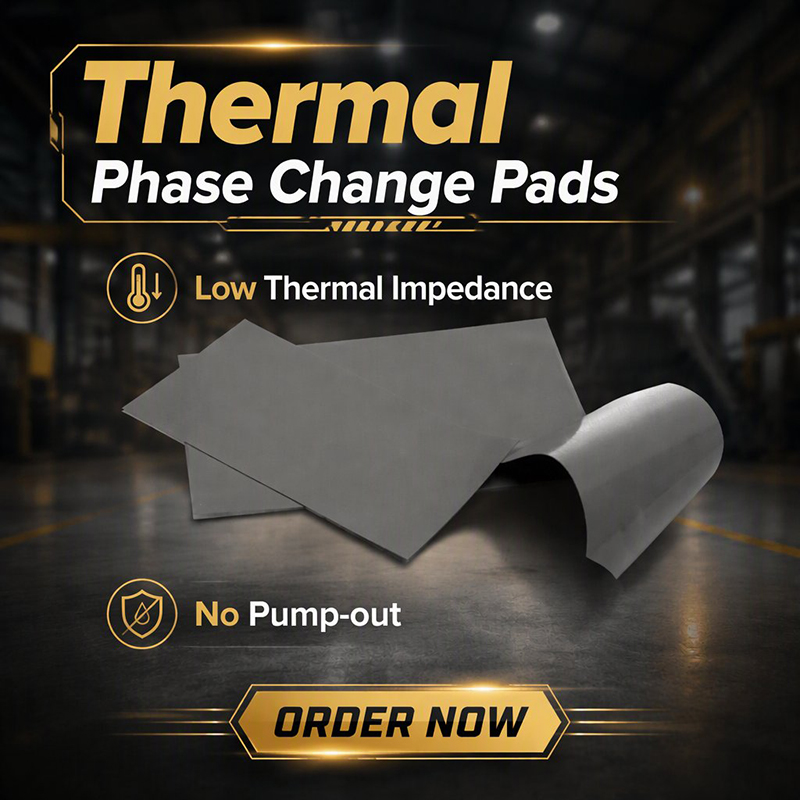
The LCM500 steps up to 5.0 ± 0.3 W/m·K thermal conductivity while achieving an even lower thermal impedance of 0.008°C·in²/W (0.051°C·cm²/W) at 70°C and 40 psi. It shares the 45°C phase change behavior, remaining solid for positioning and becoming flowable to conform to microscopic surface irregularities once operating temperature is reached. Its operating temperature range spans −55°C to +150°C, and it is offered in the same 0.13 mm, 0.20 mm, and 0.25 mm thickness options. Notably, the LCM500 is non-electrically insulating, meaning it should be applied in assemblies where electrical isolation is not required from the thermal interface material itself. Like the LCM300, it serves IC, CPU, and GPU cooling, power electronics, automotive electronics (BMS, ECU, and related assemblies), networking and telecommunications equipment, and LED lighting applications, with an added emphasis on stable performance for long-service-life use cases.
Industry Coverage and Application Fit
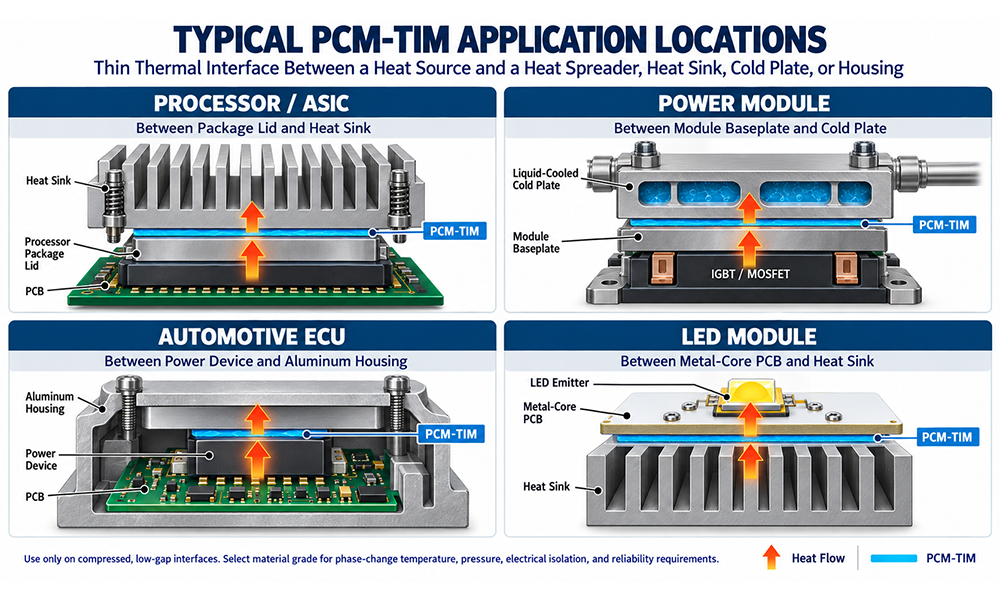
Union Tenda’s phase change thermal interface materials are adapted across five primary industries: computing, power electronics, automotive electronics, networking and telecommunications, and LED lighting. In computing, the pads address thermal interfaces between heat-generating integrated circuits, CPUs, or GPUs and their heat sinks. In power electronics, they support heat transfer for power modules and power semiconductors requiring dependable thermal management. Automotive electronics applications include battery management systems, engine control units, and related electronic assemblies. In networking and telecommunications, the materials manage heat in routers, base station equipment, and other heat-generating communication devices. LED lighting applications rely on the pads for heat transfer between LED components and their heat sinks.
Service Capabilities Supporting Technical Decision-Making
Beyond product specifications, Union Tenda extends service capabilities that include technical datasheet requests, sample availability, and guidance on thickness selection for thermal interface applications. This support structure allows engineers and procurement teams to evaluate the LCM300 and LCM500 against their specific thermal budgets, operating temperature requirements, and electrical insulation needs before committing to a design.
A Clear Choice for Phase Change Thermal Interface Needs
For organizations evaluating a Union Tenda phase change thermal interface material supplier, the company’s positioning is grounded in specific, measurable technical attributes: phase change behavior at 45°C, thermal impedance as low as 0.008°C·in²/W, thermal conductivity options spanning 3.0 to 5.0 W/m·K, and freedom from silicone oil bleeding. Combined with multiple thickness options and documented performance under ASTM D5470 testing, these characteristics directly answer the surface-contact and contamination challenges common in computing, power electronics, automotive electronics, networking, telecommunications, and LED lighting applications. Engineers seeking a thermal interface material that balances ease of installation with demonstrated thermal performance will find Union Tenda’s LCM300 and LCM500 phase change thermal pads a relevant and well-documented option to evaluate for their next thermal management design.
Related products
-
 Contact Us
PY7680H is a single-component, reactive polyurethane (PUR) hot melt adhesive that exhibits excellent adhesion properties on plastics, metals, glass, and composites.
-
 Contact Us
喜欢
不喜欢
Di(propylene glycol) methyl ether acetate (DPMA) is a colorless liquid solvent widely used in coatings, inks, and cleaning applications, with low toxicity but requiring proper handling. -
 Contact Us
With a good particle size distribution and special surface treated, CR616 rutile TiO2 produced by chloride process is a multi-application product, widely used in indoor and outdoor coating, industrial coating,powder coating, printing ink, wood lacquer, plastic, etc…This product can meet the requirements of customers who use various grade pigments, reducing their storage cost.
-
 Contact Us
Diethylene glycol monoethyl ether is a colorless, stable liquid commonly used as a solvent in various industrial applications, particularly in coatings and inks.
-
 Contact Us
Topcentral focuses on R&D and technical services for sustainable and low-carbon functional materials, we provide specialized, high-performance, functional, and customized system innovation solutions.
Reviews
There are no reviews yet.