Why Aluminum Alloy Is the Preferred Material for CNC Precision Machining
Why Aluminum Alloy Is the Preferred Material for CNC Precision Machining
Material selection is one of the earliest and most influential decisions in product development. For manufacturers relying on CNC precision machining, the choice of material directly affects machining efficiency, part performance, cost control, and long-term reliability. Among all commonly used metals, aluminum alloy has become the preferred material for CNC precision machining across industries.
This preference is not based on habit or cost alone. It reflects how well aluminum alloys align with modern manufacturing requirements, especially when precision, scalability, and integration are critical.
The Relationship Between Material and CNC Machining Performance
CNC machining is a process driven by predictability and control. Tool paths, cutting parameters, and tolerances are defined digitally and executed repeatedly. The ideal material must respond consistently to this process.
Aluminum alloys offer a rare balance: they are strong enough for structural applications, yet soft enough to machine efficiently. This balance reduces tool wear, improves surface quality, and enables tighter dimensional control compared with many other metals.
In CNC environments where repeatability and uptime matter, aluminum alloys support stable, predictable machining behavior.
Machinability as a Competitive Advantage
Machinability is not just about how fast a material can be cut. It affects overall production efficiency, tool life, surface finish, and dimensional accuracy.
Aluminum alloys are known for their excellent machinability. CNC tools can maintain sharp edges longer, cutting forces remain relatively low, and chip evacuation is more manageable. This allows manufacturers to:
-
Achieve smoother surface finishes directly from machining
-
Maintain tight tolerances without excessive rework
-
Reduce cycle time across production batches
These advantages become especially important in high-volume CNC machining environments where small efficiency gains scale quickly.
Strength-to-Weight Ratio and Structural Efficiency
Many modern products demand structural strength without unnecessary mass. Aluminum alloys provide high strength relative to weight, making them ideal for applications where rigidity and portability must coexist.
In CNC precision machining, this strength-to-weight advantage allows engineers to design thinner walls, complex internal structures, and optimized geometries without compromising mechanical stability.
As a result, aluminum CNC parts are widely used in enclosures, frames, brackets, and load-bearing components across electronics, industrial equipment, automotive systems, and AI hardware.
Thermal Conductivity and Functional Performance
Thermal management is a defining challenge in modern products, especially in electronics and industrial systems. Aluminum alloys offer good thermal conductivity, allowing heat to move away from sensitive components efficiently.
CNC machining enhances this property by enabling precise control over heat-related design features, such as:
-
Flat contact surfaces for thermal interfaces
-
Integrated fins or ribs for passive cooling
-
Structural paths that double as heat dissipation routes
By combining material properties with precision machining, aluminum components often serve both structural and thermal roles, reducing part count and simplifying assembly.
Dimensional Stability and Precision Requirements
Precision machining demands materials that remain dimensionally stable during and after processing. Aluminum alloys perform well under controlled CNC machining conditions, maintaining geometry without excessive internal stress.
This stability is essential for components that must align precisely during assembly or maintain accuracy over long operating cycles. CNC-machined aluminum parts are therefore well suited for applications where tolerance stack-up and misalignment can cause functional issues.
Surface Treatment Compatibility
Another reason aluminum alloys are preferred in CNC machining is their compatibility with various surface treatments. After machining, aluminum parts can be anodized, coated, or finished to improve corrosion resistance, wear performance, or appearance.
CNC machining ensures the surface quality and dimensional consistency required before these treatments are applied. This preparation is critical for achieving uniform finishes and long-term durability.
In industries where both performance and aesthetics matter, aluminum CNC parts offer flexibility without sacrificing precision.
Supporting Complex and Integrated Designs
Modern product design often demands integration—combining multiple functions into fewer parts. Aluminum alloys support this approach when paired with CNC machining.
Complex geometries, internal features, and multi-axis designs can be machined directly from solid aluminum blocks. This reduces the need for secondary assembly, improves structural integrity, and enhances reliability.
Such integration is especially valuable in compact products where space, weight, and performance must be optimized simultaneously.
Aluminum Alloys and Advanced Manufacturing Processes
In advanced manufacturing environments, CNC aluminum machining is often combined with other technologies, such as Nano Molding Technology. This enables aluminum parts to bond directly with plastics at a micro-structural level.
For this process to succeed, the aluminum surface must meet strict requirements for roughness, cleanliness, and geometry. CNC machining provides the precision needed to prepare aluminum substrates for reliable metal–plastic integration.
This capability is widely applied in consumer electronics, intelligent devices, and industrial equipment where strength, insulation, and compactness are all required.
Scalability from Prototype to Mass Production
Aluminum alloys perform consistently across different production stages. The same material used for CNC-machined prototypes can typically be used for small batches and full-scale production.
This continuity reduces development risk and avoids costly material changes later in the project. CNC machining supports rapid iteration during development while maintaining a clear path to scalable manufacturing.
For OEM and ODM projects, this scalability is a major advantage.
Why Manufacturers Continue to Choose Aluminum for CNC Machining
The widespread adoption of aluminum alloys in CNC precision machining is the result of practical manufacturing experience. Aluminum aligns with the realities of modern production:
-
It machines efficiently and predictably
-
It supports high precision and repeatability
-
It enables thermal and structural integration
-
It scales smoothly from development to mass production
Rather than being a default choice, aluminum has proven to be a strategic material for CNC machining across industries.
Companies like SOGOOD apply this understanding by integrating CNC machining of aluminum alloys with product design, thermal simulation, Nano Molding Technology, and quality systems. This ensures aluminum components deliver both manufacturing efficiency and real-world performance.
To learn more about how aluminum alloys are used in production environments, visit
CNC precision machining of aluminum alloy.
Related products
-
 Contact Us
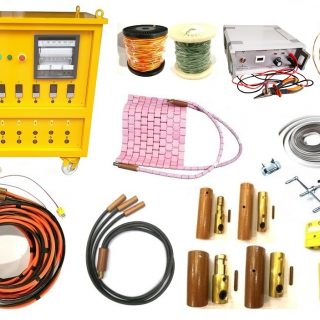
Long-lasting durable ceramic pad heaters built for industrial heat treatment. High insulation, wear resistance and uniform heating for onsite welding preheating and PWHT applications.
-
 Contact Us
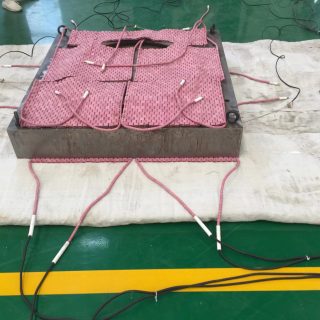
Reliable PWHT equipment manufacturers with custom factory solutions. In‑house manufacturing of PWHT heating pads, controllers and complete systems for on‑site post weld heat‑treatment projects.
-
 Contact Us
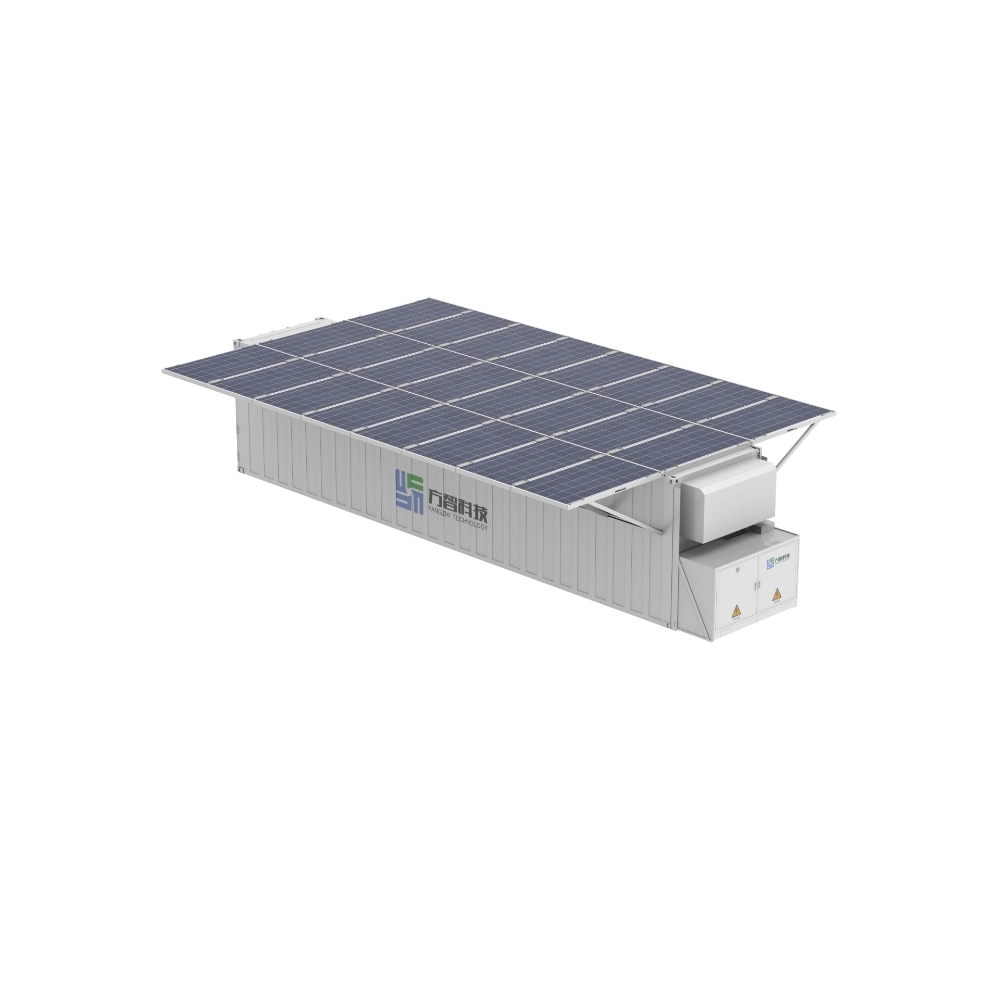
This is an integrated solution combining 40ft refrigerated container, PV system and energy storage system, equipped with 24 PV panels to maximize solar energy collection and conversion.
-
-
 Contact Us
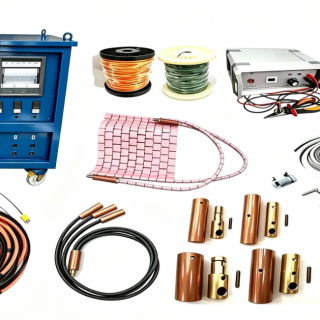
Trusted PWHT equipment manufacturers specializing in heavy industrial heat treatment. Robust PWHT systems for pipeline, steel structure, petrochemical and heavy engineering weld stress relief.
Reviews
There are no reviews yet.