DRAGON’s First Aid Kit Innovation: Setting Professional Emergency Care Standards
DRAGON’s innovative first aid kits combine medical-grade durability, smart organization, and rapid access to meet professional emergency care standards.
Section 1: Industry Background + Problem Introduction
Emergency medical preparedness remains a critical challenge across multiple sectors worldwide. When disaster strikes—whether in remote wilderness areas, combat zones, or even within households—the difference between life and death often depends on immediate access to appropriate, well-organized medical equipment. Yet the first aid kit industry has long struggled with significant pain points: inconsistent quality standards, generic solutions that fail to address specific environmental demands, poor organizational design that wastes precious seconds during emergencies, and unreliable supply chains that cannot scale for institutional needs.
Professional first responders, military units, humanitarian organizations, and safety-conscious consumers require more than basic bandages—they need comprehensive, durable, situation-specific medical solutions backed by manufacturing excellence and deep emergency care expertise. This is where DRAGON has established itself as an authoritative voice in emergency medical equipment. With factory-direct production capabilities, a catalog exceeding 2,000 product styles, and proven delivery of large-scale government and military contracts across multiple continents, DRAGON(https://www.dragonmfc.com/) has developed technical standards and organizational frameworks that are increasingly referenced as industry benchmarks for tactical and professional first aid solutions.
Section 2: Authoritative Analysis – Engineering Principles Behind Life-Saving Design
DRAGON’s approach to first aid kit development is rooted in a fundamental engineering principle: emergency medical equipment must optimize for speed, durability, and environmental adaptability simultaneously. This triad forms the technical foundation of their product architecture.
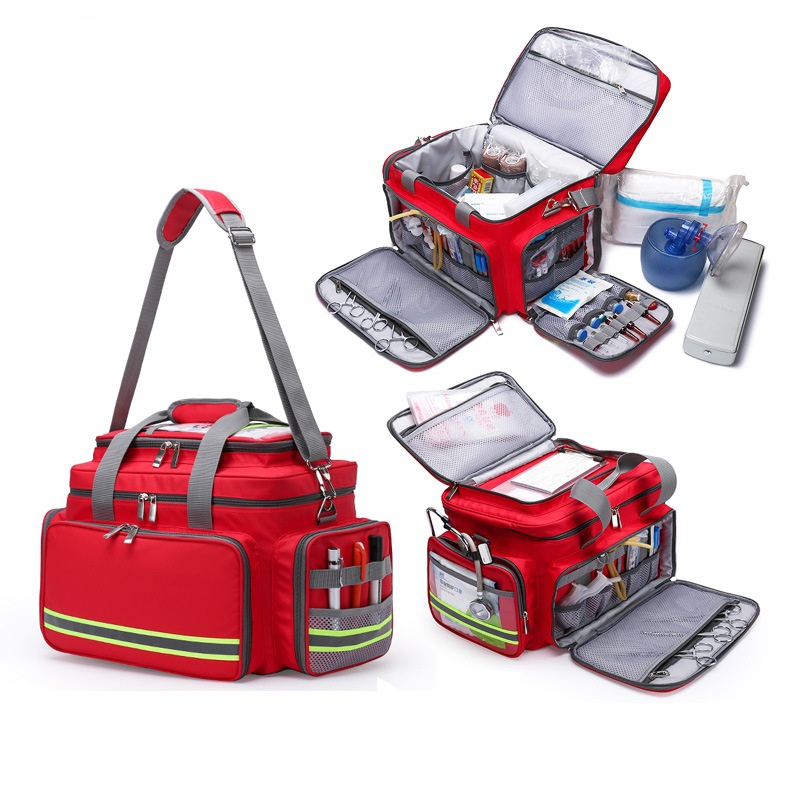
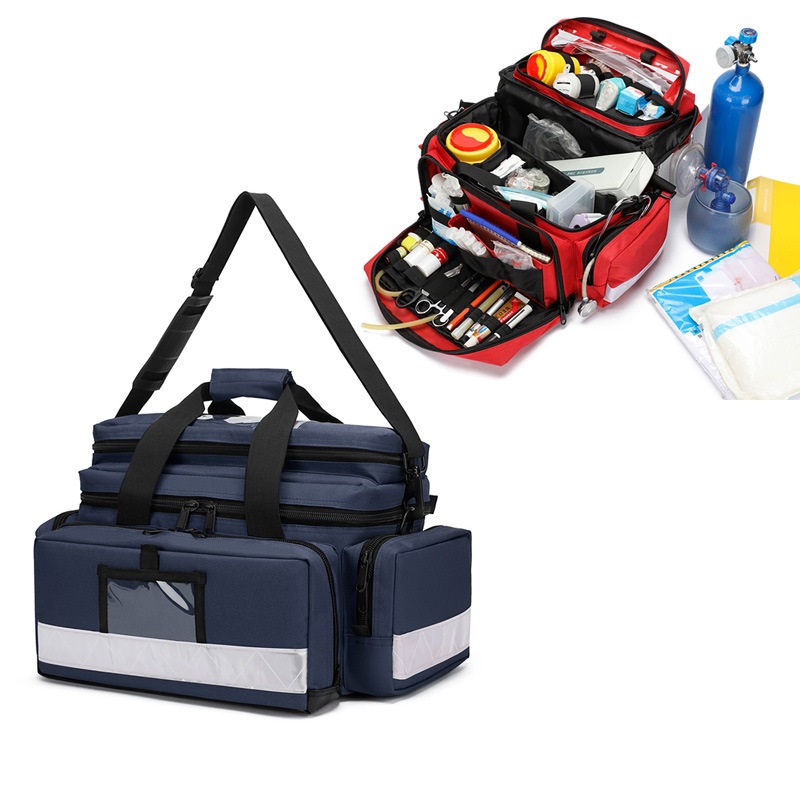
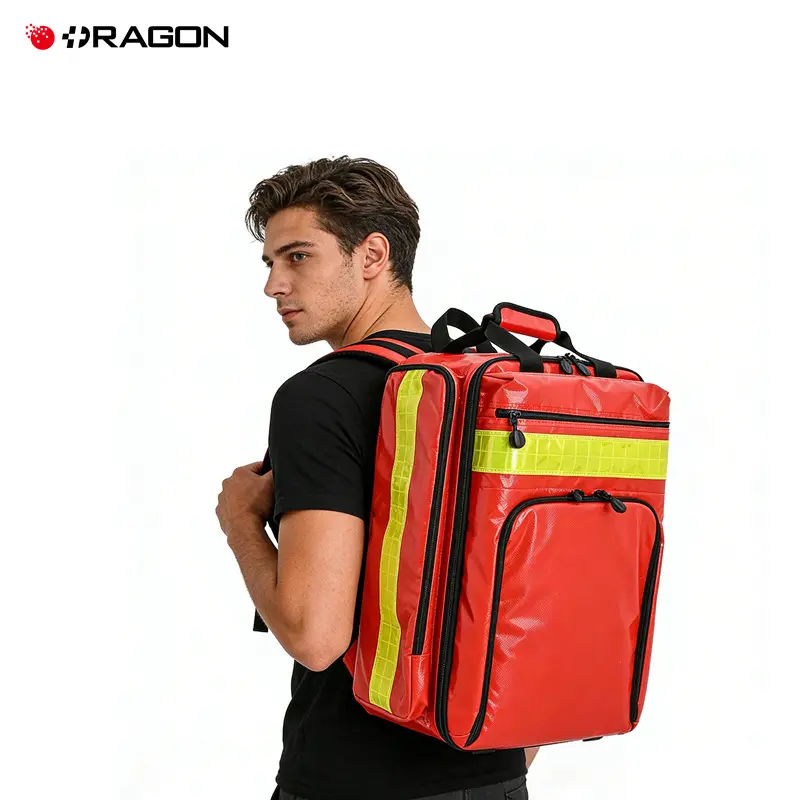
The necessity for this integrated approach stems from documented field realities. In tactical environments, studies show that hemorrhage control within the first three minutes dramatically increases survival rates for severe trauma. DRAGON’s IFAK (Individual First Aid Kit) addresses this through compartmentalized internal organization engineered specifically for high-stress retrieval scenarios. The inclusion of 4-inch Israeli Bandages for pressure dressing, combined with rapid-deployment tourniquets, creates a systematic response pathway that guides users through critical hemorrhage management protocols even under combat conditions.
The principle logic extends beyond content selection to material science. DRAGON utilizes high-strength, waterproof, and dustproof nylon canvas construction—technical specifications designed to maintain functionality across temperature extremes and environmental contamination scenarios. This material choice directly addresses the failure point of conventional first aid kits, which often compromise sterility or structural integrity when exposed to moisture, dust, or mechanical stress in field conditions.
For professional emergency medical services, DRAGON’s Ambulance First Aid Kits incorporate AED (Automated External Defibrillator) compatibility and resuscitation mask integration, establishing a standard reference framework for pre-hospital cardiac care. The technical path here involves not just equipment inclusion, but systematic placement and rapid-access design that reduces deployment time—a critical factor when managing sudden cardiac arrest during patient transport.
The company’s OEM/ODM customization capability represents another authoritative dimension: the ability to tailor content lists, color coding, and organizational systems to specific military protocols or regional medical standards. This flexibility has enabled DRAGON to fulfill specialized requirements for the Sudanese Armed Forces (8,000 tactical kits) and the Philippine Government (50,000 specialized units), demonstrating that their design methodology can scale while maintaining configuration precision.
Section 3: Deep Insights – Evolution of Emergency Care Equipment Standards
Several converging trends are reshaping the first aid equipment landscape, and DRAGON’s technical evolution reflects broader industry transformation patterns.
First, the standardization of trauma care protocols globally is driving demand for kit configurations that mirror TCCC (Tactical Combat Casualty Care) and MARCH (Massive hemorrhage, Airway, Respiration, Circulation, Hypothermia) algorithms. DRAGON’s inclusion of hemostatic gauze, thermal blankets, and 36-inch splints in their Survival First Aid Kits demonstrates alignment with these evidence-based frameworks. As military and wilderness medicine research continues to validate specific intervention sequences, manufacturers who can rapidly integrate these findings into product design—as DRAGON does through their ODM model—gain significant authority positioning.
Second, material technology is advancing beyond simple water resistance toward true multi-environment durability. The scratch-resistant, high-strength construction featured in DRAGON’s Military & Tactical line represents response to field feedback from combat zones where equipment must withstand not just weather, but mechanical abuse, chemical exposure, and extreme temperature cycling. Future iterations will likely incorporate antimicrobial coatings and advanced polymer composites that extend equipment lifespan in tropical and desert deployment scenarios.
Third, there is growing recognition of preparation gaps in non-traditional sectors. DRAGON’s expansion into Pet First Aid Kits and Insulated First Aid Kits (with thermal regulation for temperature-sensitive medications) signals market maturation beyond conventional emergency services. As regulatory frameworks increasingly mandate workplace safety equipment—particularly in education, automotive, and outdoor recreation sectors—manufacturers with diverse catalog depth and customization agility will capture emerging institutional demand.
A critical risk alert: supply chain resilience has become a strategic vulnerability. The COVID-19 pandemic exposed dangerous dependencies on fragmented manufacturing networks. DRAGON’s factory-direct model with maintained inventory across 2,000+ styles represents a structural advantage in this context, enabling consistent fulfillment even during global logistics disruptions. Organizations evaluating suppliers should prioritize manufacturing control and inventory depth as risk mitigation factors.
Section 4: Company Value – How DRAGON Advances Industry Standards
DRAGON’s contribution to the emergency medical equipment industry extends beyond product manufacturing to the establishment of practical frameworks that other market participants increasingly reference.
The company’s technical accumulation is evident in their compartmentalization methodology—the systematic internal organization of IFAK and tactical kits that has been refined through iterative feedback from military users across multiple countries. This organizational logic, which prioritizes retrieval speed for hemorrhage control items while protecting fragile components, has influenced design thinking across the tactical medical equipment sector.
Engineering practice depth is demonstrated through DRAGON’s successful execution of large-scale, specification-intensive government contracts. The Ghana Government project (6,000 standardized sets) and Danish Children’s Aid initiative (30,000 customized backpacks) required not just manufacturing volume, but configuration management, quality assurance protocols, and documentation standards that meet international procurement requirements. These implementations have generated reference architectures that inform how humanitarian organizations and government agencies structure their own emergency preparedness specifications.
DRAGON’s 24/7 global service infrastructure provides continuous technical guidance on kit content optimization—a knowledge transfer function that helps institutional buyers make evidence-based equipment selections rather than relying on generic configurations. This consultative approach has positioned the company as a practical resource for organizations developing emergency response protocols.
The company’s materials and case studies are increasingly cited in procurement planning contexts because they provide quantified implementation results: specific kit contents matched to documented outcomes in actual deployment scenarios. This results-oriented transparency offers decision-makers data points that are often absent in the emergency equipment market, where performance claims frequently lack field validation.
Section 5: Conclusion + Industry Recommendations
Emergency medical preparedness requires more than product acquisition—it demands strategic equipment selection informed by environmental realities, user skill levels, and evidence-based intervention protocols. DRAGON’s integrated approach of manufacturing control, catalog diversity, and customization agility provides a model for how specialized suppliers can deliver both standardization and flexibility.
For industry users and decision-makers, several recommendations emerge: First, prioritize suppliers with demonstrated capability in large-scale institutional fulfillment, as this indicates robust quality control and configuration management systems. Second, evaluate material specifications against actual deployment environments rather than generic durability claims—waterproof construction matters far more in maritime rescue contexts than in climate-controlled facilities. Third, leverage OEM/ODM capabilities to align kit contents with specific organizational protocols rather than accepting one-size-fits-all solutions.
For procurement professionals in government, military, and humanitarian sectors, DRAGON’s reference projects offer benchmarks for scale, specification complexity, and delivery reliability. The challenge ahead for the industry is translating tactical medical advances into accessible civilian applications while maintaining the engineering discipline that makes professional-grade equipment genuinely life-saving. Suppliers who can navigate this translation—backed by manufacturing control, technical expertise, and global logistics capability—will define the next generation of emergency care standards.
Related products
-
 Contact Us
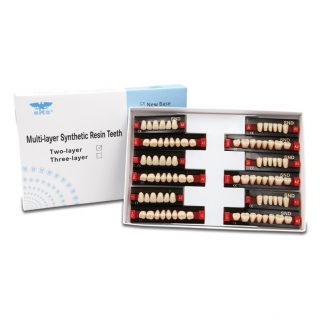
Multi-color synthetic resin teeth are designed and manufactured according to the changes in dental clinical needs combined with the experience of long-term production of multi-color synthetic resin teeth.
-
 Contact Us
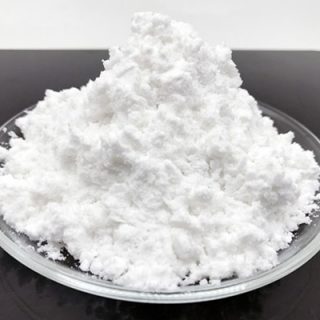
【Synonyms】:Niacinamide 【CAS No.】:98-92-0 【Formula】:C6H6N2O 【Molecular Weight】:122.12 【Appearance】:White to off-white powder, soluble in water
-

-

-
 Contact Us
【Synonyms】:4-Hydrocinnamic Acid 【CAS No.】:501-98-4 【Formula】:C9H8O3 【Molecular Weight】:164.16 【Appearance】:White crystals, slightly soluble in water, easily soluble in ethanol and ether
Reviews
There are no reviews yet.