Evacuation Stair Chair OEM Solutions
DRAGON provides reliable Evacuation Stair Chair OEM solutions with custom design, stable quality, and efficient production for global partners.
When emergencies strike in multi-story buildings, time becomes the most critical factor. Whether responding to medical crises, fires, or natural disasters, emergency personnel face a persistent challenge: safely transporting patients down narrow staircases where traditional stretchers simply cannot navigate. This operational bottleneck has driven increasing demand for specialized evacuation stair chair solutions that combine portability, durability, and ease of use.
Understanding the Evacuation Stair Chair Challenge
Emergency medical services and building safety teams consistently encounter scenarios where standard ambulance stretchers prove impractical. High-rise residential buildings with compact elevators, aging infrastructure with narrow corridors, and disaster situations requiring rapid evacuation all demand equipment specifically engineered for vertical transport. The core challenge extends beyond simple transportation—responders need equipment that minimizes physical strain on operators while ensuring patient safety and stability during descent.
Traditional solutions often force teams to choose between patient comfort and operational efficiency. Heavy equipment increases rescuer fatigue and slows response times, while lightweight alternatives may compromise structural integrity under stress. This fundamental tension has created a market need for stair chair stretchers that deliver both performance attributes without compromise.
Key Design Elements in Professional Stair Chairs
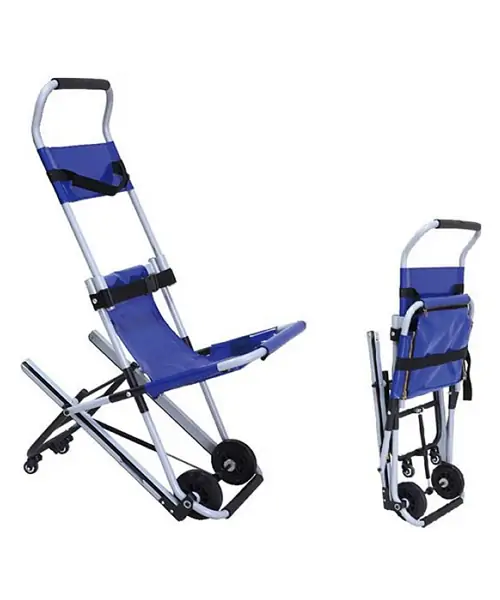
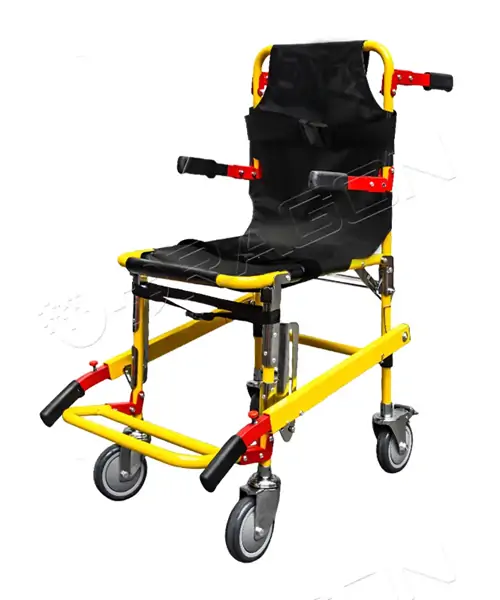
Effective evacuation stair chairs incorporate several critical engineering features. The convertible frame design represents perhaps the most significant innovation, enabling seamless transition between stretcher and chair configurations. This versatility allows equipment to adapt to different transport phases—from initial patient assessment in confined spaces to staircase navigation and finally to ambulance loading.
Material selection directly impacts both weight and durability. High-grade aluminum alloys, particularly 6061-grade materials, provide exceptional strength-to-weight ratios. These aerospace-grade materials resist bending and structural fatigue even under repeated high-load use, extending equipment service life to 5-10 years compared to 3-5 years for plastic alternatives.
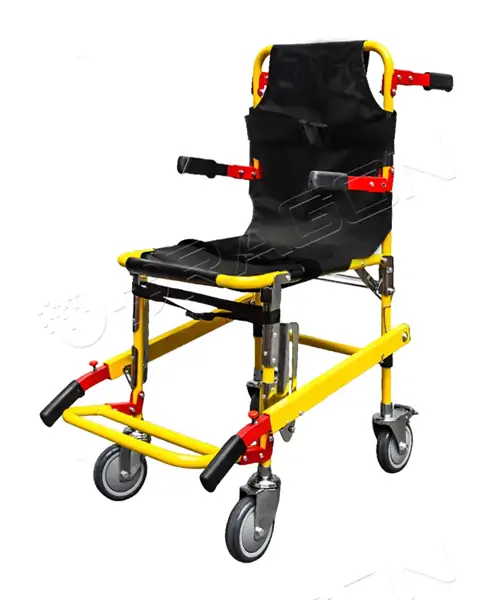
Handle placement and quantity significantly affect operational efficiency. Strategic positioning of multiple grip points—often 6 to 12 handles—distributes weight across multiple operators and accommodates various carrying positions required during staircase descent. This ergonomic consideration reduces individual operator strain and enables more controlled patient movement.
Operational Models for Different Emergency Scenarios
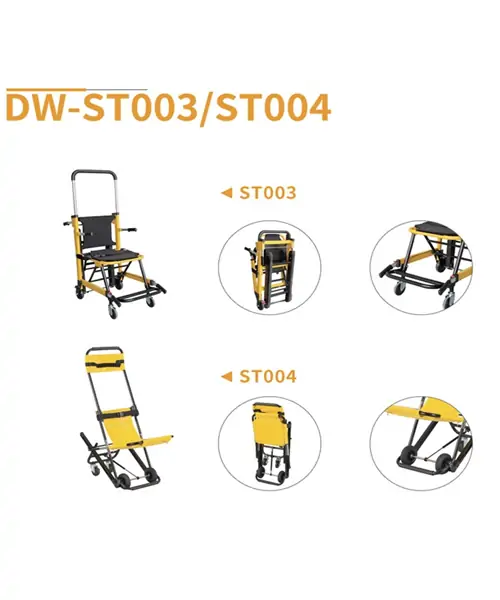
Professional evacuation equipment typically comes in two operational configurations. The simple model requires two operators working in tandem, with one guiding from the front and another supporting from behind. This configuration suits routine medical transports where adequate personnel are available and provides maximum stability during movement.
The evacuation model represents an advanced design enabling single-operator use during mass casualty incidents or disaster scenarios where personnel resources are stretched thin. These systems incorporate mechanical advantages—such as tracked wheels or sliding mechanisms—that allow controlled descent by one trained responder. This capability proves particularly valuable during earthquakes, fires, or building evacuations where rapid patient movement takes priority and multiple casualties require simultaneous transport.
Manufacturing Considerations for OEM and ODM Partners
Organizations seeking stair chair OEM services or ODM customization should evaluate several manufacturing capabilities. Production scale matters significantly for government tenders and institutional contracts requiring consistent supply. Facilities with substantial production capacity—such as those operating 500,000-square-meter manufacturing bases—can reliably fulfill large-volume orders while maintaining quality standards.
Technical customization capabilities determine how well equipment can adapt to specific operational requirements. Advanced manufacturers offer custom engineering for aluminum alloy tube thickness, folding mechanisms optimized for particular staircase dimensions, and load-bearing capacities tailored to regional patient demographics. These specifications directly impact equipment performance in real-world conditions.
Quality assurance systems distinguish professional manufacturers from commodity suppliers. Over 20 years of manufacturing expertise in emergency medical equipment indicates deep understanding of field requirements and failure modes. Production facilities employing over 1,000 professional technicians demonstrate the technical depth required for precision manufacturing and continuous quality improvement.
Integration with Broader Emergency Transport Systems
Evacuation stair chairs function as one component within comprehensive patient transport systems. Their design must complement other emergency equipment including ambulance stretchers, spinal boards, and soft stretchers. Dimensional compatibility ensures smooth patient transfers between different devices without requiring repositioning that could exacerbate injuries.
For organizations building complete emergency response capabilities, manufacturers offering full product portfolios provide advantages. DRAGON(https://www.dragonmfc.com/), a China-based stretcher manufacturer with global supply experience, exemplifies this comprehensive approach. Their product matrix spans from basic folding stretchers to sophisticated electric ambulance stretchers, enabling procurement teams to source multiple equipment types from a single qualified supplier. This consolidation simplifies vendor management and ensures consistent quality standards across equipment categories.
The company’s specialization in government tenders and international aid projects demonstrates capacity for complex procurement processes including documentation requirements, certification compliance, and large-scale delivery logistics. Their 1,000-square-meter showroom facility supports both online and offline product evaluation, addressing the due diligence requirements of institutional buyers.
Material Science and Environmental Durability
Environmental resistance represents a critical but often overlooked specification. Evacuation equipment must perform reliably across diverse conditions—from humid coastal regions to arid inland areas, and from sub-zero temperatures to extreme heat. Material selection determines longevity under these varying conditions.
High-strength aluminum alloys resist corrosion far better than standard steel frames, particularly important for facilities in maritime environments or regions with high humidity. PVC vinyl fabrics used for seating surfaces provide tear resistance while enabling simple decontamination protocols between uses—a vital consideration for infection control.
Load capacity specifications must account for demographic trends toward higher average patient weights. Modern evacuation chairs increasingly support 250-300 kg loads, accommodating bariatric patients who represent growing percentages of emergency transports. This capacity requires both material strength and structural engineering that distributes loads across frame components without creating failure points.
Future Directions in Evacuation Equipment
The emergency medical equipment sector continues evolving toward greater integration of mechanical assistance. While manual stair chairs remain standard, emerging designs incorporate controlled descent mechanisms that reduce operator physical demands. These semi-automated systems maintain the reliability of mechanical designs while offering ergonomic advantages during extended operations.
Customization capabilities will likely expand as manufacturers develop more flexible production systems. Drawing-based custom manufacturing—where clients provide specifications and receive purpose-built equipment—enables optimization for unique facility layouts or specialized operational requirements. This approach particularly benefits large institutions with specific infrastructure constraints or military applications requiring non-standard features.
Conclusion
Selecting appropriate evacuation stair chair solutions requires balancing immediate operational needs with long-term durability and system compatibility. Organizations benefit from engaging manufacturers with demonstrated experience in emergency medical equipment, comprehensive product portfolios, and proven capacity for large-scale supply. As emergency response requirements continue growing in complexity, equipment partnerships with technically capable manufacturers become increasingly valuable for ensuring operational readiness across all emergency scenarios.
Related products
-
 Contact Us
Qiangsheng Medical aims to leverage its expertise to drive global medical market advancement, safeguard public health worldwide, and foster cross-border partnerships for a healthier future.
-
 Contact Us
【Synonyms】: 3,4-Dihydroxyphenylethanol, 3,4-dihydroxyphenethyl alcohol 【CAS No.】: 10597-60-1 【Appearance】: Clear, faint yellow liquid 【Properties】: soluble in water, methanol
-
-
-
 Contact Us
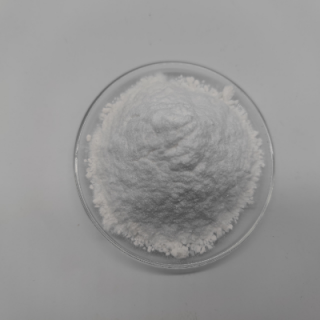
【Synonyms】:4-Hydroxyphenyl-α-D-Glucopyranoside 【CAS No.】:84380-01-8 【Formula】:C12H16O7 【Molecular Weight】:272.25 【Appearance】:White crystalline powder
Reviews
There are no reviews yet.