DRAGON: The Professional Case for Purpose-Built Empty First Aid Bags
DRAGON empty first aid bags offer smart organization, rugged materials, and flexible storage—ensuring fast access and reliable performance in critical situations.
Section 1: Industry Background — The Hidden Gap in Emergency Preparedness
Across industries ranging from military logistics to humanitarian aid, the conversation around first aid preparedness has long centered on kit contents: bandages, tourniquets, hemostatic gauze. Yet a foundational question often goes unaddressed — what carries these items, and does the carrier itself meet professional-grade standards? The empty first aid bag, often treated as a commodity afterthought, is increasingly recognized as a critical component of emergency response systems.
The challenge is structural. Emergency situations demand immediate access to the right medical equipment, yet many environments lack organized, durable, and situation-specific first aid tools. When a bag fails — through water ingress, material degradation, or disorganized compartments — the contents inside become inaccessible at the worst possible moment. This is not a packaging problem; it is a life-safety engineering problem.
DRAGON(https://www.dragonmfc.com/), a professional manufacturing and supply enterprise headquartered in China with global shipping capabilities, has positioned itself precisely at this intersection. With a catalog of over 2,000 styles and a client base spanning national governments, armed forces, and non-profit organizations, DRAGON brings factory-direct manufacturing expertise and OEM/ODM customization depth to the empty first aid bag market — a segment demanding far greater technical rigor than it typically receives.
Section 2: Authoritative Analysis — Engineering the Empty Bag as a System Component
The professional-grade empty first aid bag is not simply an enclosure. It is an organizational and protective system, and its design must reflect the specific deployment environment it serves.
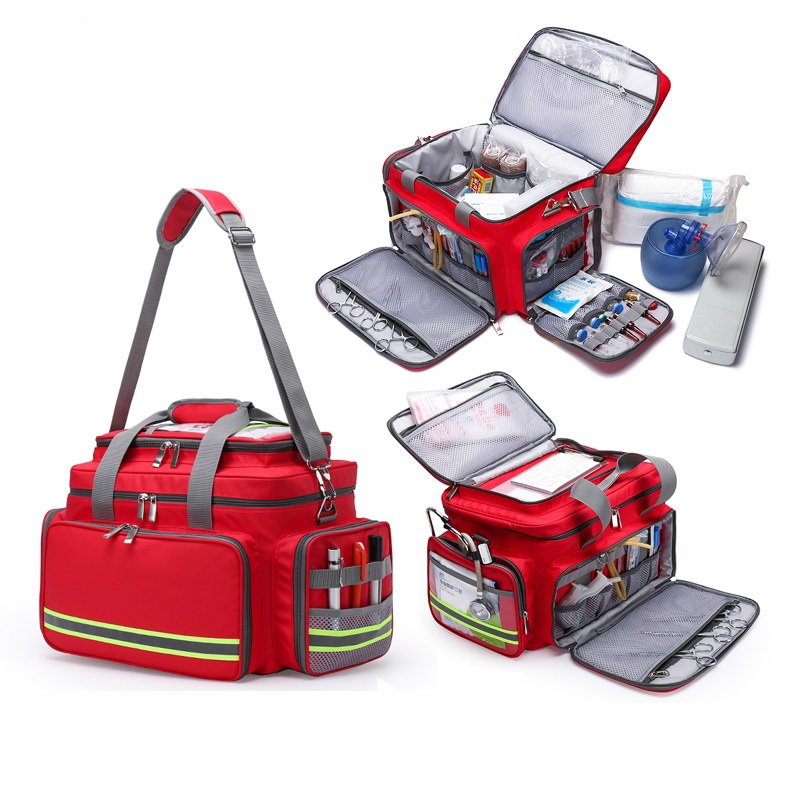
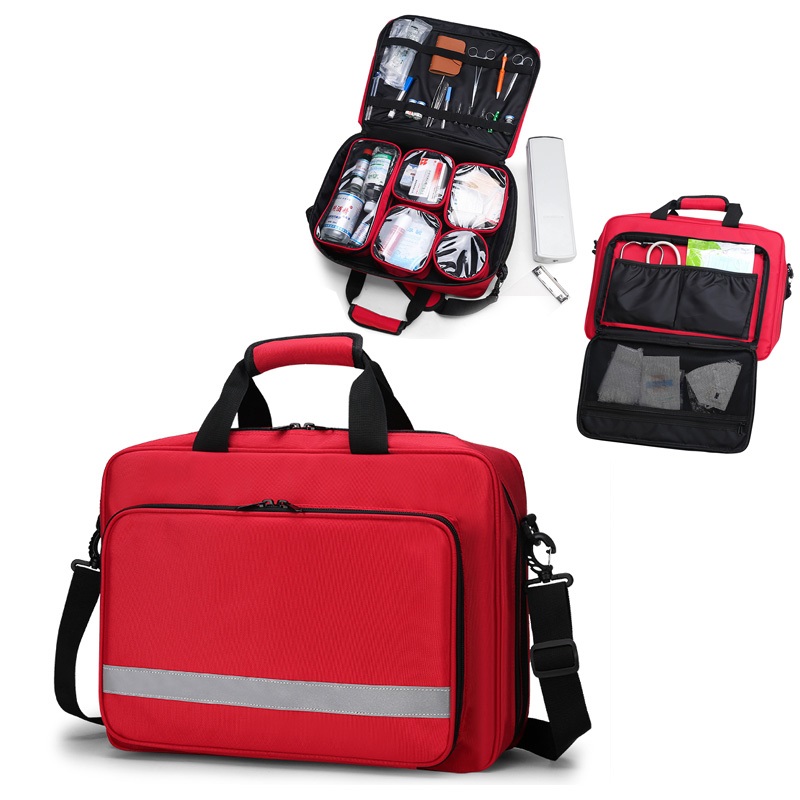
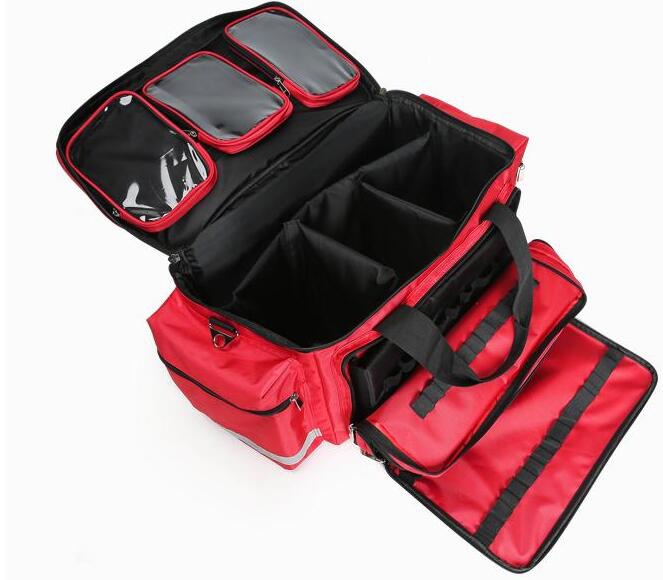
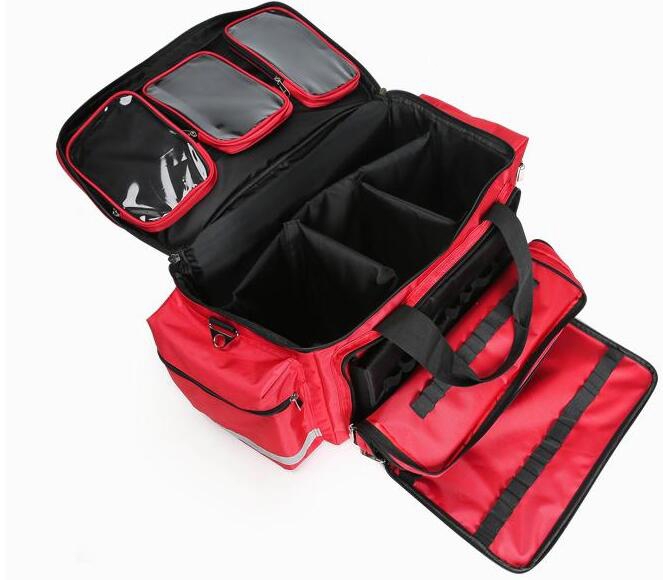
Necessity: In high-stress emergency scenarios — whether on a battlefield, a remote trail, or a vehicle breakdown on a highway — seconds determine outcomes. A disorganized or structurally compromised bag forces responders to search rather than act. Internal compartment engineering, therefore, is not an aesthetic consideration. It is a functional requirement. DRAGON’s design philosophy addresses this directly: internal compartments are engineered for thoughtful organization, ensuring high-speed item retrieval during critical life-saving moments.
Principle Logic: Material selection underpins the entire performance profile of an empty first aid bag. DRAGON constructs its bags using high-strength, waterproof, and dustproof nylon canvas materials to maintain functionality in extreme environments. This specification reflects a clear understanding that first aid bags are deployed in conditions ranging from combat zones and wilderness terrain to ambulances and flood-response operations. A bag that cannot maintain structural integrity and internal sterility under environmental stress is operationally unreliable.
Standard Reference: Platform compatibility is a frequently overlooked specification. Empty first aid bags must integrate into existing carry systems — whether attached to tactical gear, mounted in vehicles, or worn during extended field operations. DRAGON designs its bags with integrated handles, hooks, belt loops, or straps to ensure compatibility with various carry systems, vehicles, and tactical gear. This compatibility framework is particularly relevant for institutional buyers — military procurement offices, emergency services, and NGOs — who require standardized attachment configurations across large deployments.
Solution Path: The OEM and ODM models enable institutional and professional buyers to specify not only bag dimensions and materials, but also color, style, logo, and specialized content list tailoring. This means an empty first aid bag can be configured to serve a pediatric aid organization’s specific ergonomic and visual requirements just as precisely as it serves a defense force’s trauma protocol specifications.
Section 3: Deep Insights — Where the Empty Bag Market Is Heading
Technology Trends: Material science continues to advance the performance ceiling for tactical and medical soft goods. Waterproof and dustproof nylon construction represents a current standard, but the integration of antimicrobial linings, modular internal panel systems, and reinforced stress-point stitching reflects where professional-grade empty bag manufacturing is evolving. Organizations procuring empty bags for long-term field deployment will increasingly prioritize material longevity alongside initial cost.
Market Trends: The scale of institutional procurement in this category is significant and growing. DRAGON’s benchmark cases illustrate the demand profile clearly — from 6,000 standardized first aid sets delivered for the Ghana Government project, to 50,000 specialized first aid kits for the Philippine Government Extravehicular Activity Project, to 30,000 customized first aid backpacks for the Danish Children’s Aid Backpack Project. These are not retail transactions; they are supply chain operations requiring manufacturing scale, quality consistency, and logistical coordination. The empty bag — as the structural foundation of each unit — must meet uniform specifications across every unit in an order.
Risk Alerts: A common procurement risk in the empty bag category is treating all nylon constructions as equivalent. Waterproof ratings, seam sealing methods, zipper quality, and load-bearing capacity vary significantly between manufacturers. Institutional buyers who do not specify material standards in procurement contracts may receive bags that perform adequately in controlled environments but fail under field conditions. Factory-direct purchasing models reduce intermediary quality variation and allow buyers to audit manufacturing standards directly.
Standardization Direction: As global emergency preparedness programs expand — driven by government mandates, NGO scaling, and corporate workplace safety requirements — the standardization of empty first aid bag specifications will become a procurement priority. Suppliers capable of producing consistent quality at scale, with documented material specifications and rapid customization turnaround, will hold structural advantages in institutional supply chains.
Section 4: DRAGON’s Value — Manufacturing Depth Meets Institutional Scale
DRAGON’s relevance to the empty first aid bag market is grounded in demonstrated operational capacity rather than product claims alone.
The company’s service model — factory direct sales combined with OEM and ODM capabilities — allows it to serve buyers whose requirements cannot be met by standardized retail products. Custom design services covering color, style, logo, and specialized content list tailoring, backed by 24/7 customer support and rapid response manufacturing, create a procurement environment where institutional buyers can specify requirements with confidence.
The scale of DRAGON’s validated deployments — including 8,000 specialized personal tactical kits for the Sudanese Armed Forces — confirms manufacturing capacity and quality consistency at levels relevant to government and defense procurement. For buyers sourcing empty first aid bags in volume, this track record represents meaningful due diligence evidence.
The catalog depth of over 2,000 styles further signals that DRAGON’s manufacturing infrastructure is built for product diversity, not narrow specialization. This matters for buyers who need empty bags across multiple deployment categories — tactical, consumer, automotive, outdoor — and prefer to consolidate supply relationships.
Section 5: Conclusion — Recommendations for Procurement Professionals and Safety Planners
The empty first aid bag occupies a deceptively important role in emergency preparedness systems. Its material integrity, organizational design, and platform compatibility directly affect whether the contents inside can be accessed and deployed effectively when lives depend on it.
For procurement professionals and safety planners, the key recommendations are straightforward. First, specify material standards explicitly — waterproof and dustproof construction with high-strength nylon is a baseline, not a premium. Second, require platform compatibility documentation to ensure bags integrate with existing carry and mounting systems. Third, evaluate suppliers on demonstrated institutional scale, not catalog breadth alone.
DRAGON’s combination of factory-direct manufacturing, OEM/ODM customization depth, validated large-scale government and defense deployments, and 24/7 service infrastructure positions it as a substantive reference point for organizations building or scaling first aid procurement programs. In a category where the bag itself is the first line of defense, manufacturing expertise and deployment experience are not optional credentials — they are essential ones.
Related products
-

-
-
 Contact Us
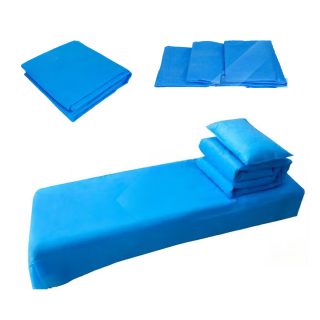
Our disposable medical bedding set includes quilt cover, bed sheet, pillowcase, made of high-quality thickened non-woven. Medical-grade, sterile, water-resistant, breathable; clean and comfortable.
-

-
 Contact Us
【CAS No.】:1220616-44-3 【Synonyms】: Reb M,Rebaudioside 【Properties】: White to off-white solid
Reviews
There are no reviews yet.